

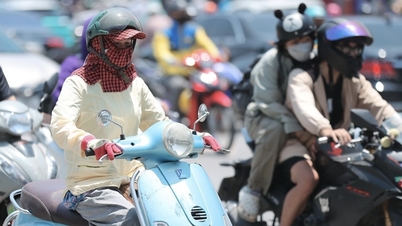
In recent days, most areas across the country have been experiencing the most intense and widespread heatwave in history, with temperatures commonly ranging from 37 to 40 degrees Celsius, and exceeding 40 degrees Celsius in many places (According to the National Center for Meteorological and Hydrological Forecasting, May 6, 2023).
According to information from the Central Military Hospital 108, the Internal Medicine and Toxicology Intensive Care Unit received a young man diagnosed with heatstroke and organ damage.

Patients suffering from heatstroke due to the hot weather require emergency treatment (photo courtesy of the source).
The patient is a 29-year-old male who was transferred from Thach That District Hospital, Hanoi, with a diagnosis of heatstroke with organ damage (liver, kidney, hematology).
The patient was transferred to the Internal Medicine and Toxicology Intensive Care Unit, Intensive Care Center, Military Central Hospital 108 on May 22, 2023.
According to the family, after jogging for about 5km at 5 PM, the patient felt dizzy, lightheaded, and had a hot flashes throughout the body, then quickly fell into a coma and was promptly taken to the emergency room by family members.
The patient's test results showed elevated creatinine kinase (CK) at 1,080,000 U/l; elevated liver enzymes GOT at 1,800 U/l and GPT at 14,000 U/l; renal failure with a decreased glomerular filtration rate of 50 ml/min; thrombocytopenia at 84 G/l; impaired coagulation function, and a prothrombin (PT) percentage of 55%.
During treatment, the patient's body temperature was monitored, intravenous fluids were administered, electrolytes were replenished, and other intensive medical treatments were provided. After more than a week, the patient's organ function improved, and they were discharged from the hospital without any sequelae.
In the case mentioned above, the patient was fortunate to receive proper and timely emergency care, thus avoiding unfortunate consequences. However, heatstroke during particularly hot weather always poses many dangers.
Dr. Pham Dang Hai, Deputy Head of the Department of Internal Medicine and Toxicology, said: "Heat stroke can be divided into two types: classic heatstroke and exertional heatstroke."
Classic heatstroke is common in the elderly, those with weakened immune systems, children, and people with cardiovascular disease, neurological disorders, or endocrine disorders, and usually occurs after passive exposure to a high-temperature environment for many hours or days.
Heat stroke due to exertion is more common in young, healthy individuals with normal thermoregulation systems, occurring after exposure to high ambient temperatures and simultaneously due to heat generation during exercise or exertion.
Heatstroke causes multi-organ damage, affecting the central nervous system, respiratory system, circulatory system, liver, kidneys, and hematology, leading to rapid multi-organ failure if not treated promptly, and even death.
Therefore, understanding heatstroke, its early signs, timely emergency care, and prevention is extremely important, helping us reduce morbidity and mortality rates.
To prevent the risk of heatstroke during hot weather, people need to be aware of some signs that help people recognize heatstroke early, including altered consciousness: coma, seizures; respiratory disorders: difficulty breathing, respiratory failure; cardiovascular disorders: arrhythmias, hypotension, oliguria, accompanied by fatigue, headache, flushed face, possibly vomiting, diarrhea, body temperature above 40 degrees Celsius, hot and dry skin.
To act promptly, immediate hypothermia and support for organ dysfunction are two core aspects of emergency care and treatment. Emergency responders need to remove the patient from the hot environment, move them to a cool, shaded area, remove their clothing, and immediately lower their body temperature by placing them in a cool room at 20-22°C and using a fan.
Pour cold water (25-30°C) over the patient, or cover the patient with wet, cold compresses (20-25°C) and fan them. Alternatively, the patient can be immersed in cold water (20-25°C) with their head above the water surface, closely monitoring vital signs.
Place ice packs on the groin, armpits, and neck.
Lowering the patient's body temperature by any means necessary should be undertaken, but this should not hinder the transportation of the patient to the nearest medical facility. Transportation can be done in an air-conditioned vehicle or with windows open, lowering the patient's temperature during transport.
For children, the elderly, and those with underlying medical conditions such as cardiovascular, respiratory, endocrine, or metabolic diseases, or those with weakened bodies, appropriate preventive measures and training plans should be developed. Those with risk factors should avoid exercising in excessively hot weather.
Encourage organizations and associations to have programs that widely disseminate information about the signs, symptoms, and risks of the disease to help with early diagnosis and treatment.
Each individual must train themselves to adapt to the heat, scheduling physical exercise during cooler times of the day and reducing physical activity when the weather is excessively hot.
If it is unavoidable to work or live in hot weather, people should drink enough water and salt, cover their bodies by wearing loose, light, breathable, and light-colored clothing, wear a wide-brimmed hat, and use sunscreen.
Source




![[Photo] General Secretary and President To Lam presides over a meeting on preparations for the review of one year of operation of the three-tiered government system.](https://vphoto.vietnam.vn/thumb/1200x675/vietnam/resource/IMAGE/2026/06/02/1780391821195_a1-bnd-4595-9717-jpg.webp)






















































































Comment (0)