

Drug allergies can cause life-threatening reactions if not detected and treated promptly.
The unpredictable health risks from improper medication use.
Drug allergies can cause life-threatening reactions if not detected and treated promptly.
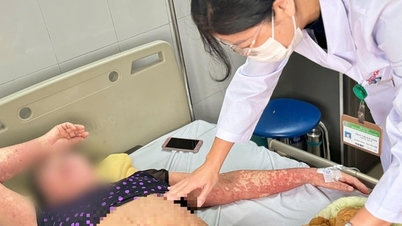
The National Hospital for Tropical Diseases recently admitted patient NTC, a 67-year-old woman from Hanoi , who presented with persistent high fever, generalized itching, and severe edema.
 |
| Severe drug allergies can cause dangerous complications such as anaphylactic shock, laryngeal edema, airway constriction, generalized edema, etc., and can be life-threatening if not treated promptly. |
The elderly woman was taken to the doctor by her family due to knee pain and was diagnosed with lower extremity venous insufficiency. After examination, the doctor prescribed five medications, including a venous circulation support drug, calcium, vitamin C, a multivitamin, and cholesterol-lowering medication. However, two days after starting the medication, she began to experience mild itching, which then spread to her entire body, from her legs to her face.
When the itching worsened, she returned to the medical facility for a follow-up examination and was prescribed additional allergy medication. However, despite using the allergy medication, the symptoms did not subside, and she continued to have a persistent high fever for 24 hours, with her body temperature fluctuating between 39°C and 40°C, causing her family to worry and decide to take her to the hospital.
At the National Hospital for Tropical Diseases, the elderly woman was admitted in a critical condition with a persistent high fever, rash, and generalized edema. Her face was so swollen that it was disfigured, and the edema was not only on her face but also on her lips, abdomen, legs, and back. Doctors immediately determined this was a severe drug allergy, potentially causing anaphylactic shock and damage to vital organs.
Notably, during treatment, her liver enzyme levels increased dramatically, reaching eight times the normal level.
The continuous use of fever-reducing medication for 4 days (every 5 hours) overloaded the liver, leading to elevated liver enzymes. Doctors say that if left untreated, this condition can lead to acute liver failure and affect other organs in the body.
According to Dr. Tran Hai Ninh, Head of the Department of General Internal Medicine at the Central Hospital for Tropical Diseases, drug allergies can cause life-threatening reactions if not detected and treated promptly.
"Severe drug allergies can cause dangerous complications such as anaphylactic shock, laryngeal edema, airway constriction, generalized edema… and can be life-threatening if not treated promptly," Dr. Ninh warned.
In Ms. NTC's case, if left untreated, elevated liver enzymes can lead to acute liver failure, affecting other organs such as the kidneys, heart, and digestive system. Furthermore, allergic symptoms like rashes and swelling can severely impact the patient's quality of life.
Dr. Tran Hai Ninh emphasized that even though doctors have prescribed medication, patients still need to closely monitor their body's reaction after starting to use the drug.
If any unusual symptoms such as rash, fever, shortness of breath, or swelling occur, the patient should immediately stop taking the medication and go to a medical facility for prompt treatment. Do not change the dosage or extend the duration of fever-reducing medication without a doctor's prescription.
Doctors also advise that if there are signs of suspected drug allergy such as difficulty breathing, abdominal pain, rash, swelling, or blisters, patients should immediately stop using the medication and go to the hospital for examination and timely treatment.
One of the major factors contributing to severe drug allergies is the self-medication of drugs without a doctor's guidance.
The habit of self-medicating with painkillers, fever reducers, or other medications of unknown origin can worsen the condition. This is especially dangerous when patients are not monitored by medical professionals and are not advised about potential side effects.
To reduce the risk of drug allergies, doctors advise people not to self-medicate when they are sick. Strict adherence to treatment protocols and only using medication as prescribed by a doctor is crucial. If any unusual symptoms occur while taking medication, patients should promptly seek medical attention.
Source: https://baodautu.vn/nguy-co-suc-khoe-khon-luong-tu-viec-su-dung-thuoc-khong-dung-cach-d253768.html


![[Photo] Prime Minister Pham Minh Chinh presides over a meeting on private sector economic development.](/_next/image?url=https%3A%2F%2Fvphoto.vietnam.vn%2Fthumb%2F1200x675%2Fvietnam%2Fresource%2FIMAGE%2F2025%2F12%2F20%2F1766237501876_thiet-ke-chua-co-ten-40-png.webp&w=3840&q=75)
























































































Comment (0)