

Each Ba Na clan in the village has a "village house". No matter where they go or what they do, as long as they see the roof of their clan's "village house" still standing, they know that their roots are always protected.
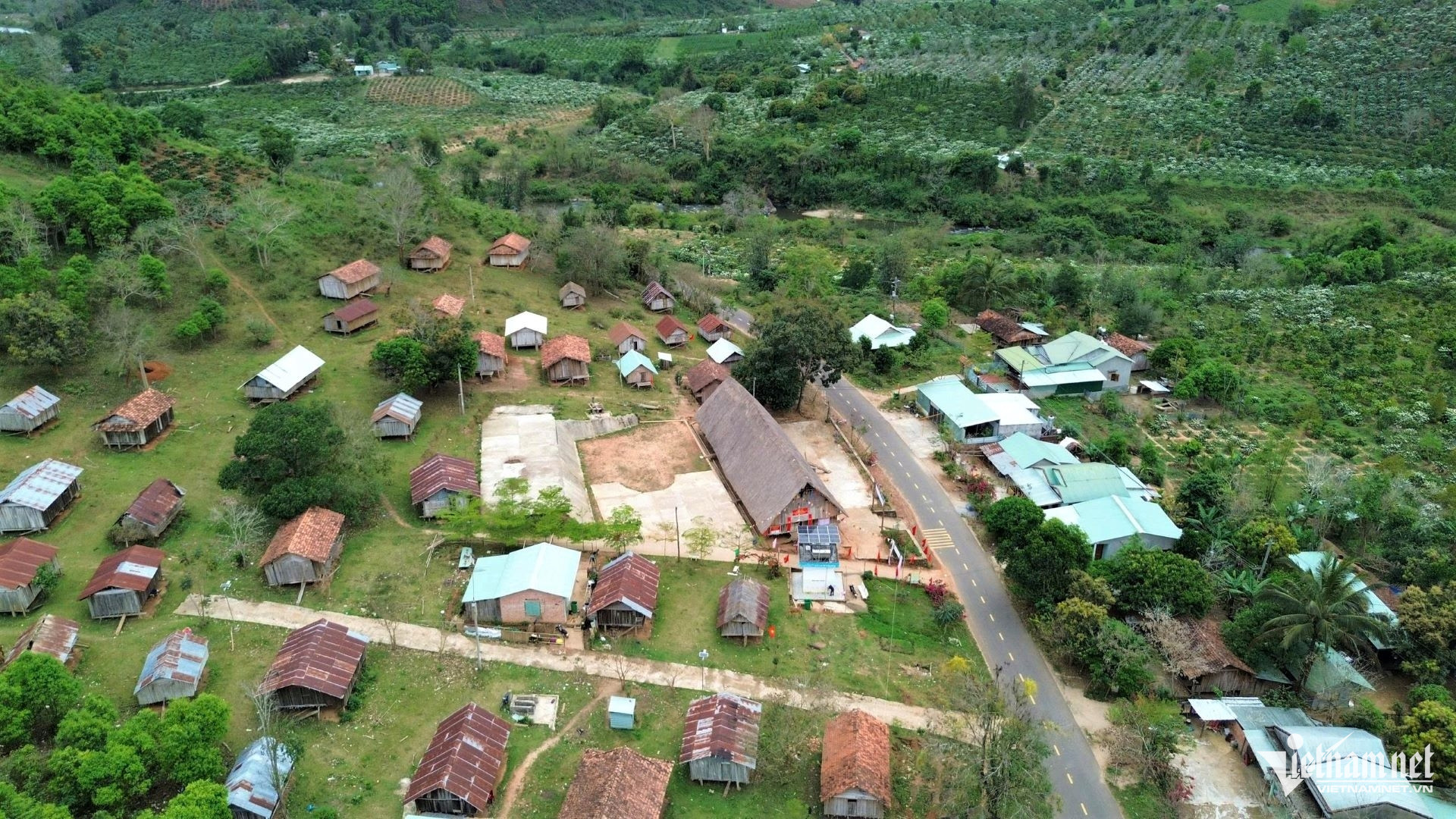
The unique architecture of the village houses.
When mentioning the traditional architecture of the Ba Na villages, people often immediately think of the stilt houses and communal houses, proudly displaying roofs that resemble axes piercing straight up into the sky.
However, in the villages of Kon Gộp, Kon Túc, and Kon Gol in Đăk Rve commune, Quảng Ngãi province, many traditional village houses (also known as ancestral houses) are still preserved, standing quietly and retaining their ancient appearance over the years, alongside the majestic presence of the communal house.
Elder A Deo, from Kon Tuc village, Dak Rve commune, shared: If the communal house is likened to the heart, a symbol of power and spirituality for the entire village, then the "village houses" are the satellites surrounding it. Each clan in the village will have a "village house".
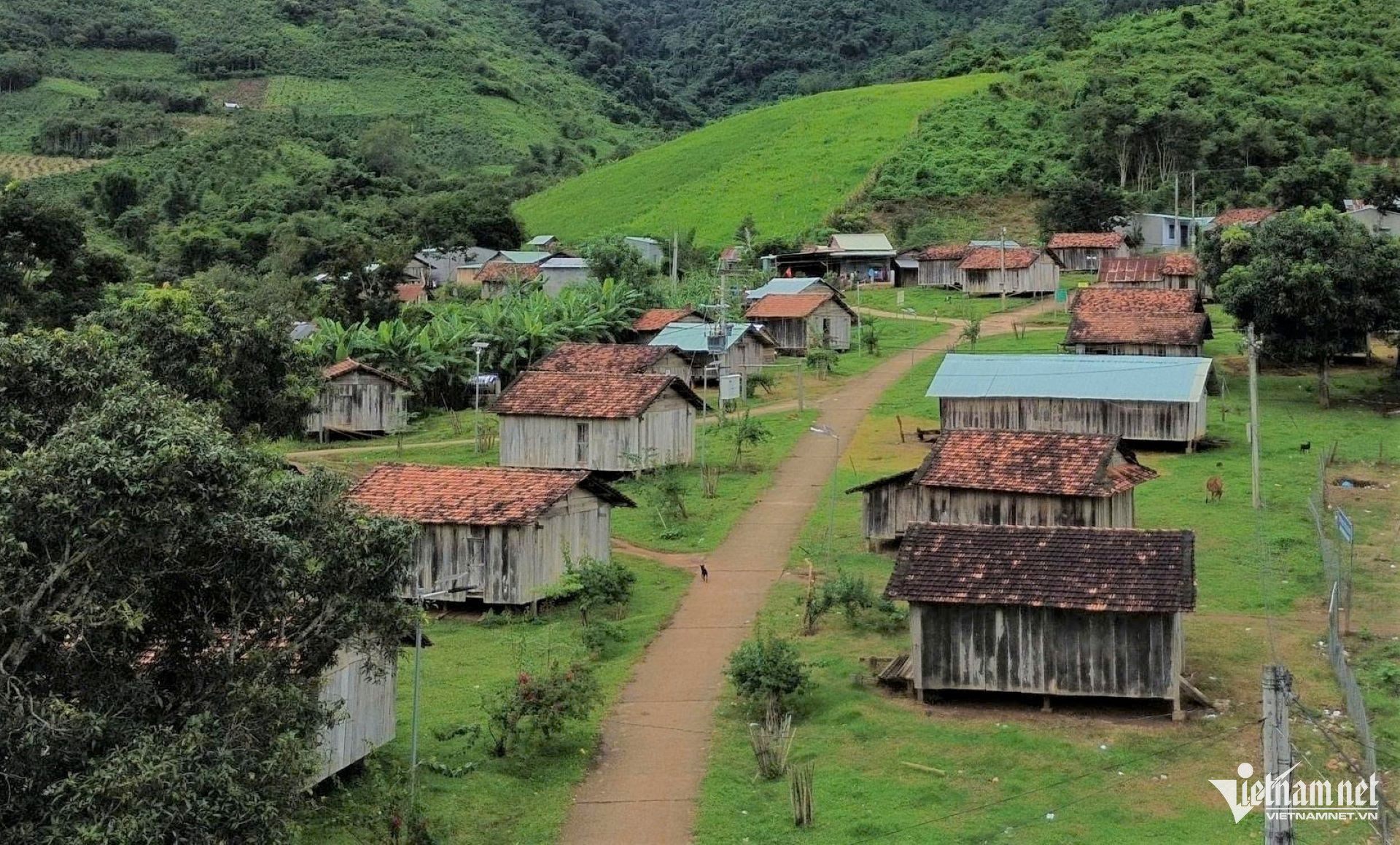
The village houses are all built entirely of natural wood, in the style of low stilt houses, with tiled or corrugated iron roofs. The village houses are located opposite the main entrance and facing the large courtyard of the communal house.
This arrangement is not random, but reflects the profound philosophy of life of the Ba Na people.
The village houses all face the center, signifying unity, respect for customs and traditions, and community spirit. The relatively uniform spacing and placement around the communal house courtyard reflect the spirit of equality among the clans in the village.
Elder Dinh Thoi, from Kon Gop village, Dak Rve commune, said: "The village house has been preserved since our ancestors' time and we have maintained it to this day. Unlike the ordinary houses of individual families, the village house is very simple but large enough to accommodate more than 20 people from the clan when the village has a major event."
“The village house is not owned by any single individual, but is the common property of an entire clan. It is where the stories of our ancestors' pioneering and village-building are preserved. Inside, there is only a traditional fireplace and a corner for sacred objects of the Ba Na people,” Elder Dinh Thoi further shared.
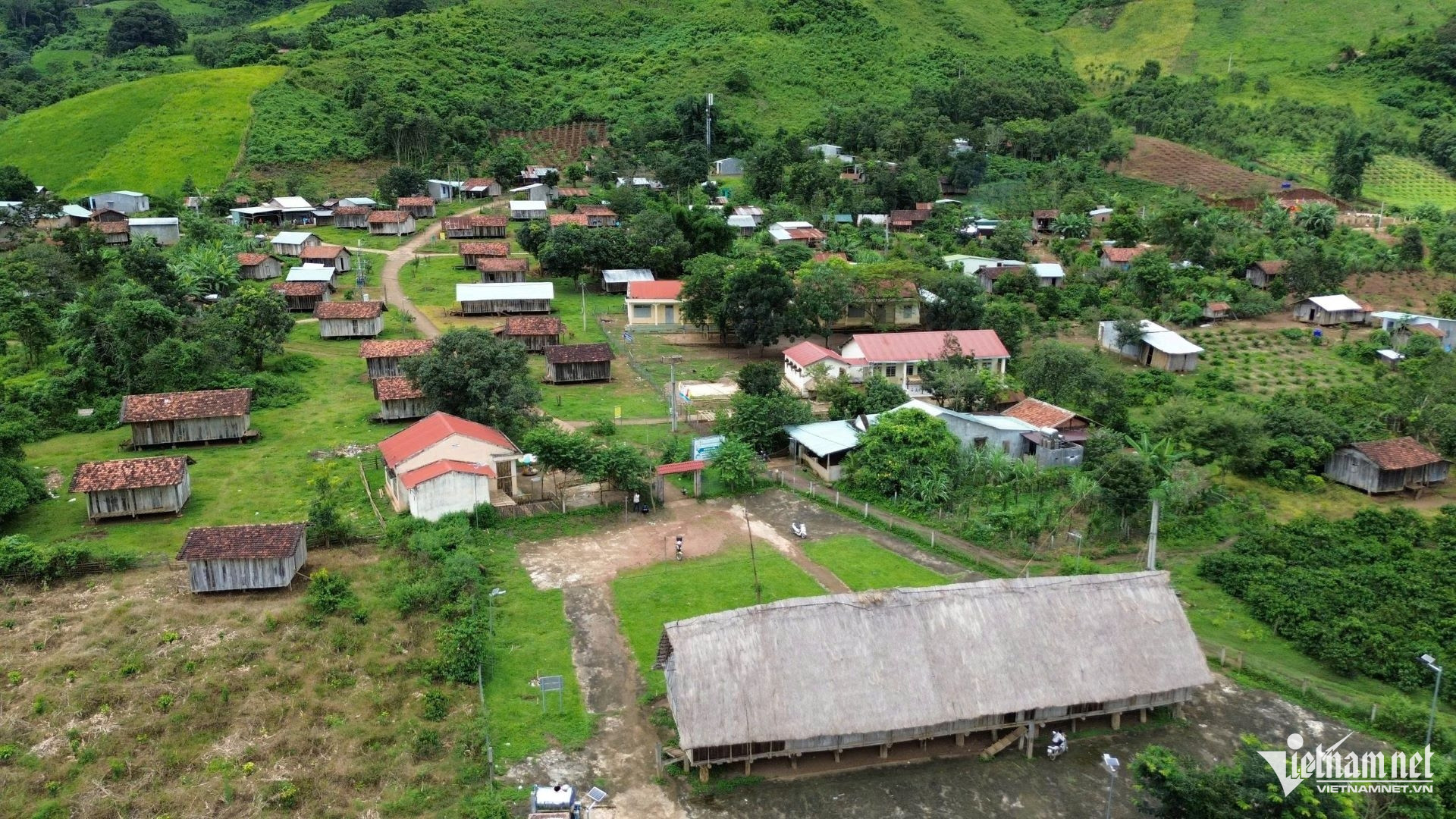
The village house is a place that witnesses the succession of generations; newborn children are brought to be introduced to the clan, and young people grow up, get married, and are remembered by the clan under this roof.
On ordinary days, the village houses stand silently, witnessing the simple working life of the people. But in the hearts of every Ba Na person, no matter where they go or what they do, as long as they see the roof of their ancestral village house still standing, they know that their roots are always protected.
A place where generations come together.
The village house is not like the everyday living space of a family's home. Only when the village has a major festival does the village house truly "wake up" and become full of life.
At that time, families from the same lineage would gather at their village home. Together, they would prepare offerings and traditional dishes to participate in the village's communal festival.
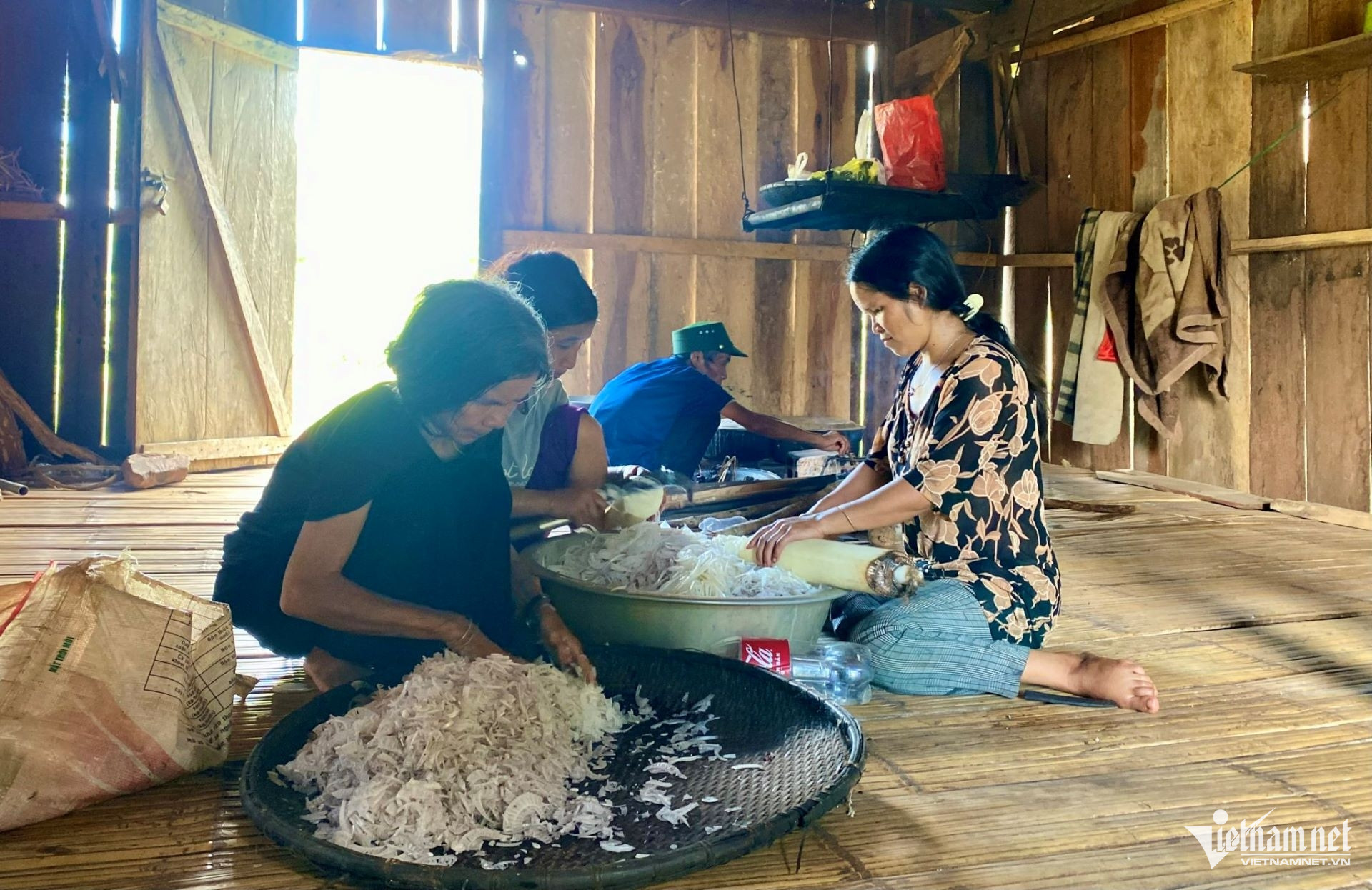
Ms. Y Brai, from Kon Tuc village, Dak Rve commune, shared: "For the Ba Na people here, there are two major festivals: the New Rice Festival and the Et Dong Festival (the festival of eating the bamboo rat). When the village organizes these two festivals, all the clans in the village participate, and all the descendants gather at the village hall. This is the warmest and most welcoming place for the entire clan to exchange greetings and good wishes."
The greatest significance of the village house lies in its spiritual value and sense of community, a place where generations of grandparents, parents, and children gather together, bridging the age gap.
The village house is also a place for resolving minor conflicts within the clan in a spirit of love and mutual support. It is also where the elders tell the younger generation about traditional culture, teach them how to play gongs and drums, weave baskets, and cook traditional dishes.
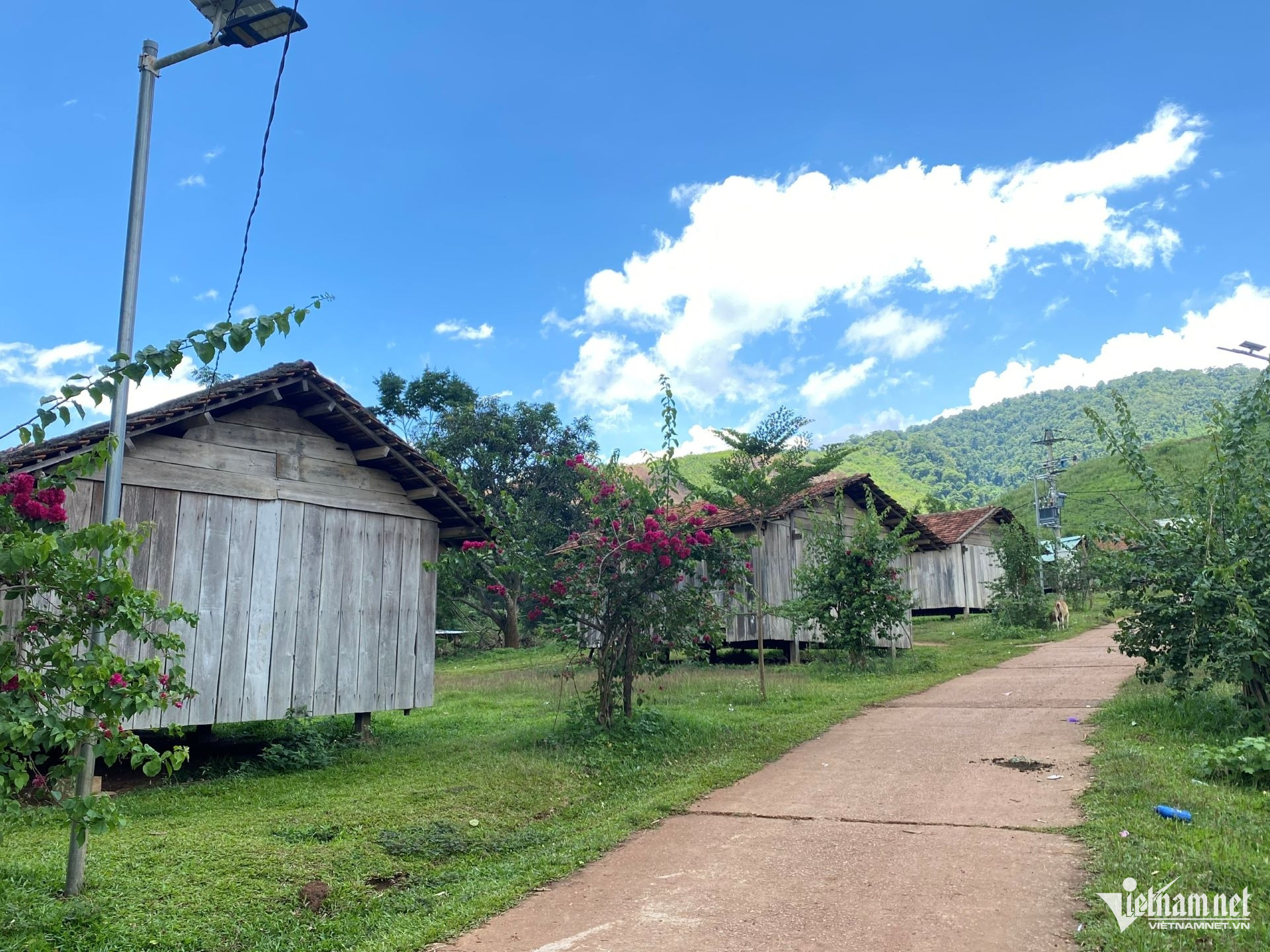
Mr. A Meo, head of Kon Gop village, Dak Rve commune, said: The village has 168 households and currently preserves nearly 30 traditional village houses. Preserving these village houses is not only an achievement of cultural conservation efforts, but more importantly, it reflects the self-awareness and deep-seated love of the Ba Na people for their ancestral heritage.
Having the opportunity to visit the villages of Kon Gộp, Kon Gol, and Kon Túc in Đăk Rve commune, and seeing the village houses nestled beside the majestic communal house, one truly understands the beauty of unity and the love for culture of the Ba Na people in the magnificent Central Highlands.
Source: https://vietnamnet.vn/nha-lang-cua-nguoi-ba-na-co-gi-dac-biet-2519823.html

![[Image] A brilliant symphony and explosive power in the skies of Da Nang.](https://vphoto.vietnam.vn/thumb/1200x675/vietnam/resource/IMAGE/2026/05/31/1780196945787_anh-man-hinh-2026-05-31-luc-10-08-51.png)










![[Video] Sunset at Lap An Lagoon – Where the sun sets over the fishing nets](https://vphoto.vietnam.vn/thumb/340x192/vietnam/resource/IMAGE/2026/05/31/1780192137701_beach-landscape-sea-water-nature-grass-745871-pxhere-com.jpeg)






































































Comment (0)