

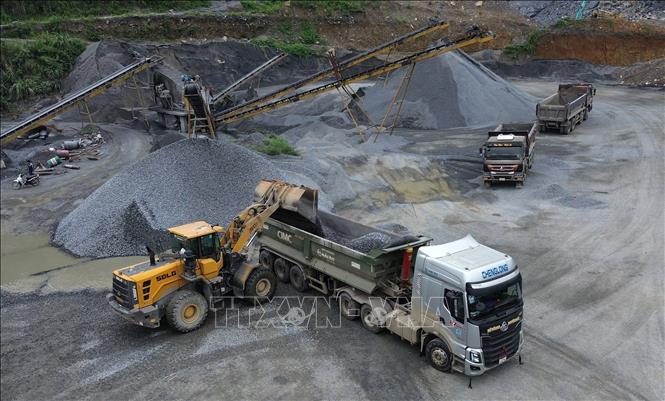
A dilemma
The sharp fluctuations in material, fuel, and capital costs are creating unprecedented pressure on construction businesses. In this context, many contractors are forced to accept a harsh reality: continuing construction means losses, but stopping faces legal risks.
According to Mr. Nguyen Quoc Hiep, Chairman of the Vietnam Association of Construction Contractors (VACC), construction price indices in many localities are still published with a significant delay, lagging behind market realities. This makes it difficult for businesses to prepare cost estimates, control expenses, and manage projects.
Meanwhile, input price fluctuations have been rapid and significant. Global geopolitical tensions have driven up diesel prices from around 17,000 VND/liter to 35,000 VND/liter. Asphalt prices have also increased from 12,000 VND to 19,000 VND/kg, leading to a surge in operating, transportation, and construction costs.
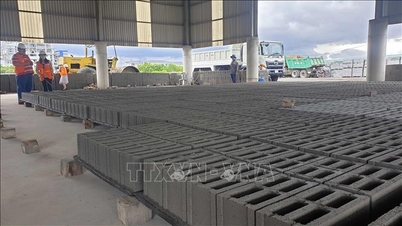
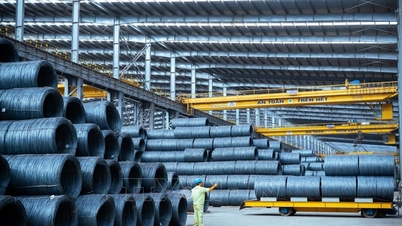
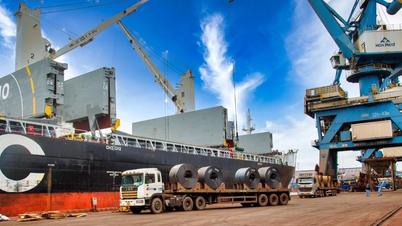
Along with fuel, many construction materials such as steel and cement are also experiencing price increases. Nearly 90% of businesses in the industry acknowledge this as their biggest challenge currently.
The pressure is even greater because the majority of construction contracts are still lump-sum or fixed-price contracts, lacking flexible adjustment mechanisms. When input costs rise rapidly, the difference is almost entirely passed on to the contractor, further eroding already thin profit margins, and sometimes even turning them into "negative".
Besides material costs, capital costs have also become a major burden. Mr. Nguyen Quoc Hiep cited that interest rates on business loans have increased from 7-7.5% per year to approximately 11-12% per year since the beginning of the second quarter of 2026. For homebuyers, the common interest rate is 14-15% per year.
High interest rates are causing difficulties for both developers and homebuyers, leading to a slowdown in the real estate market. Meanwhile, access to credit is becoming increasingly difficult as banks tighten lending, especially for new projects.
When cash flow is disrupted, projects cannot proceed as planned, liquidity decreases, and inventory increases. The ripple effect quickly spreads to construction contractors, leading to job losses, weakened cash flow, and increased financial risk for many businesses.
From the perspective of a manufacturing business, Mr. Le Ba Tho, Vice Chairman of the Board of Directors of Gelex, stated that fluctuations in global raw material prices, especially copper, have directly impacted the company's operations. Raw material costs currently account for 70-80% of total input costs in the electrical equipment segment and 25-45% in the construction materials segment.
To cope, this company is forced to proactively forecast prices, maintain 45-60 days' worth of raw material inventory, and utilize financial tools and long-term contracts to mitigate risks. However, these are only temporary solutions and are unlikely to completely eliminate cost pressures.
A flexible mechanism is needed to reduce the "discrepancy".
According to experts, the core problem today lies not only in rising material prices, but also in the delays in the regulatory mechanism. When input prices fluctuate rapidly on a monthly, even weekly, basis, basis, but published prices and contract unit prices are updated slowly, the gap between actual costs and contract prices widens, creating a large discrepancy.
For example, in the first quarter of 2026, construction material prices generally increased by over 10%, with many types rising by 10-30%. However, the contract unit prices were established beforehand, leaving businesses to bear the entire difference.
For lump-sum contracts, price adjustments are only considered in exceptional circumstances such as force majeure or "fundamental changes in circumstances," but the process is complex and time-consuming. This leaves businesses with almost no tools to respond promptly to market fluctuations.
Local realities clearly demonstrate these shortcomings. Observations in Gia Lai province show that construction material prices have increased by 10-30%, while the officially announced prices are 30-40% lower than the actual prices. This large discrepancy has forced many construction projects to proceed at a slow pace, facing the risk of exceeding the total investment budget.
According to reports from local businesses, the price of sand after transportation can reach 500,000–700,000 VND/m3, while the officially announced price is only below 100,000 VND/m3. The price of concrete has increased to 1.3–1.4 million VND/m3, and many other materials also show a difference of 40–45% compared to the estimated price.
This not only creates difficulties in cost accounting, but also poses legal risks, forcing many contractors to slow down construction or adjust their plans.
Furthermore, the supply of materials also reveals inadequacies due to imbalances between different types. Construction sand is scarce, while stone is in surplus and transported out of the province, increasing the supply-demand gap and driving up prices.
In light of this situation, Vice Chairman of the Gia Lai Provincial People's Committee Nguyen Tu Cong Hoang stated that state management of construction materials still has many shortcomings and does not closely follow market developments. The lack of specific data in reporting and the lack of coordination between agencies lead to ineffective management.
Therefore, the Gia Lai provincial leadership has requested relevant departments and agencies to accurately review the supply and demand of each type of material, update and publish prices that reflect actual market conditions. At the same time, they are strengthening inspections and checks on price listings, controlling the origin and quality of materials, and strictly handling cases of speculation and hoarding.
The Vietnam Association of Construction Contractors proposes allowing fuel costs to be offset in contract prices, and considering the application of a force majeure mechanism in cases of prolonged price fluctuations. Simultaneously, they suggest improving contract mechanisms to be more flexible, allowing price adjustments based on market fluctuations, especially for long-term projects. This is considered a crucial solution for sharing risks between parties and protecting business profit margins.
Furthermore, developing a diversified capital market to reduce dependence on bank credit is also an urgent requirement. Channels such as corporate bonds and infrastructure investment funds need to be opened up to provide long-term capital at reasonable costs.
At the enterprise level, improving management capabilities, applying technology, and controlling costs are considered core solutions. Careful project selection, using financial tools to mitigate risks, and optimizing the supply chain will help businesses increase their resilience.
In the context of increased public investment and continued high construction demand, addressing the discrepancy between published prices and market prices is not only a concern for businesses but also directly relates to the efficiency of capital utilization and the progress of construction projects.
According to experts, without timely solutions, the risk of delays, declining business capacity, and reduced market attractiveness is unavoidable. Conversely, if the price and contract management mechanisms are perfected, the construction industry can leverage the "infrastructure springboard" to create sustainable growth in the coming period.
Source: https://baotintuc.vn/kinh-te/nha-thau-xay-dung-mac-ket-trong-vong-xoaychi-phi-20260409121055121.htm

![[Image] Close-up view of the interchange connecting the two expressways and Long Thanh Airport.](https://vphoto.vietnam.vn/thumb/1200x675/vietnam/resource/IMAGE/2026/05/25/1779703378210_ndo_br_z7863716673926-224453a31600126cce10622af6290afd-4549-jpg.webp)
![[Image] Hanoi's urban life under the challenge of a "scorching hot" environment](https://vphoto.vietnam.vn/thumb/1200x675/vietnam/resource/IMAGE/2026/05/25/1779706979265_nang-nong-t5-2026-minh-duy-7-4636-jpg.webp)





















































































Comment (0)