

Yesterday, April 6th, the Japan Maritime Self-Defense Force (JMSDF) announced via social media the completion of Phase 1 of the upgrade for the Izumo-class destroyer JS Kaga, aiming to deploy the fifth-generation stealth fighter jet F-35B.
Japan's breakthrough
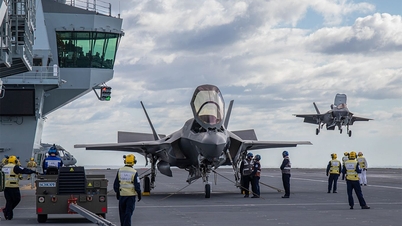
With a design similar to amphibious assault ships, such as the US America and Wasp classes, featuring a wide deck that can be used to deploy fighter jets, the Izumo-class ships, upon their launch in 2013, were modestly referred to by Japan as helicopter destroyers. The Japan Maritime Self-Defense Force (JMSDF) owns two Izumo-class ships: JS Izumo (DDH-183) and JS Kaga (DDH-184). By 2018, amidst significant developments in the Indo-Pacific region, Japan revealed plans to upgrade the two Izumo-class ships to accommodate F-35B fighter jets. In 2021, the US F-35B fighter jet successfully test-landed on the JS Izumo.
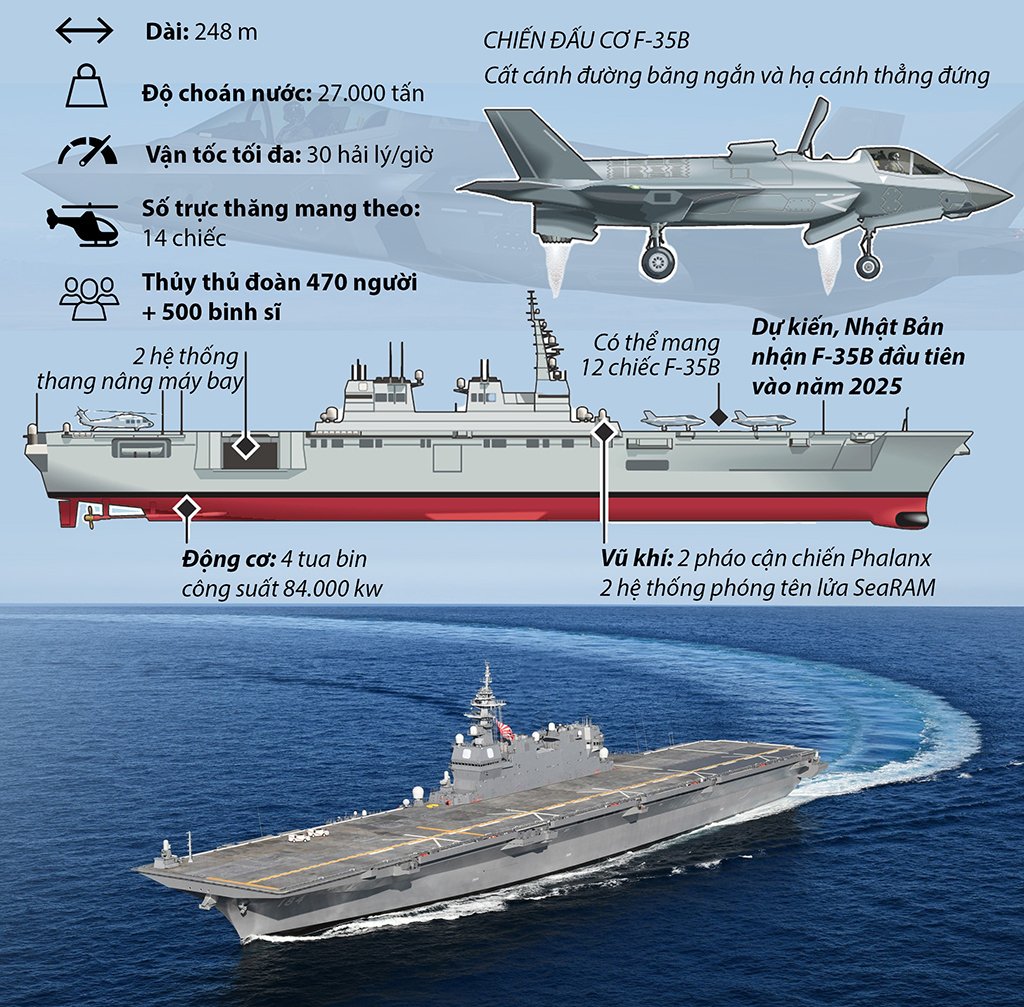
The JS Kaga during a sea voyage, and brief information about the Izumo-class ship after completing its upgrade.
Photo: JMSDF - Graphics: Hoang Dinh
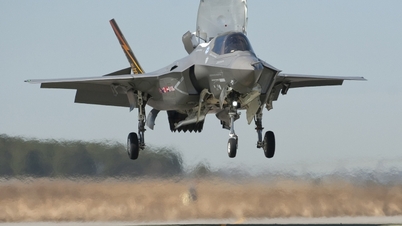
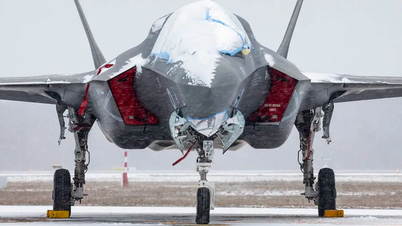
Part of the F-35 family, the F-35B is a version capable of short runway takeoffs and vertical landings, allowing it to operate from various classes of amphibious assault ships. Following recent announcements from the JMSDF, Japan is nearing completion of upgrades to both warships, enabling them to deploy as aircraft carriers.
However, according to Tokyo, the upgrade is only aimed at enhancing defensive capabilities; the F-35B fighter jets will not be regularly deployed on the two Izumo-class ships so that these warships do not become offensive vessels. To date, Japan has ordered 105 F-35A and 42 F-35B fighter jets, according to Defense News . Of these, the country has already commissioned some F-35A and is expected to begin receiving F-35B from 2025.
The acquisition of two warships capable of deploying advanced fighter jets like the F-35B has become a crucial turning point. This is because aircraft carriers provide the JMSDF with a comprehensive and modern fleet of warships.
Japan converts destroyer into aircraft carrier for F-35B.
Over the years, the Japan Maritime Self-Defense Force (JMSDF) has acquired many advanced warships, placing it among the most powerful in the world . For example, Japan's Kongo, Atago, and Maya-class destroyers are all equipped with the advanced Aegis missile defense system. The Maya and Atago-class destroyers, in particular, are equipped with 96 vertical missile launch tubes, making them some of the most modern destroyer classes in the world. In addition, Japan's Soryu and Taigei-class submarines are also among the top-of-the-line diesel-electric submarines. The JMSDF also possesses other outstanding weapons such as the highly modern Mogami-class frigates and two Hyuga-class ships capable of carrying dozens of aircraft of various types.
Increase military aid.
Besides strengthening its military capabilities, Japan is also promoting burden-sharing in security and collaborating with the US in various multilateral cooperation programs with regional partners such as the "Quad" (US-Japan-Australia-India), trilateral cooperation between the US-Japan-Philippines and the US-Japan-South Korea, and promoting technological cooperation under the AUKUS agreement (US-UK-Australia).
Furthermore, Japan is expanding its Official Security Assistance (OSA) program to several countries. In April 2023, in a statement regarding OSA as a key part of its new security strategy, Japan emphasized: "To deter unilateral attempts to change the status quo by force, to ensure peace and stability in the Indo-Pacific region, and to create a desirable security environment for Japan."
According to The Defense Post , as part of the OSA (Operating Support Agreement), Japan is finalizing the delivery of patrol vessels worth approximately $3.8 million to Bangladesh. Last year, during an official visit to the Philippines, Japanese Prime Minister Fumio Kishida also announced the OSA for the host country, specifically the provision of maritime surveillance radar.
In fiscal year 2023, Japan allocated 2 billion yen (nearly 14 million USD) to implement the Overseas Employment Agreement (OSA) for the Philippines, Bangladesh, Fiji, and Malaysia. It is projected that in fiscal year 2024, Japan will increase the OSA budget to 5 billion yen (approximately 34 million USD) for six countries, including three Southeast Asian nations.
Strengthening US-Japan military and defense industry cooperation.
The South China Morning Post reported yesterday, April 6th, that US Ambassador to Japan Rahm Emanuel said Washington is seeking to modernize the command structure of its security alliance with Tokyo to address emerging challenges in the Indo-Pacific. According to him, this upgrade is not only for "a contingency" but is also "built around security in the Indo-Pacific."
This information was released just ahead of a meeting between Japanese Prime Minister Fumio Kishida and US President Joe Biden, scheduled for April 10th in Washington D.C. The meeting is expected to lead to a series of important agreements on military cooperation and defense industry. During this time, the two leaders will also participate in a trilateral summit with Philippine President Ferdinand Marcos Jr.
According to Kyodo, US, Japanese, Philippine, and Australian military forces are expected to conduct joint exercises in the South China Sea today, April 7th.
Source link

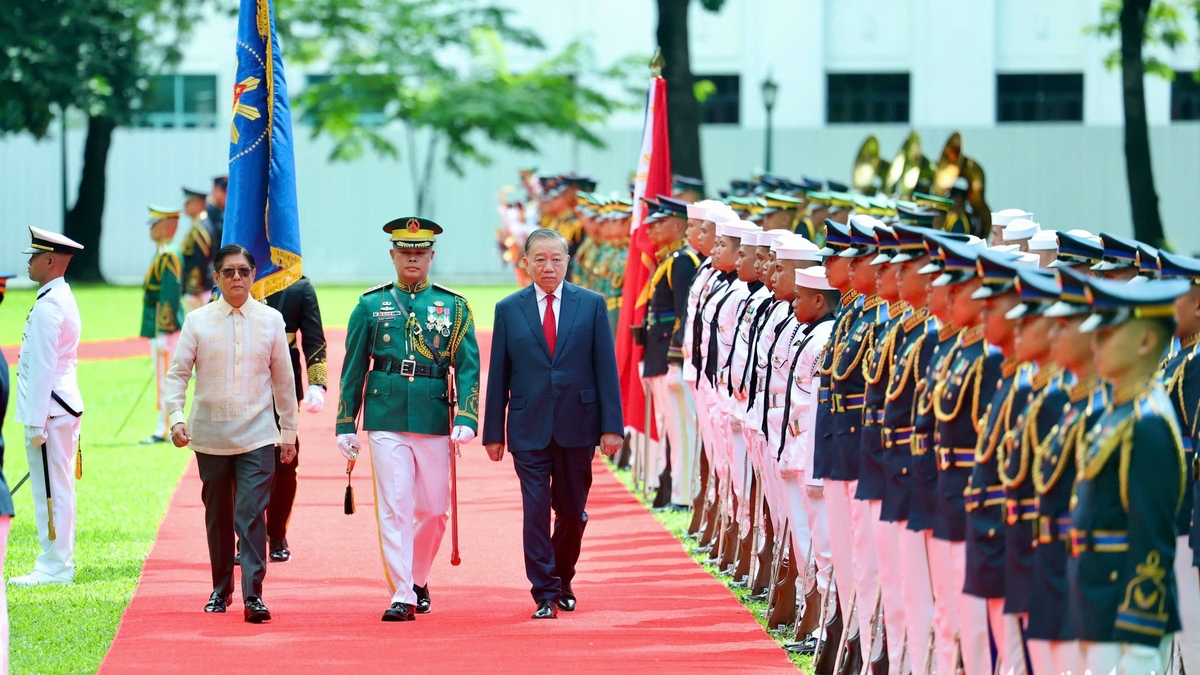
![[Photo] General Secretary and President To Lam and the President of the Philippines hold talks.](https://vphoto.vietnam.vn/thumb/1200x675/vietnam/resource/IMAGE/2026/06/01/1780283481955_vna-potal-tong-bi-thu-chu-tich-nuoc-to-lam-va-tong-thong-philippines-hoi-dam-8797519-1429-jpg.webp)



































































Comment (0)