

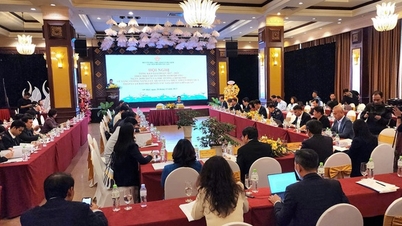
On the morning of November 20th, the National Assembly discussed the results of monitoring the resolution of voter petitions submitted to the 5th session of the 15th National Assembly. Representative Nguyen Huu Thong (from Binh Thuan province) stated that during the COVID-19 outbreak, due to the high number of cases, hospitals faced many difficulties in implementing procurement regulations due to social distancing measures.
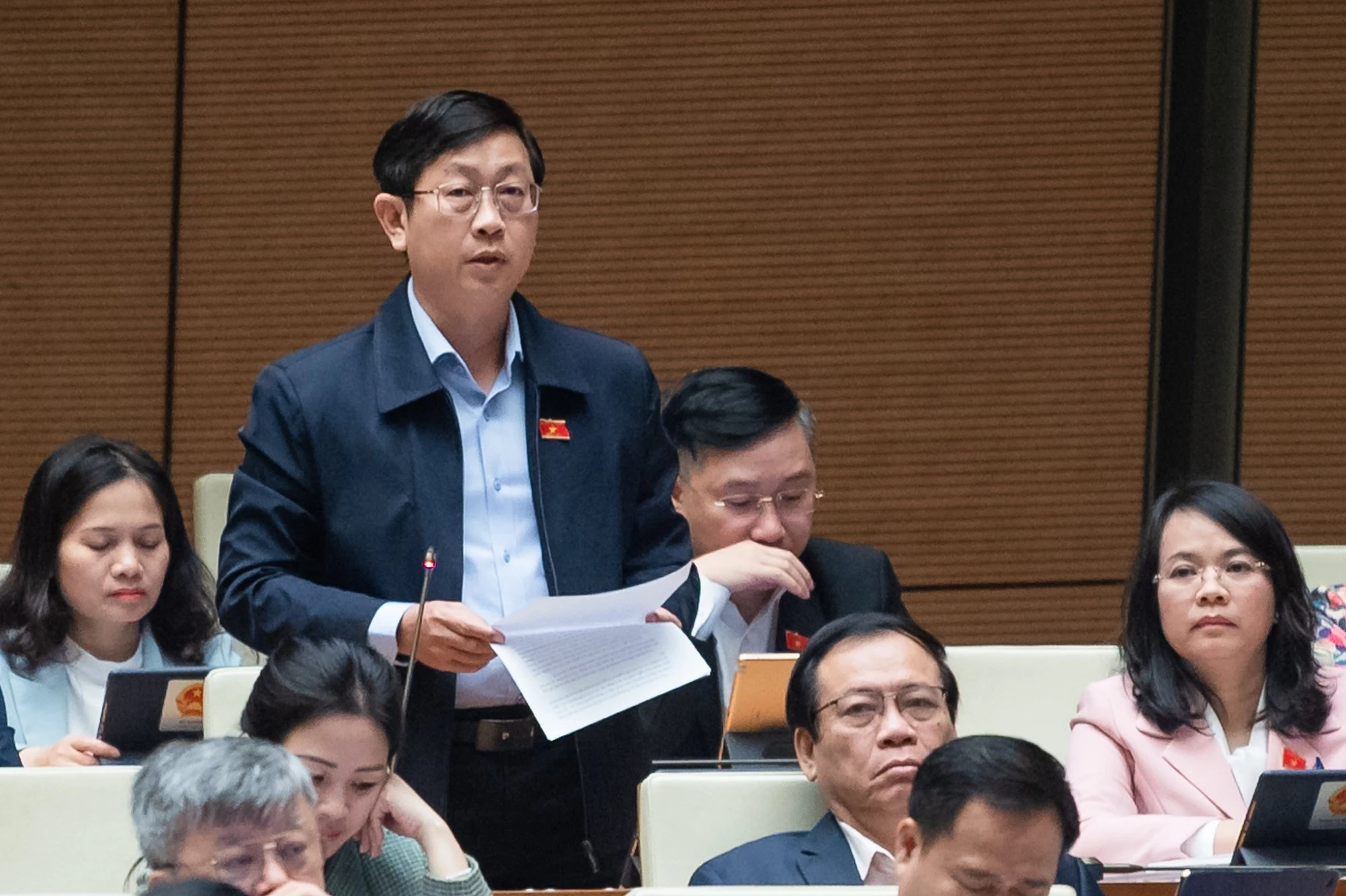
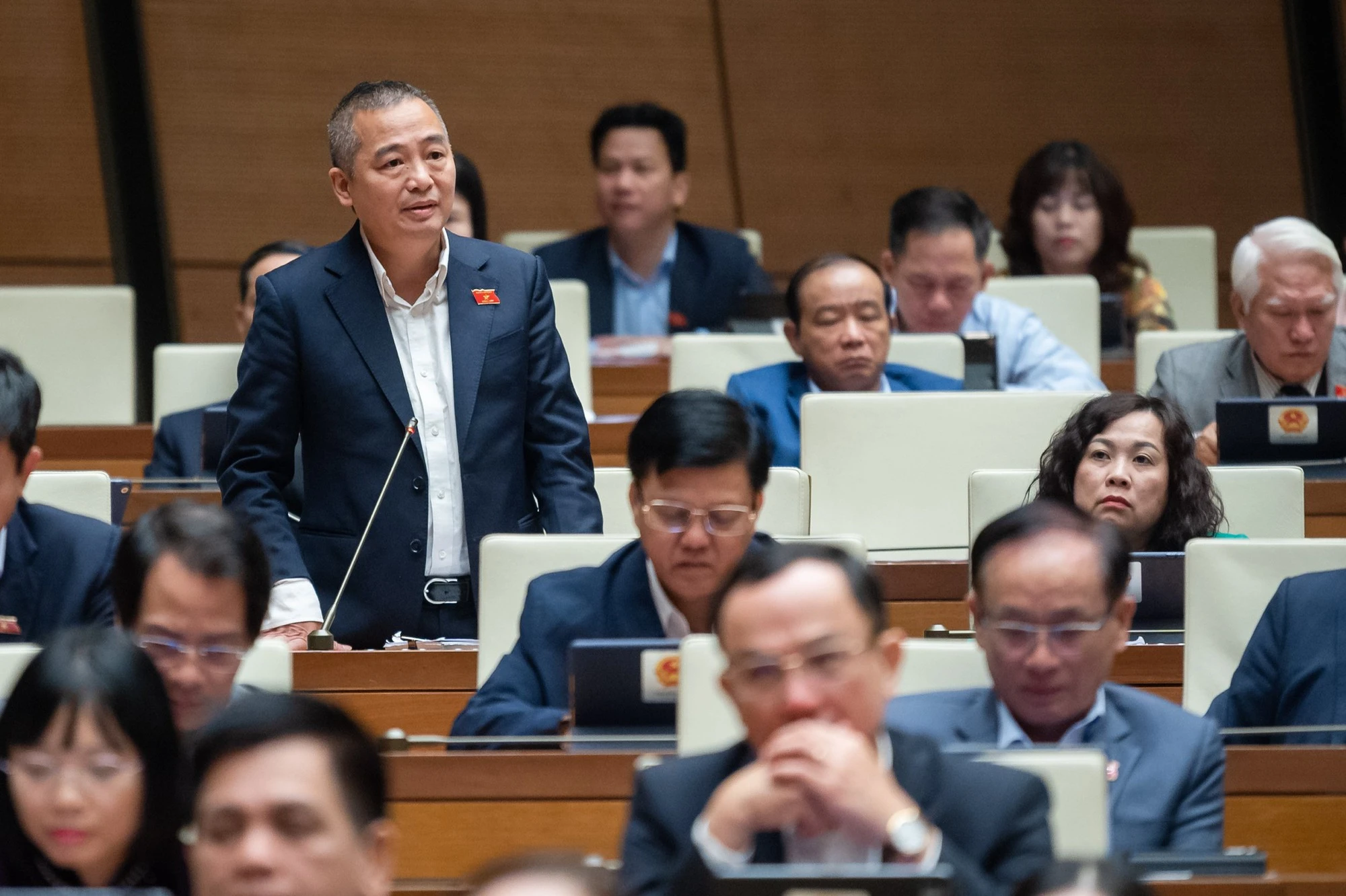
Delegates Nguyen Huu Thong and Nguyen Lan Hieu expressed concern that hospitals might face legal action for delayed payment of outstanding debts related to COVID-19 prevention and control due to the lack of guidelines.
Medical units have had to "borrow" medical supplies and disinfectants from private suppliers and businesses. However, payments have not yet been made due to procedural obstacles. Voters have petitioned the authorities to provide guidance on debt repayment for units involved in the purchase and borrowing of medical equipment, supplies, and biological chemicals. In Binh Thuan province alone, the current debt exceeds 91 billion VND.
According to him, although the National Assembly has issued Resolution No. 99 on this thematic supervision to resolve difficulties and obstacles, the Government and the Ministry of Health have yet to issue guiding documents for its implementation.
"Local healthcare facilities are facing many difficulties and obstacles in repaying debts, 'creditors are waiting anxiously, while debtors are waiting anxiously for guidance'," Representative Thong stated, and requested the Government and the Ministry of Health to soon find a solution to this problem.
During the subsequent debate, delegate Nguyen Lan Hieu (from Binh Dinh province) stated that this is a prominent issue not only in Binh Thuan province but also in the vast majority of provinces and cities experiencing pandemic outbreaks. This situation affects not only medical supplies and medicines but also meals, laundry, oxygen, compressed air, etc.
Representative Nguyen Huu Thong proposed that the Ministry of Health issue guidelines to resolve the issue, but Representative Lan Hieu argued that "that alone is not enough." According to him, the Government can only set out principles and direct localities to conduct reviews themselves, but always with the phrase "implement in accordance with the law," thus "everything will remain stagnant."
The Director of Hanoi Medical University Hospital also cited the reality that the hospital had "accumulated debts for too long with no way to pay them, exceeding the fiscal year, and even facing legal action, with the hospital certain to lose because it used other people's equipment and supplies." Therefore, the hospital had to pay the principal along with bank interest.
Representative Nguyen Lan Hieu also suggested that the Ministry of Health issue detailed guidelines on specific items and their use in epidemic control. Local authorities need to provide strong support to the health sector through resolutions of the People's Council, resolving outstanding issues after the pandemic so that the health sector can confidently carry out its mission of caring for the people's health.
Patients have to go through a lot of trouble getting referral letters.
Speaking during the discussion, delegate Nguyen Anh Tri (Hanoi) stated that voters have expressed many concerns about the inconvenience, time-consuming, and tiring process of patients having to obtain referral letters when going for medical examinations.
Meanwhile, with advancements in information technology, the sharing of test results, functional examinations, and diagnostic imaging has become quite smooth. With over 93% of the Vietnamese population covered by health insurance, the additional barrier of requiring referral letters should definitely be abolished.
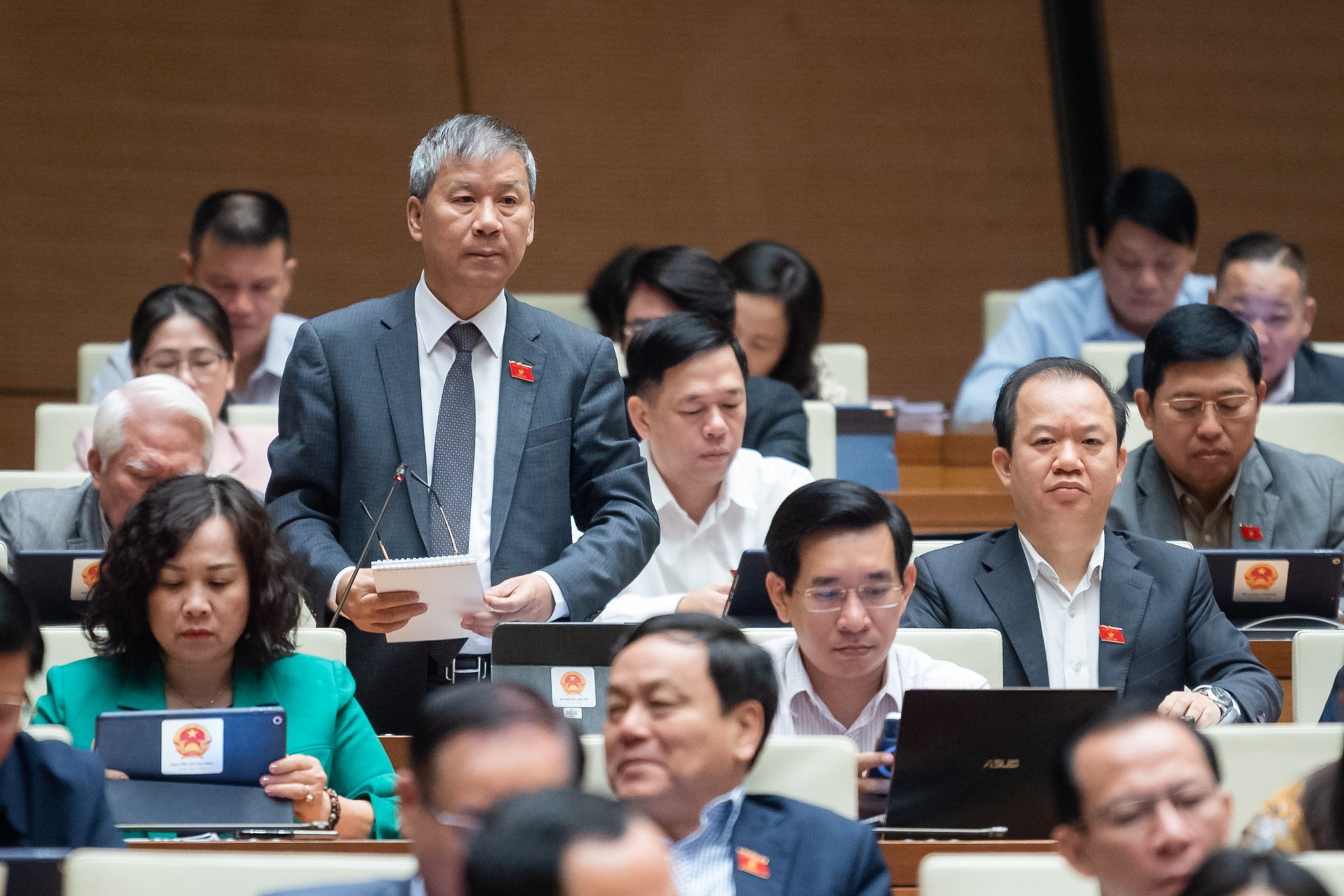
Representative Nguyen Anh Tri (Hanoi)
Therefore, he suggested accelerating the implementation of the referral system, making it more substantive, and in the upcoming revision of the Health Insurance Law, ensuring that people with health insurance can receive medical treatment wherever they want, taking into account their medical condition, quality of examination and treatment, travel time, and care conditions.
Regarding the total payment amount or spending limit of the health insurance fund for medical examination and treatment facilities over a one-year period, this has been adjusted by Government Decree 75/2023. Accordingly, health insurance medical examination and treatment services will be reimbursed based on actual needs; the medical facility will only reimburse for the services, drugs, chemicals, and supplies provided.
While acknowledging that the issuance of this decree has put an end to the long-standing inconveniences in medical examination and treatment, Representative Tri also expressed his desire to continue monitoring and promoting the effective implementation of the decree's contents, ensuring it does not become corrupted.
Source link
![[Photo] Prime Minister Pham Minh Chinh presides over a meeting on private sector economic development.](/_next/image?url=https%3A%2F%2Fvphoto.vietnam.vn%2Fthumb%2F1200x675%2Fvietnam%2Fresource%2FIMAGE%2F2025%2F12%2F20%2F1766237501876_thiet-ke-chua-co-ten-40-png.webp&w=3840&q=75)



















































































Comment (0)