

 |
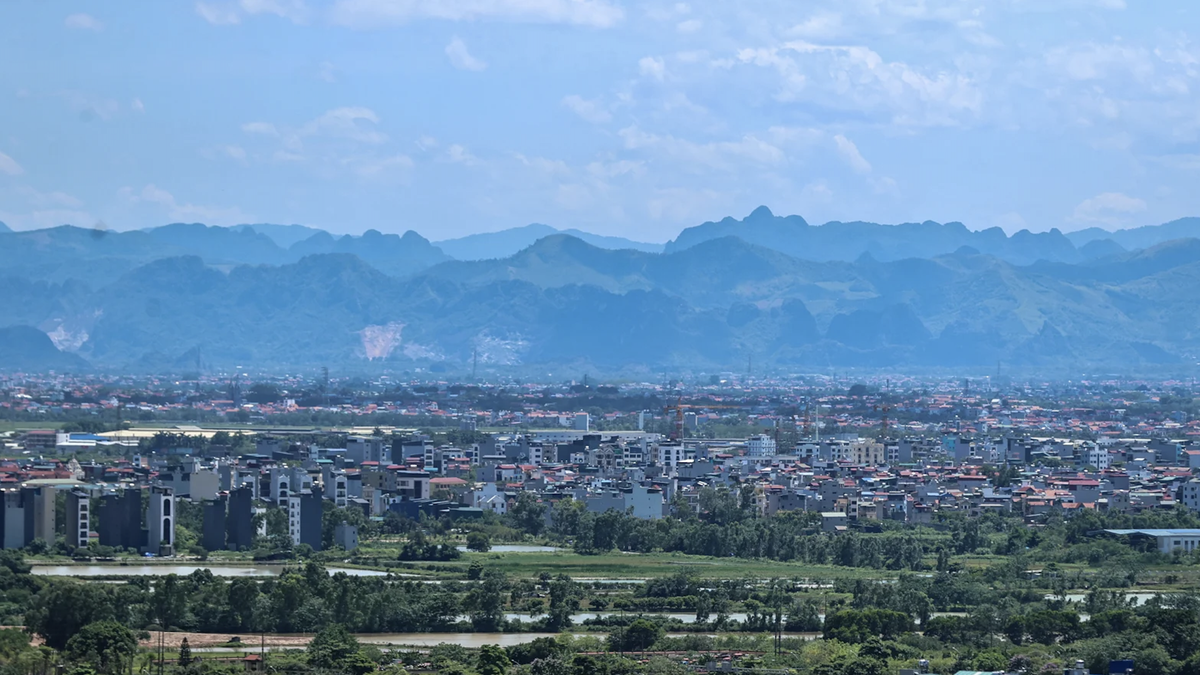
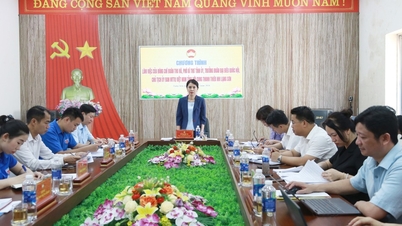
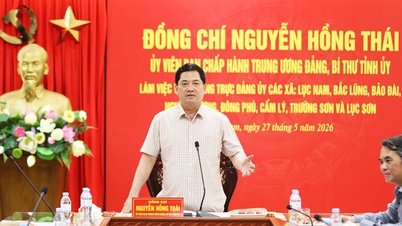
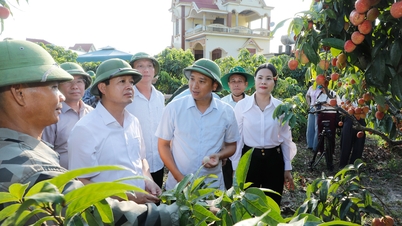
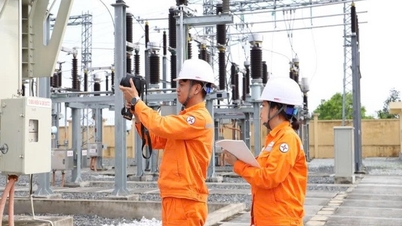
Illustrative image. |
On May 26th, the Government issued Decree 185/2026 on the organization and operation of villages and residential areas, and the regime and policies for part-time officials in villages and residential areas.
According to the new regulations, villages in Hanoi and Ho Chi Minh City must have a minimum of 500 households, and residential areas must have a minimum of 700 households. Compared to before, the size of a village has increased by 200 households, and a residential area by 250 households.
In the Northern Midlands and mountainous regions, villages must have at least 150 households, and residential areas 300 households; in the Red River Delta, villages 400 households, residential areas 550 households; and in the North Central region, the figures are 350 and 450 households respectively.
In the South Central coastal region and the Central Highlands, villages must have a minimum of 300 households, and residential areas 450 households. The Southeast region and the Mekong Delta apply the same minimum of 400 households for villages and 550 households for residential areas.
The new scale is higher than the previous regulations, which only required 100 to 350 households per village, and 150 to 450 households per residential area.
The government allows for a lower scale than the minimum requirement in certain specific areas, including mountainous regions, ethnic minority areas, border areas, islands, areas with scattered populations, difficult transportation, or areas subject to land clearance and resettlement.
Provincial People's Committees are tasked with providing specific guidance for special cases, ensuring that it is appropriate to local realities, maintains community stability, and meets national defense and security requirements.
The decree stipulates that the establishment, arrangement, reorganization, dissolution, naming, or renaming of villages and residential areas must be in accordance with natural conditions, population size, level of socio -economic development, and ensure the preservation of historical, cultural, customary, and traditional values of the locality.
The reorganization of villages and residential areas that do not meet the criteria must carefully consider geographical factors, ethnicity, religion, customs, population characteristics, and the aspirations of the people in order to create consensus.
The decree also adds standards for village heads and neighborhood group leaders. Those holding these positions must be permanent residents of the area, have prestige within the community, possess the ability to mobilize residents, and be capable of applying information technology appropriately to the job requirements. The term of office for village heads and neighborhood group leaders is 5 years.
Each village and residential area shall have no more than 3 part-time officials, including the Party Branch Secretary, the Village Head or Head of the Residential Area, and the Head of the Fatherland Front Committee.
According to regulations, villages include types such as hamlets, villages, and settlements; residential areas include residential groups, neighborhoods, blocks, clusters, and sub-districts. These are self-governing organizations of the community within a commune-level administrative unit.
According to the Ministry of Interior, by the end of 2021, the whole country had more than 90,000 villages and residential areas, of which about 21,200 villages had fewer than 150 households, mainly in the northern mountainous region. Meanwhile, many residential areas in Hanoi and Ho Chi Minh City have exceeded 1,000 households.
In mid-May, the Prime Minister requested that localities complete the merger of villages and residential areas before June 30th in order to reduce administrative pressure after the reorganization of administrative units and streamline the apparatus at the grassroots level.
Source: https://baobacninhtv.vn/nhieu-thon-to-dan-pho-se-phai-sap-nhap-postid446537.bbg

![[Photo] General Secretary and President To Lam and his wife begin their official visit to Thailand.](https://vphoto.vietnam.vn/thumb/1200x675/vietnam/resource/IMAGE/2026/05/27/1779881249412_anh-man-hinh-2026-05-27-luc-18-10-51.png)
![[Photo] The courage of new recruits of Brigade 144 on the training ground.](https://vphoto.vietnam.vn/thumb/1200x675/vietnam/resource/IMAGE/2026/05/27/1779881651341_anh-man-hinh-2026-05-27-luc-18-32-52.png)













































![[Photo] The courage of new recruits of Brigade 144 on the training ground.](https://vphoto.vietnam.vn/thumb/402x226/vietnam/resource/IMAGE/2026/05/27/1779881651341_anh-man-hinh-2026-05-27-luc-18-32-52.png)






















Comment (0)