

The book's sole content is a list of approximately 10,000 authors' names, a strong protest against artificial intelligence (AI) companies that have used their works without permission and without compensation. This case serves as a stern warning to the AI industry in general, and to AI business "empires" in particular, regarding the exploitation (if not outright copyright infringement) of the works of those dedicated to creative arts and literature.
 |
Illustration photo: viettelai.vn |
During his lifetime, the poet Lê Đạt (1929-2008) considered himself a "word laborer." He respected poets who toiled under the sun and rain, working tirelessly in the fields of paper, exchanging sweat for every grain of language. This illustrates that the creative labor of literature and words is arduous, difficult, and even miserable, not unlike that of farmers plowing and cultivating the fields: "Oh, whoever holds a bowl of rice/ Each fragrant grain contains a thousand bitter sorrows" (Folk poem).
Deeply devoted to words, often exhausting their energy to conceive and produce poetic and literary works that contribute to purifying the human soul and beautifying the spiritual life of society, the material life of these creators can sometimes be difficult and precarious. Even the renowned "king of love poetry," Xuan Dieu (1916-1985), famous in Vietnamese literature, once exclaimed: "The bitter hardships of life are showing their claws / Food and clothing are no joke for poets."
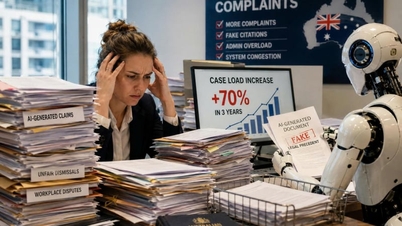
Generally speaking, most writers, if they only pursue their writing as a profession, find it difficult to make a living from royalties or the money earned from editing and publishing books. Income, salaries, and profits from writing are already insignificant, and now they are being threatened by the "bogeyman" of AI, which is not only intimidating but is actually showing signs of "invading" their creative rights. They cannot remain silent in the face of this harsh and unjust reality.
When AI algorithms are trained to "compose" literature, it is essentially an act of exploiting the already arduous and laborious work of writers, "stealing" their creative work. Meanwhile, the AI masters unjustly benefit from the intellect, sweat, and effort of writers. Furthermore, when these cold, emotionless AI algorithms "create" literature, they can produce works that have form but are not whole, leading to a superficial and distorted reception of the works by the public. Most dangerously, AI can "kill" the ideals, aspirations, motivations, and genuine artistic inspiration of writers. To put it ironically, as a writer would say, if AI were to "reign supreme" in the literary world, it would not only steal writers' livelihoods but also destroy their future creative careers.
Incidentally, it's worth adding that AI tools can also distort personality, especially honesty, purity, kindness, and integrity in writers if they misuse these algorithms. The recent case of a young Vietnamese poet having his literary award revoked is a direct consequence of the misuse of AI for translation and plagiarism of foreign poetry. This serves as a warning to all those involved in writing: if they want to maintain social respect, a bright future for their profession, and a promising literary career, they must thoroughly understand and appropriately interact with AI tools and never become its slaves.
Source: https://www.qdnd.vn/van-hoa/van-hoc-nghe-thuat/nhin-thang-noi-that-ai-len-ngoi-van-dan-se-lam-meo-mo-van-chuong-1038529
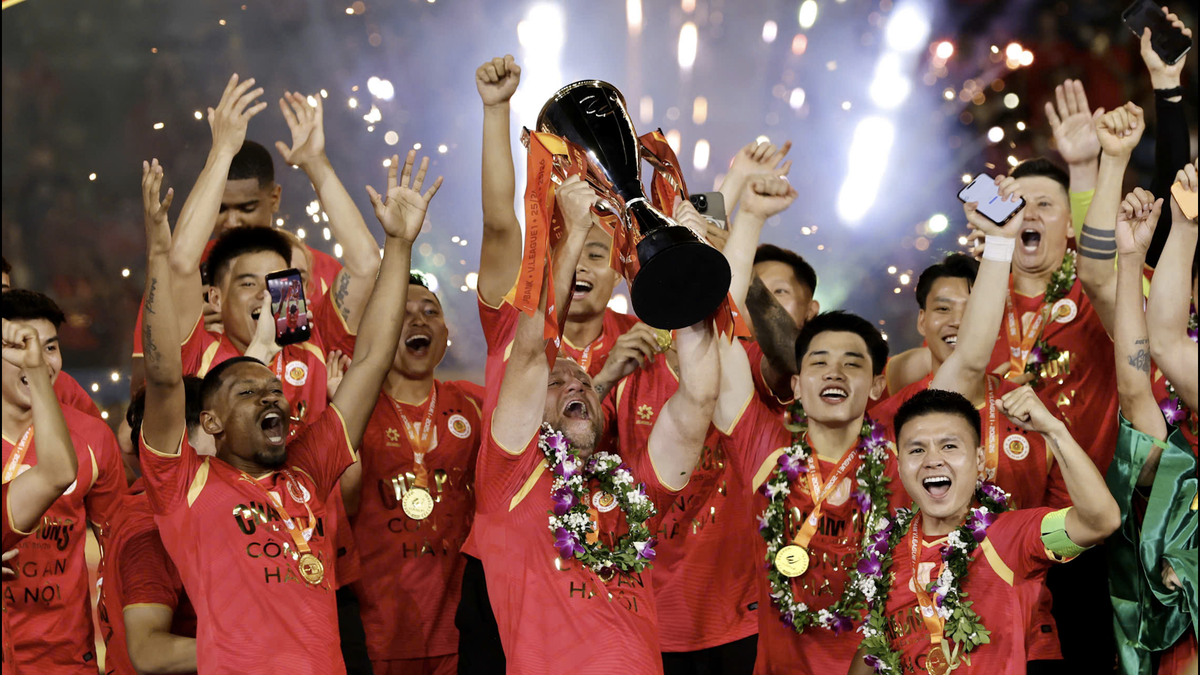
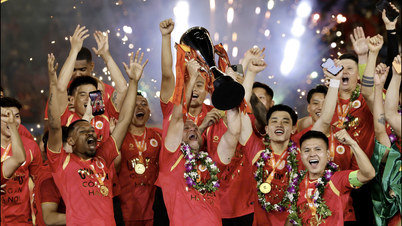
![[Image] Hanoi Police officially crowned champions of V-League 2025/2026](https://vphoto.vietnam.vn/thumb/1200x675/vietnam/resource/IMAGE/2026/05/31/1780244769054_ndo_br_039d561b692be875b13a-jpg.webp)



















![[Photo] The General Secretary, President and his wife begin their state visit to the Philippines.](https://vphoto.vietnam.vn/thumb/1200x675/vietnam/resource/IMAGE/2026/05/31/1780230559452_anh-man-hinh-2026-05-31-luc-19-28-11.png)



















































Comment (0)