

The recently reached ceasefire agreement in the Gaza Strip offers brighter hope not only for the Israel-Hamas conflict but also for many other threats in the Middle East. The agreement was achieved thanks to a combination of factors, including the reconciliation of interests among all parties and a team of experienced and dedicated negotiators.
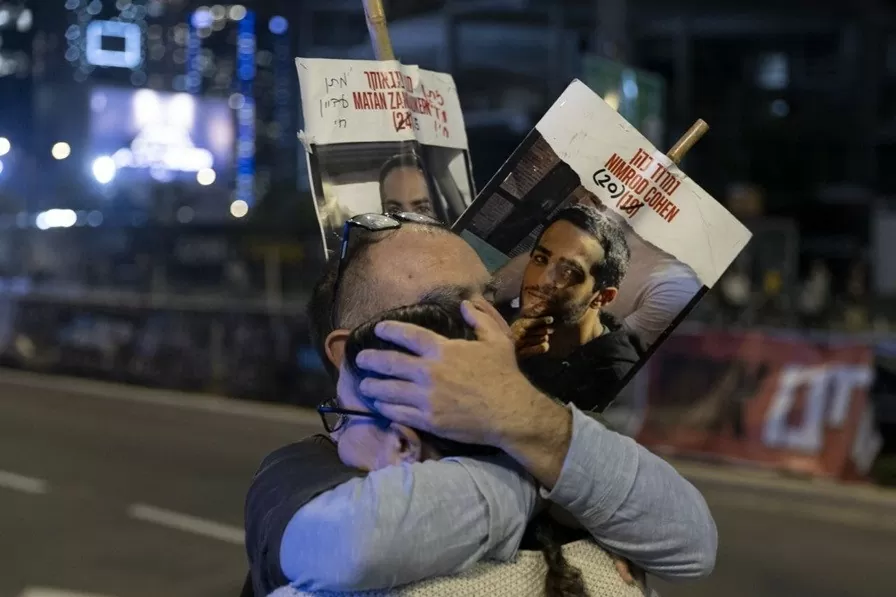 |
| Israelis celebrate after a ceasefire agreement was reached in the Gaza Strip. (Source: CNN) |
On January 15, Reuters reported that Israel and the Hamas Islamic movement had reached a ceasefire agreement in the Gaza Strip after 15 months of conflict. The agreement was reached after months of ongoing negotiations with efforts from Egypt and Qatar, along with the support of the United States.
Mediators said the ceasefire agreement would take effect on January 19, 2025, and would include provisions for the release of hostages held in Gaza.
Hope is shining brightly...
Palestinians poured into the streets of Gaza to celebrate news of the ceasefire agreement, amid severe shortages of food, water, shelter, and fuel.
In the city of Khan Younis in southern Gaza, crowds clogged the streets as they cheered, waved Palestinian flags, and danced.
"I'm so happy. I'm crying, but they are tears of joy," shared Ghada, a mother of five who was displaced by the conflict.
In Tel Aviv, Israel, the families and friends of the Israeli hostages also rejoiced at the news. They felt immense relief upon hearing that an agreement had been reached to bring their loved ones home.
According to the ceasefire agreement, the first phase will last for six weeks, during which Israeli forces will gradually withdraw from the Gaza Strip. Meanwhile, hostages held by Hamas in Gaza will be released in exchange for Palestinian prisoners held by Israel.
Joy knows no boundaries.
At a press conference in Doha on January 15, Qatari Prime Minister Sheikh Mohammed bin Abdulrahman Al Thani announced that negotiators were working with Israel and Hamas on steps to implement the agreement.
"This agreement will help halt the fighting in Gaza, increase much-needed humanitarian aid for Palestinian civilians, and allow hostages to be reunited with their families after more than 15 months of captivity," said U.S. President Joe Biden in Washington, D.C.
Israeli Prime Minister Benjamin Netanyahu spoke with US President Joe Biden and President-elect Donald Trump on January 15 to thank them for helping to reach an agreement to release Israeli hostages held in Gaza.
Speaking to reporters at United Nations headquarters, UN Secretary-General Antonio Guterres praised the Egyptian, Qatari, and American mediators for their efforts in brokering the ceasefire agreement.
He said: "This agreement is an important first step, but we must mobilize all efforts to advance larger goals, including maintaining the unity, contiguity and integrity of the occupied Palestinian territories."
Türkiye, Egypt, Saudi Arabia, South Africa, the European Union, and many other member states also welcomed the ceasefire agreement.
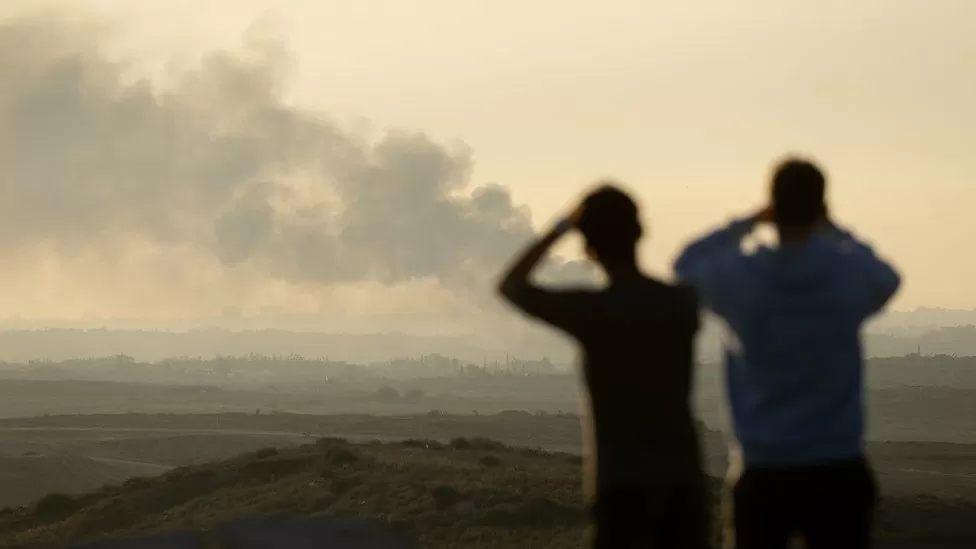 |
| Although the ceasefire in the Gaza Strip is of great significance, much work remains to be done. (Source: The Atlantic) |
Experience and responsibility
It can be affirmed that this achievement is thanks to the crucial contributions of key negotiators from the United States, Egypt, and Qatar, countries that have continuously strived to mediate and promote reconciliation between the parties.
David Barnea, Director of the Israeli intelligence agency Mossad, led the Israeli negotiating team. Working alongside him were Ronen Bar, head of the Shin Bet internal security agency, and top political and military advisors to Prime Minister Benjamin Netanyahu. This group worked closely together to develop strategies that would safeguard Israel's interests within the framework of the agreement.
Ronen Bar, who directly handled issues related to Palestinian security prisoners, participated in months-long dialogues. Following the Hamas attack on Israel on October 7, 2023, he frankly accepted responsibility for the failures to prevent the event and pledged to investigate the post-war causes.
From the American side, Brett McGurk—President Joe Biden's top Middle East adviser—played a central role in drafting and presenting reconciliation proposals between the parties. With more than two decades of experience in U.S. foreign policy, McGurk was a crucial bridge in facilitating negotiations between Israel and Hamas.
Meanwhile, Steve Witkoff, President-elect Donald Trump's special envoy to the Middle East, has also been actively involved in this process. He has met separately with Israeli Prime Minister Benjamin Netanyahu and Qatari Prime Minister Sheikh Mohammed bin Abdulrahman Al Thani to support parallel negotiation efforts between the Trump and Biden administrations.
Sheikh Mohammed bin Abdulrahman Al Thani, the Prime Minister and Foreign Minister of Qatar, played a key role in communicating with Hamas. As a crucial mediator, Mohammed led reconciliation efforts with support from regional leaders.
Hassan Rashad, the head of Egypt's intelligence agency, also took on the role of liaison with Hamas. Since taking office in October 2024, Rashad has continued to maintain Cairo as the central negotiating hub, where the parties meet to reach a consensus.
On the Hamas side, Khalil al-Hayya, the group's political chief, led the negotiations. Although he did not meet directly with US or Israeli officials, he communicated through intermediaries in Egypt and Qatar to present Hamas's position.
| Following the ceasefire agreement between Israel and Hamas in the Gaza Strip, President Joe Biden emphasized that the agreement was based on the framework he had laid out, while President-elect Donald Trump attributed it to his election victory and the involvement of one of his special envoys in the negotiations. According to Trump, the ceasefire could only have happened thanks to his historic victory in the November 2024 US presidential election. Meanwhile, from the White House, President Biden stated that "my diplomacy never stopped working to achieve this." |
There are still many "minefields" ahead.
If successful, the ceasefire would halt the fighting that has leveled much of Gaza and displaced most of the territory's 2.3 million inhabitants before the conflict.
In return, a ceasefire could ease tensions across the Middle East, where the Hamas-Israel conflict has fueled clashes in the West Bank, Lebanon, Syria, Yemen, and Iraq, and raised fears of a full-scale war between the region's sworn enemies, Israel and Iran.
However, the road ahead is complex, with many potential political "minefields." Families of Israeli hostages have expressed concerns that the agreement may not be fully implemented and that some hostages could be left behind in Gaza, according to Reuters .
Even if all goes smoothly, Palestinians, Arab states, and Israel will still need to agree on a vision for Gaza after the conflict, a major challenge involving security guarantees for Israel and billions of dollars in investment for reconstruction.
One unanswered question is who will govern Gaza after the conflict. Israel has rejected any involvement of Hamas, the force that has controlled Gaza since 2007 and has vowed to destroy Israel. But Israel also has almost equal opposition to the leadership of the Palestinian Authority.
Source: https://baoquocte.vn/thoa-thuan-ngung-ban-o-dai-gaza-nhin-thay-anh-sang-cuoi-duong-ham-cong-lon-thuoc-ve-ai-301095.html

![[Photo] General Secretary and President To Lam presides over the meeting to approve the draft report on the results of the second inspection by the Politburo of the Standing Committee of the Hanoi City Party Committee.](https://vphoto.vietnam.vn/thumb/1200x675/vietnam/resource/IMAGE/2026/05/26/1779789811432_a2-bnd-4430-9620-jpg.webp)





























































































Comment (0)