

 |
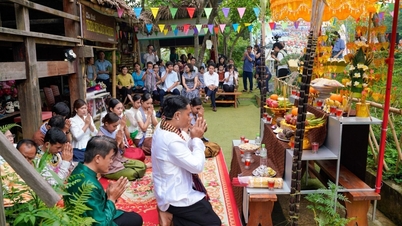
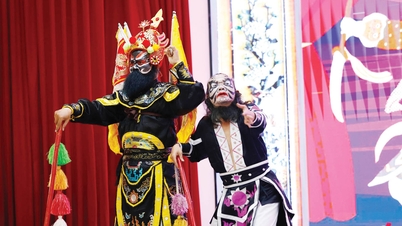
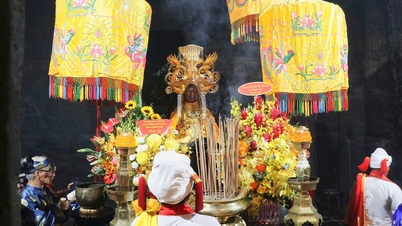
| Many traditional festivals and religious ceremonies are held solemnly, contributing to the preservation and dissemination of Hue's cultural identity. |
The legal framework needs improvement.
The Law on Religious Affairs, which came into effect in 2018, has created an important legal framework for religious activities to be conducted in an orderly manner. In Hue City, a city with many major religions and hundreds of religious establishments, the Law has proven effective in ensuring the right to religious practice for the people; at the same time, it has strengthened the effectiveness and efficiency of state management.
Over the years, religious activities in the area have been stable and in compliance with the law. Many traditional festivals and religious ceremonies have been organized solemnly, contributing to preserving and spreading Hue's cultural identity. Religious organizations and establishments have actively participated in social welfare and humanitarian work, working alongside the government in caring for the people's lives.
However, the practical implementation of the Law on Freedom of Information and Communication has revealed some shortcomings in its provisions. According to Mr. Nguyen Van Hung, Director of the Department of Justice, after 8 years of implementation, the Law on Freedom of Information and Communication has affirmed its important role but also needs to be reviewed and amended to meet new requirements. Practical implementation shows that some provisions have not kept pace with the development of social life, especially in the context of digital transformation and international integration. Amending the law is necessary to continue ensuring the freedom of information and communication for citizens. At the same time, it aims to improve the efficiency of state management in a more transparent and convenient manner.
The revision process needs to focus on simplifying administrative procedures, strengthening decentralization and delegation of power to local authorities; improving the coordination mechanism between functional agencies, and ensuring uniformity and consistency in the management of natural resource management activities.
Ensuring harmony
Hue is a locality with a rich religious life, in which Buddhism holds an important place in the cultural and spiritual life of the people. The amendment of the Law on Religion and the Faith not only has legal significance but also directly impacts daily religious activities.
Venerable Thich Hue Phuoc, Deputy Head of the Executive Board of the Vietnam Buddhist Association in Hue City, stated that the Law on Religious Activities has facilitated Buddhist activities in recent years, but some aspects still need further improvement. The law has significantly contributed to ensuring the legitimate right to religious practice for monks, nuns, and Buddhists. However, during implementation, some procedures still need further simplification, especially in registering activities and organizing religious events.
According to Venerable Thich Hue Phuoc, Hue is a heritage land with a system of temples and religious facilities of long-standing historical value. The management, restoration, and use of these facilities require a flexible mechanism that harmonizes heritage preservation with meeting the religious needs of the people.
In reality, many religious sites in Hue serve as both places of spiritual activity and cultural tourism destinations. This necessitates enhanced coordination between various sectors, especially culture and religion, to effectively manage and utilize heritage values in conjunction with sustainable development.
In the context of digital transformation, the dissemination of religious doctrines and the organization of religious activities online are becoming increasingly common. This is a new issue, requiring the amended law to have specific regulations that both guarantee freedom of belief and prevent the exploitation of religion to violate the law.
Based on the experience in Hue, it can be seen that amending the Law on Land Use Rights not only aims to overcome current shortcomings but also to build a modern legal framework that is in line with development trends.
According to experts, the revised law should focus on several key areas, including: reaffirming and guaranteeing the freedom of religion and belief for citizens; promoting administrative procedure reform; strengthening the application of information technology in management; improving regulations on property and land of religious establishments; and enhancing the effectiveness of coordination among relevant agencies.
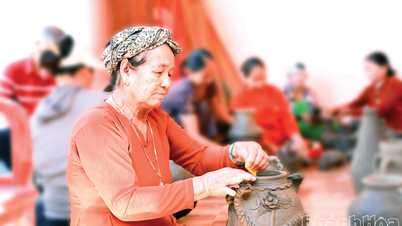
For Hue, perfecting the law also plays a crucial role in preserving and promoting the unique cultural values of this heritage land, where traditional crafts have been closely intertwined with community life for generations.
The Law on Traditional Culture, when amended and supplemented appropriately, will not only create more favorable conditions for traditional culture activities but also contribute to strengthening national unity, promoting traditional cultural values, and aiming for sustainable development in the new era.
Source: https://huengaynay.vn/chinh-polit-xa-hoi/theo-dong-thoi-su/nhin-tu-vung-dat-di-san-hue-164873.html




























































![[INFOGRAPHICS] Strengthening the strategy for ethnic affairs work until 2030, with a vision to 2045](https://vphoto.vietnam.vn/thumb/402x226/vietnam/resource/IMAGE/2026/05/23/1779540129141_1779539919.webp)















Comment (0)