

A group of students from Suranari University of Technology have created gemstones from agricultural waste, yielding a value 6,000 times higher than the original material.
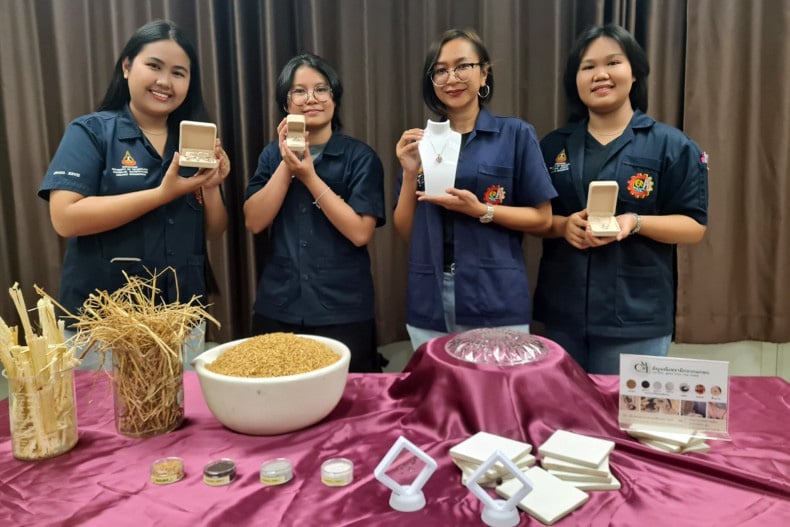
A group of Thai students and their research on transforming rice husks into gemstones - Photo: BANGKOK POST
Speaking to the Bangkok Post, the group of students, including Parnpailin Jaichuei, Chatcha Chuma, and Saowalak Boonpakdi, who are final-year students at the School of Ceramics Engineering, Suranari University of Technology (SUT), said their research stemmed from the reality that Thailand is an agricultural country with rice and sugarcane as its two main production sectors.
Every year, large agricultural production generates a significant amount of agricultural waste, such as straw, rice husks, and sugarcane bagasse. Much of this waste is not effectively recycled; it is often plowed into fertilizer or, worse, burned, causing air pollution with PM2.5 fine dust, seriously impacting health and the environment.
From there, the team decided to study the characteristics of these types of waste, applying their knowledge of ceramics techniques to transform them into valuable products.
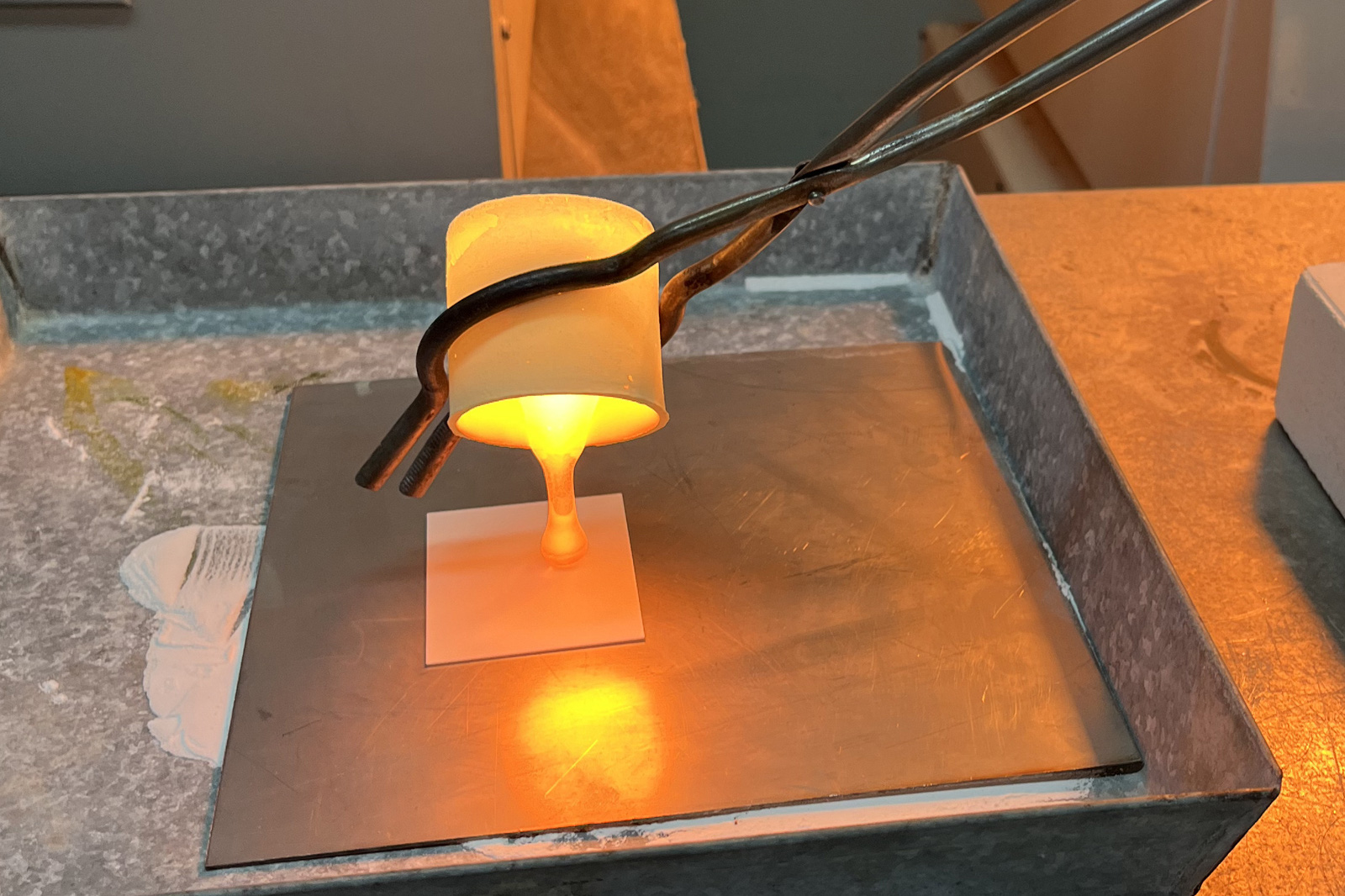
The team's processing steps - Photo: BANGKOK POST
Initial analysis revealed that waste materials like rice husks contain high levels of silica, a key component in natural gemstones. The student group leveraged this property to transform straw, rice husks, and sugarcane bagasse into ceramic gemstones.
The process begins by incinerating waste at temperatures of 300, 500, and 700 degrees Celsius to produce high-quality ash. The ash is then mixed with chemically and technically engineered additives to form a composite.
This mixture is melted at 1,300 degrees Celsius to form liquid glass, then cooled to solidify. Next, the solid is reheated at 550 degrees Celsius in a ceramic furnace to increase its strength and cooled slowly to enhance its stability.
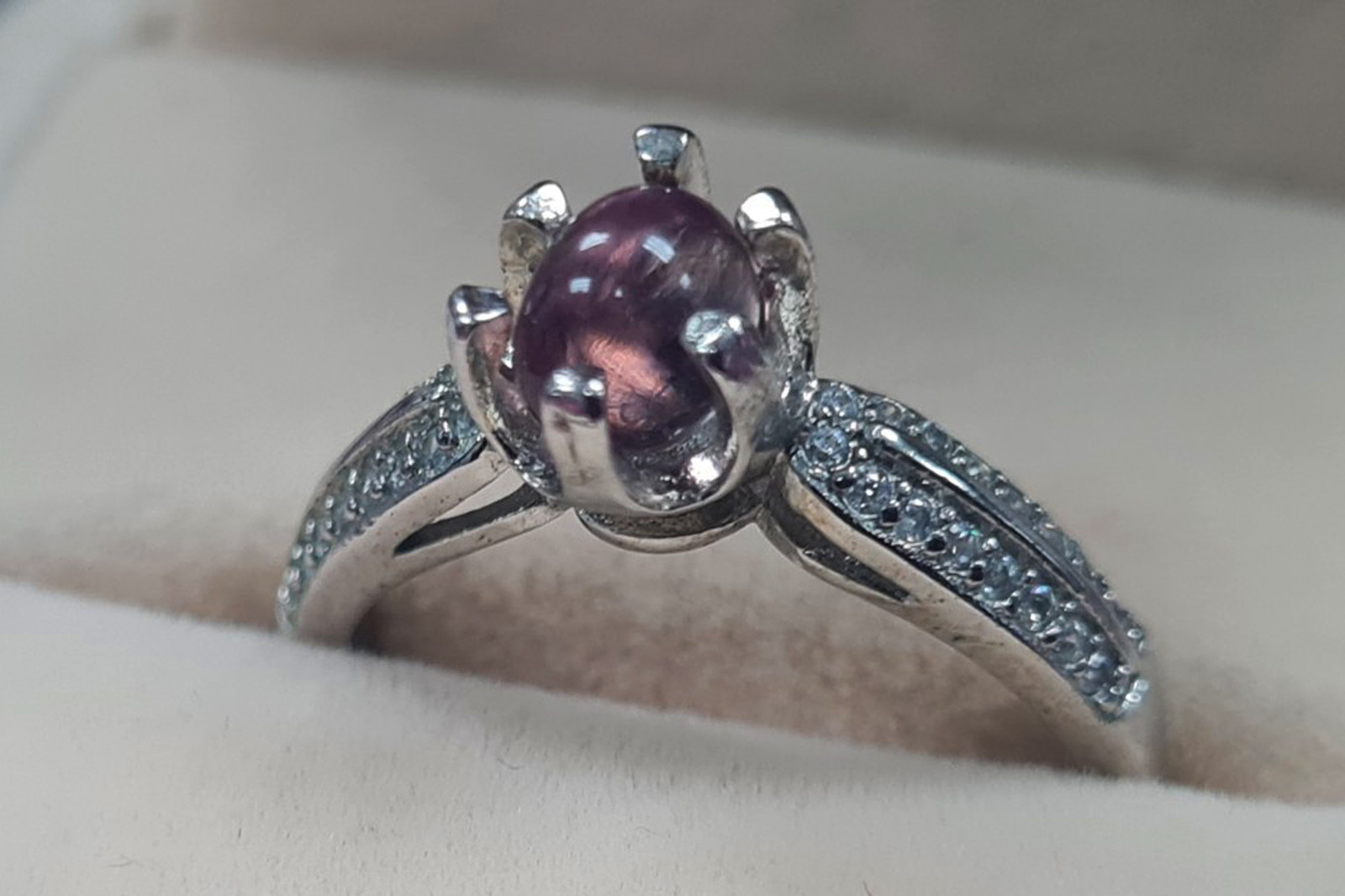
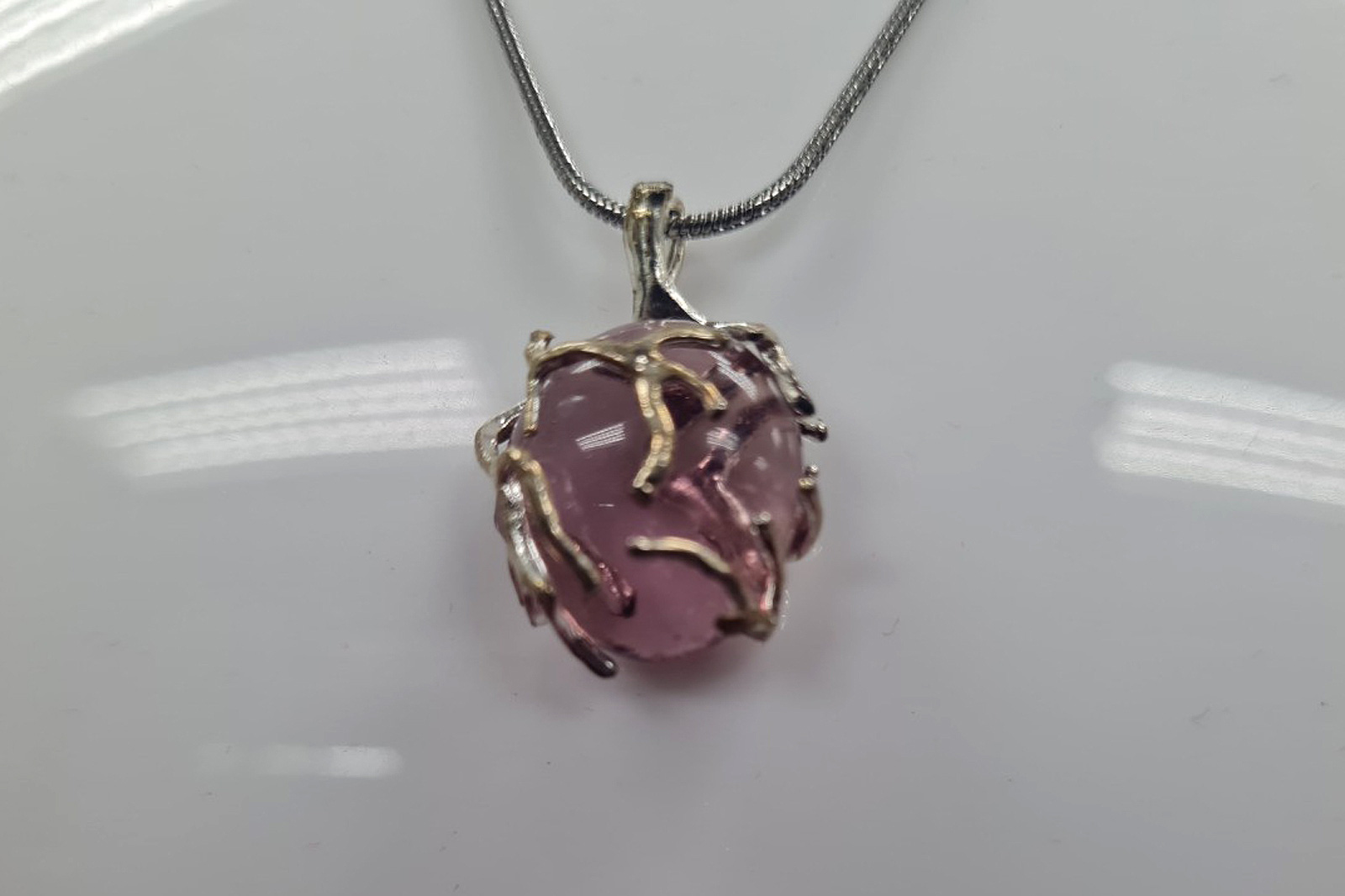
The finished product of the student group - Photo: BANGKOK POST
Saowalak, a female student, said that the color of the gemstone reflects the material from which it was made. The stone's size is similar to natural gemstones, and it is durable and suitable for industrial applications.
More importantly, this research helps increase the value of agricultural waste. With just 1kg of waste costing about 4 baht, the team created 20 gemstones, with a total value of up to 24,000 baht.
The team's work not only unlocks new potential in recycling agricultural waste but also contributes to reducing pollution, protecting the environment, and promoting sustainable values.
Source: https://tuoitre.vn/nhom-sinh-vien-bien-vo-trau-thanh-da-quy-20250103160548321.htm

















![[Photo] Reception to welcome General Secretary and President To Lam and his wife on their State visit to the Philippines](https://vphoto.vietnam.vn/thumb/1200x675/vietnam/resource/IMAGE/2026/06/01/1780295488620_vna-potal-chieu-dai-chao-mung-tong-bi-thu-chu-tich-nuoc-to-lam-va-phu-nhan-tham-cap-nha-nuoc-toi-philippines-8798060-7855-jpg.webp)









































Comment (0)