

Over the years, the province has mobilized various resources and integrated national target programs to invest in the development of essential infrastructure in rural and mountainous areas. These projects, once completed, have yielded practical results, contributing to making previously impoverished rural areas more prosperous.
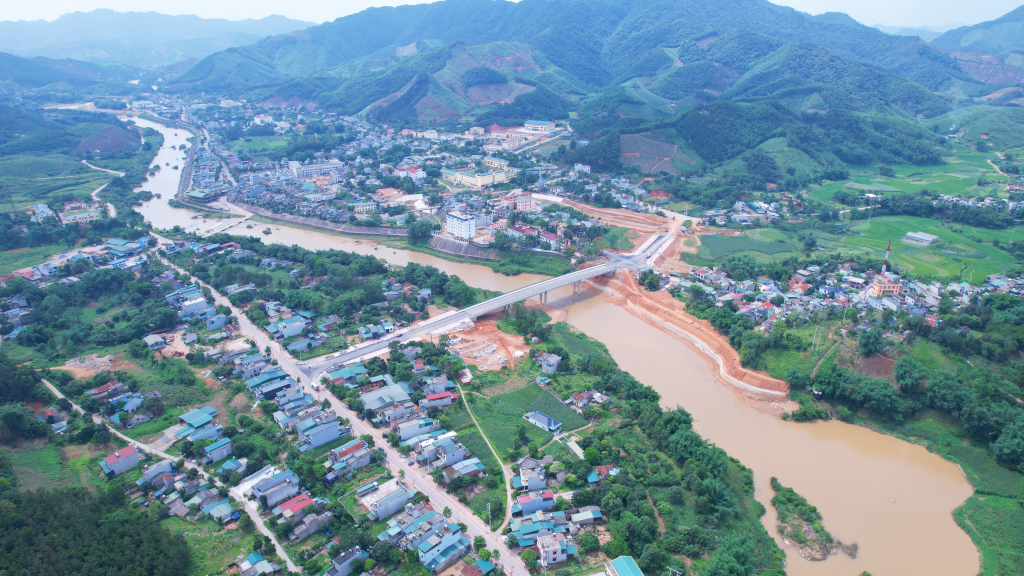
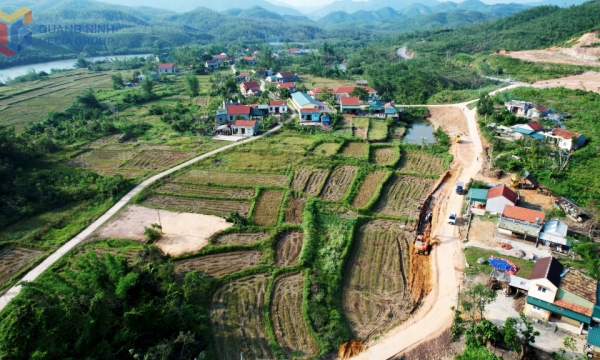
Amidst the jubilant atmosphere celebrating the 79th anniversary of the August Revolution and National Day on September 2nd, the people of Ba Chẽ district are even more delighted as the project to connect Provincial Road 330 with the center of Ba Chẽ town, combined with the embankment to prevent landslides along the main road and residential area of Ba Chẽ town, has been basically completed and put into use.
The project includes a 182.3m long, 16.5m wide bridge spanning the Ba Chẽ River, a 428.07m long approach road with 2 lanes; 5 sections of embankment to prevent landslides, totaling 1.8 km in length; a synchronized sidewalk and drainage system; and a total investment of nearly 249 billion VND from the local budget, with the District Investment and Construction Project Management Board as the investor.
Previously, during the rainy season, Mr. Le Xuan Mui's household (Zone 1, Ba Che town) and dozens of other households on both sides of the river had to live in anxiety and insecurity because of the rising floodwaters from upstream... "The completed project not only ensures safety but also opens up opportunities for the people of the town as well as the highland communes of the district, as transportation is more convenient, and people can confidently plant forests and trade goods...", Mr. Mui shared.
Rural and mountainous transportation infrastructure has always been a priority for investment by the province and local authorities, aiming to connect dynamic areas with disadvantaged regions within the province. Notable projects include: the renovation and upgrading of Provincial Road 341 (QL18C) Phase 2 from Mong Cai Border Gate Economic Zone to Bac Phong Sinh Border Gate Economic Zone; the renovation and upgrading of Provincial Road 342 connecting Ha Long City with Ba Che District and Lang Son Province; the renovation, upgrading, and expansion of National Highway 279, from Km0+00 to Km8+600; the renovation and upgrading of Provincial Road 333; and the renovation and upgrading of Provincial Road 345… Organizations, units, and localities have also proactively mobilized social resources to invest in and complete transportation infrastructure in communes, villages, and hamlets in ethnic minority and mountainous areas.
Implementing the New Rural Development program, in recent years many clean water projects have been invested in in the province's disadvantaged areas, fulfilling the aspirations of the people. Previously, people in Phong Du commune (Tien Yen district) had to fetch water from streams and springs in the forest through pipes and troughs, which was arduous, costly, and not hygienic; during the dry season, there was even no water. Since the water dam project in Khe San village (Phong Du commune) and the system of pipelines, reservoirs, and filtration tanks for domestic water supply in the commune were invested in (over 30 billion VND) and put into operation, the constant worry about clean water for nearly 1,000 households/4,500 people there has been resolved.
The province currently has 274 centralized domestic water supply systems; 99.9% of rural households have access to hygienic water, with over 70% of households using clean water. Quang Ninh is currently developing a rural clean water supply project for the period 2021-2025, and is undergoing the necessary assessment steps for approval.
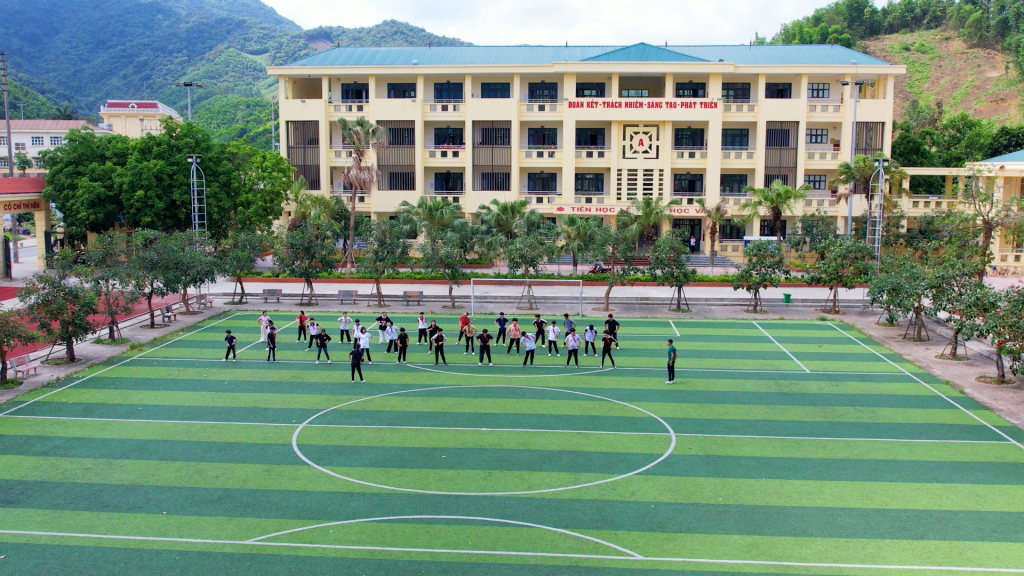
The province has issued numerous mechanisms and policies to invest in healthcare and education in disadvantaged, mountainous, border, island, and ethnic minority areas. This has gradually improved the quality of education and the lives of the people, contributing to reducing the gap between regions. Implementing the Project for the renovation, repair, upgrading, and completion of the province's education infrastructure for the period 2022-2025, in 2023, localities repaired and supplemented 166 construction projects and schools, with a total budget of nearly 1,400 billion VND. This included upgrading 5 schools in ethnic minority and mountainous areas, with a budget of over 48 billion VND.
According to Resolution No. 99/NQ-HĐND (dated May 31, 2023) of the Provincial People's Council, the goal is that by 2025, each district will have one public school meeting high-quality infrastructure standards at each level of general education, and each city/town will have one public high school meeting high-quality infrastructure standards; 22 schools (6 primary schools, 8 junior high schools, and 8 high schools) will be invested in and built according to high-quality standards. To date, the province has invested in and put into use 4 high schools, including 2 schools in ethnic minority and mountainous areas: Binh Lieu High School (Binh Lieu district) and Quang La Junior and Senior High School (Ha Long city).
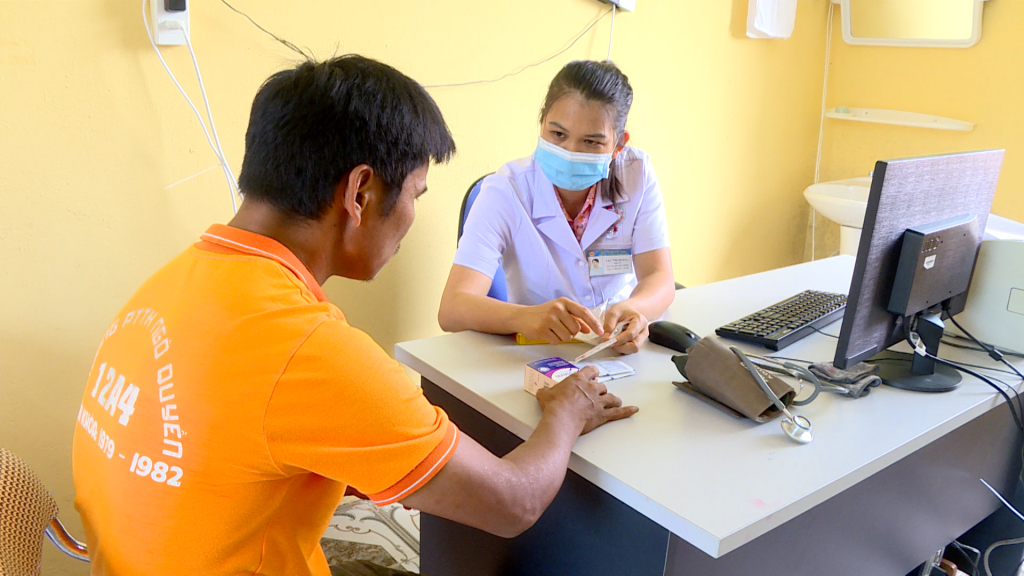
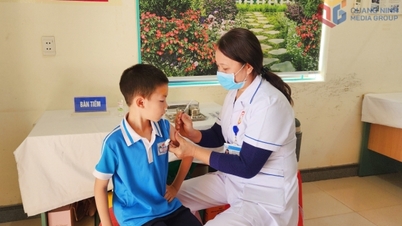
The Provincial People's Committee continues to direct the Department of Health to finalize the Project "Improving the capacity of the preventive and curative health care system; the quality of healthcare for the people in the period 2021-2025"; and the Project "Improving the capacity of commune, ward, and town health stations," especially in ethnic minority areas, mountainous regions, border areas, and islands, to strengthen primary healthcare for the people and the community. The provincial health sector has implemented solutions to consolidate and invest in improving infrastructure and equipment for preventive medicine, medical examination and treatment, and emergency care. In the period 2021-2023, localities invested 240 billion VND in repairing and maintaining facilities and infrastructure for grassroots health care, with special priority given to mountainous areas. 177 commune-level health stations and 16 district-level health units have basically met the standards.
To date, the face of ethnic minority and mountainous areas has seen many positive changes. Socio-economic infrastructure has been invested in, gradually meeting the needs of people's living, learning, labor, production, and livelihoods. Many effective models of support and investment in production development have been implemented and replicated, contributing to increased income and reduced poverty rates. Quang Ninh completed the National Target Program for Sustainable Poverty Reduction (2021-2025) three years ahead of schedule. Currently, the province no longer has any poor households according to the central government's poverty standard. The average annual income in rural areas in 2023 reached 73.43 million VND/person; in particular, communes in ethnic minority, border, and island areas reached 73 million VND/person.
Source


![[Photo] Closing Ceremony of the 15th Conference of the Central Committee of the 13th Party Congress](/_next/image?url=https%3A%2F%2Fvphoto.vietnam.vn%2Fthumb%2F1200x675%2Fvietnam%2Fresource%2FIMAGE%2F2025%2F12%2F23%2F1766462841764_a1-bnd-3731-1647-jpg.webp&w=3840&q=75)








































































Comment (0)