

According to health experts, infertility is no longer a rare problem. Work pressure, living environment, unhealthy lifestyles, late marriages, etc., are some of the reasons why the rate of couples having difficulty conceiving is on the rise. In light of this reality, Quang Ninh province has focused on and directed the health sector to gradually improve its capacity in the field of reproductive health care in general and assisted reproductive technology in particular.

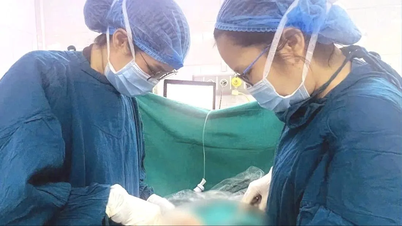
In 2014, Quang Ninh Obstetrics and Pediatrics Hospital established a Reproductive Support Department, implementing a full range of techniques from basic to advanced: IUI, IVF, ICSI, embryo-sperm-egg cryopreservation, preimplantation genetic screening (PGT), and techniques for extracting sperm from the epididymis or testes (PESA, MESA, TESE). These techniques not only improve the conception rate but also help screen for dangerous genetic diseases such as thalassemia (congenital hemolytic anemia).
Dr. Do Duy Long, Deputy Director of Quang Ninh Obstetrics and Pediatrics Hospital, said: Early examination is crucial in the treatment of infertility. Women under 35 should see a doctor after 12 months without natural conception; those over 35 should shorten this to 6 months due to decreased ovarian reserve; and women over 40 should see a doctor immediately due to a significant decline in fertility. Cases with irregular menstruation, gynecological diseases, or a history of ectopic pregnancy should be checked earlier. Men should also be examined if they have risk factors affecting sperm quality.
According to Dr. Long, depending on the examination results of both husband and wife, the doctor will consider the appropriate treatment. If the wife has a regular menstrual cycle and the husband's sperm count is normal, the doctor may only need to monitor the ovarian follicles to time ovulation. This is not highly effective but is less expensive. A more suitable option would be intrauterine insemination (IUI), which increases the pregnancy rate to about 15-20% per cycle. For more severe cases, IVF (in-vitro fertilization) is the best option, with a success rate of 45-50% in women under 35 years old. The effectiveness of IVF gradually decreases with age, especially after age 40, to only 10-20%. Therefore, delaying conception or delaying examination can make treatment more difficult, more expensive, and result in a lower success rate.

In recent times, the Quang Ninh health sector has also strengthened the application of science and technology and digital transformation in management and treatment. The development of electronic health records, patient information management, and treatment monitoring has helped improve the effectiveness of care, counseling, and support for patients in a comprehensive and continuous manner. Couples struggling with infertility not only receive medical treatment but also psychological counseling, lifestyle guidance, and appropriate nutrition advice, thereby increasing the success rate of assisted reproductive methods.
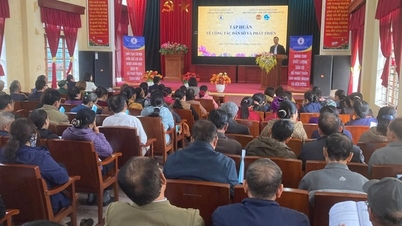
Simultaneously, communication activities and public awareness campaigns on reproductive health care and infertility prevention have been intensified. Numerous reproductive health counseling and screening programs have been organized, particularly targeting young people and those of reproductive age, contributing to early detection of risk factors, timely intervention, and limiting long-term consequences.
In addition to screening and early examination, doctors also recommend that those of reproductive age It is necessary to proactively take care of reproductive health, maintain a healthy lifestyle, limit alcohol and tobacco, control weight, have regular health check-ups, and not delay having children for too long…
Source: https://baoquangninh.vn/nhung-tien-bo-trong-ho-tro-sinh-san-3391067.html





































































































Comment (0)