

Eight years and 10 million images contributed by the Pokémon Go community.
According to information released by Niantic , the developer of Pokémon Go , they are developing a Large Geospatial Model (LGM), which applies image data and geographic coordinates from their mobile games, especially Pokémon Go and the Scaniverse app.
Unlike conventional AI models that use text, audio, or video data from the internet, LGM is built from over 10 million real-world location images contributed by users over the past eight years. On average, about 1 million new scans are uploaded by users weekly. Most of these scans come from the perspective of pedestrians, providing valuable data in areas inaccessible by car or street cameras.
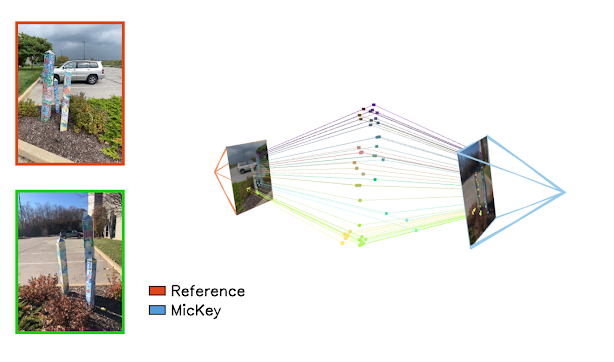
The image illustrates how Niantic uses data from different perspectives to build an accurate 3D spatial model.
PHOTO: NIANTIC
The LGM model development process
For five years, Niantic focused on building a Visual Positioning System (VPS). This system allows for the determination of location and direction from a single image, based on a 3D map created from the user's image data. From this, LGM emerged as a further step, processing physical space through images with geocoordinates, similar to how large language models (LLMs) process text and natural language.
Niantic revealed that they trained over 50 million neural networks, each representing a specific location or perspective. These neural networks compress thousands of images into numerical representations, totaling 150 trillion parameters. By combining these local networks, Niantic expects LGM to be able to identify any location in the world , even if the images are taken from previously unseen perspectives.
Niantic illustrates the power of LGM with an example: “If you’re standing behind a church and the model only recognizes the front gate, it won’t know where you are. But with LGM, we have data from thousands of churches worldwide . While the churches aren’t exactly alike, they share similar architectural features. LGM will rely on that knowledge to identify them.”
LGM is an evolution of the current Lightship VPS positioning system, which allows players to place virtual items in real-world spaces with centimeter-level accuracy. The Pokémon Playgrounds feature in Pokémon Go demonstrates this capability, allowing players to place Pokémon in real-world locations for others to find.
In addition to supporting augmented reality (AR) and mixed reality (MR) products, Niantic says LGM also opens up potential in many other fields such as robotics, automation, autonomous vehicles, logistics, and space planning.
However, the question remains whether Pokémon Go players are fully aware that the data they generate is being used to develop the AI. While this may be addressed in the game's terms of service, the details have only recently been made public. The incident could spark mixed reactions in the coming months, as players become increasingly concerned about their privacy and how their data is used.
Source: https://thanhnien.vn/niantic-dung-du-lieu-pokemon-go-de-phat-trien-mo-hinh-ai-dinh-vi-185241120235020012.htm


![[Photo] Prime Minister Pham Minh Chinh presides over a meeting on private sector economic development.](/_next/image?url=https%3A%2F%2Fvphoto.vietnam.vn%2Fthumb%2F1200x675%2Fvietnam%2Fresource%2FIMAGE%2F2025%2F12%2F20%2F1766237501876_thiet-ke-chua-co-ten-40-png.webp&w=3840&q=75)























































































Comment (0)