

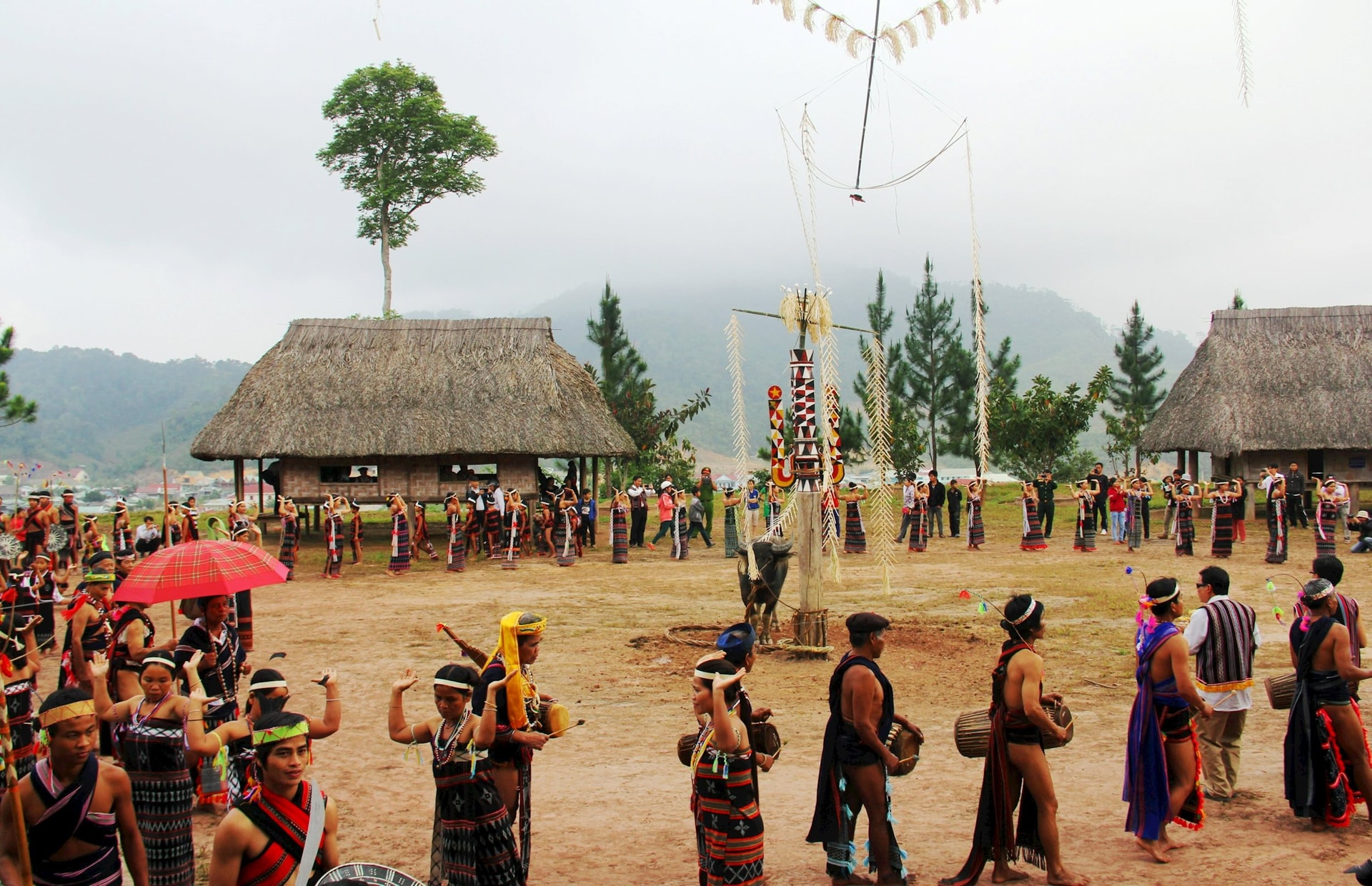
On that occasion, during the fortunate encounter of visiting and staying in the village deep within the ancient forest, many smiles were brought forth, along with gifts to "feed together," a fascinating custom that the Co Tu people still preserve.
A special gift for those far away.
After wandering through many villages, I understand better the feeling of "belonging" each time I sit down by the fireplace in a stilt house. There, there is always the familiar hospitality of the mountain people, the genuine kindness they offer without any conditions or expectations. It's simply a thoughtful giving, as if it were something they should do, and necessarily must do.
That time, Mrs. Nghế, the owner of the house at the beginning of Aur village, when she learned that we had come from far away, readily pointed to the fireplace. "You can stay at my house."
The fire in the kitchen was lit. Soon after, someone brought cassava. Another brought dried fish, then many more. Rice wine, corn, some squirrel meat, stream fish… smiles were ever-present on the faces of those who successively brought food to Ms. Nghế's house.
I sat down by the fire. A bowl of wine was brought over, and the festivities began. The whole village joined in. Everything unfolded so naturally that I felt as if I had been there for a very long time, as if I were being welcomed back to my own home. The most precious thing they offered me was their generosity and hospitality.
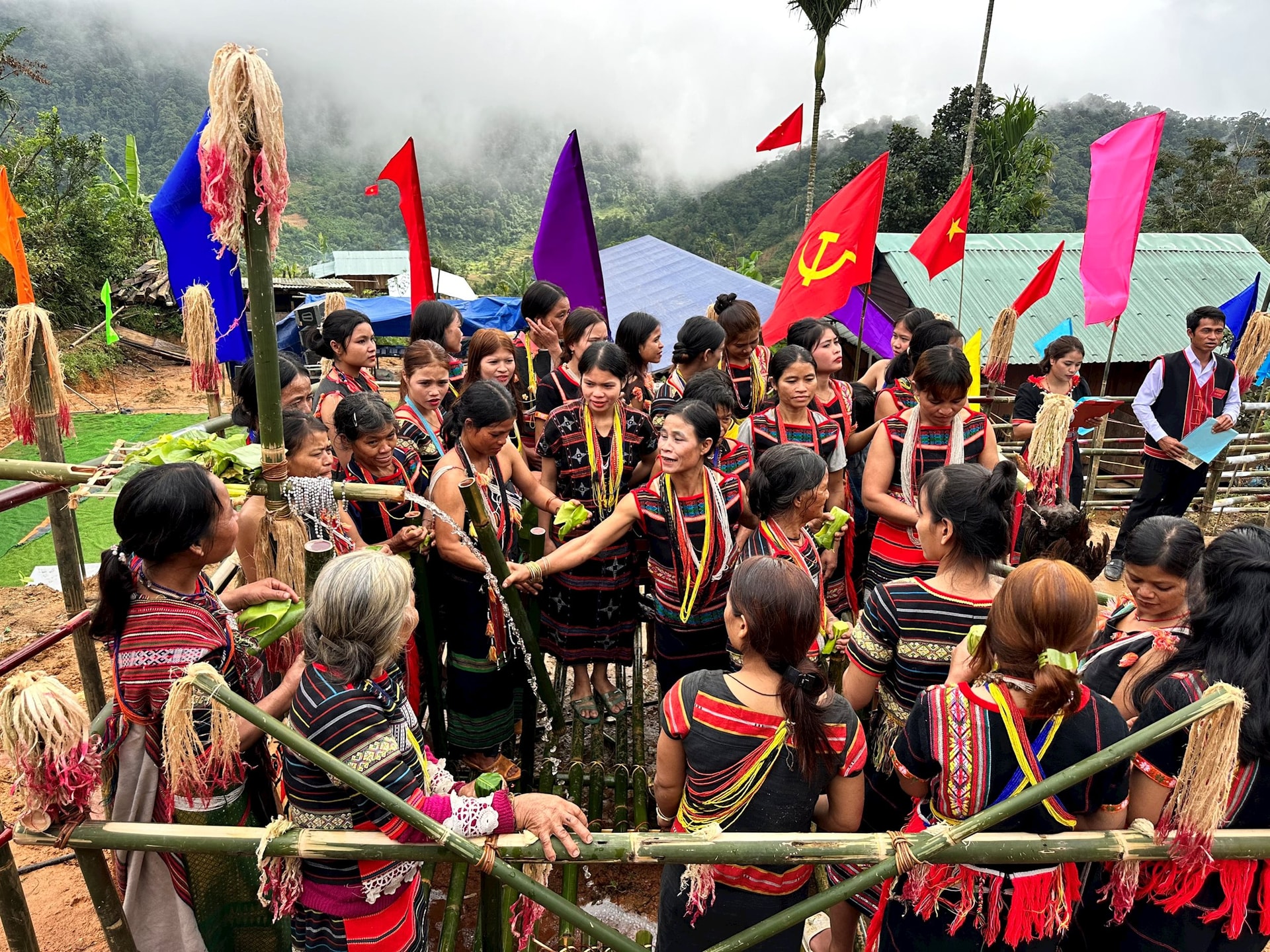
Head towards the highlands, immerse yourself in the village's festivities, surrounded by faces you were once strangers to, and you'll realize that for them, the line between familiar and unfamiliar is very thin. Just step into a house, sit by the fire, take a sip of rice wine, and you've become part of the conversation.
People can tell stories and entertain guests with whatever they have. Then, amidst the crowd, the sound of music and singing suddenly rings out. There will be no warning signs before these impromptu performances, but that's precisely the most wonderful feeling when guests are immersed in an atmosphere filled with warmth and camaraderie, something not easily found in a completely unfamiliar place.
Those sitting around you on that wonderful, intoxicating night in the village could all be artists. They play instruments, they sing, they talk... naturally, as if they were talking to themselves. They sing for the festivities, for the village, for the forest. Their performances are therefore always unique. This is also a privilege, a gateway for visitors to once touch the private lives of the people in the far-off green, beneath the forest canopy.

Sacred love for the forest
The art of the mountain people is not like what we usually think. They don't create works to preserve or leave a mark on life. For them, art is life itself; every moment of creation is a joy in the very space they are immersed in, and then they forget about it.
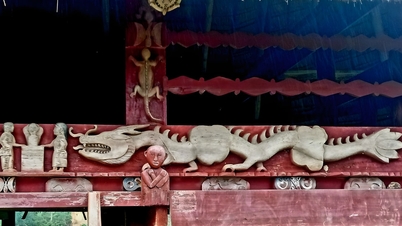
Wandering through the forests, one can easily come across tomb statues, sculpted in a moment of inspiration, then left abandoned to the sun and rain. Melodies sung at night, then fading into the mist and kitchen smoke.
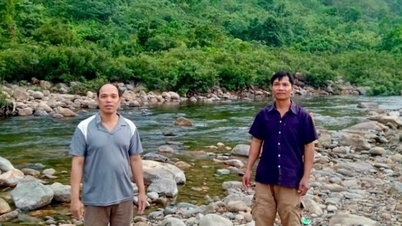
More than ten years ago, during a trekking trip with the locals into a forest in Dong Giang, I, along with many other tourists, followed the village elder Bnướch Bao deep into the forest.
He walked ahead, carrying a machete, with a satchel slung over his shoulder. When he reached the stream, he stopped to sharpen the machete and said a few words in the local language. The others immediately fanned out around him.
Some people gathered stones to build a dam, while others searched for pa'chác tree bark. They crushed the bark and threw it into the stream. After a short while, fish began to surface. The tourists in the group were delighted.
But for old Bao and the villagers, it was just a normal thing. Their ancestors had been connected to the forest, existing, practicing, and passing it on as a natural act. They repeated it in their generation's struggle for survival.
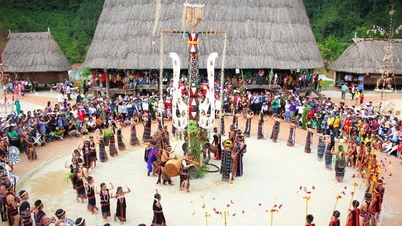
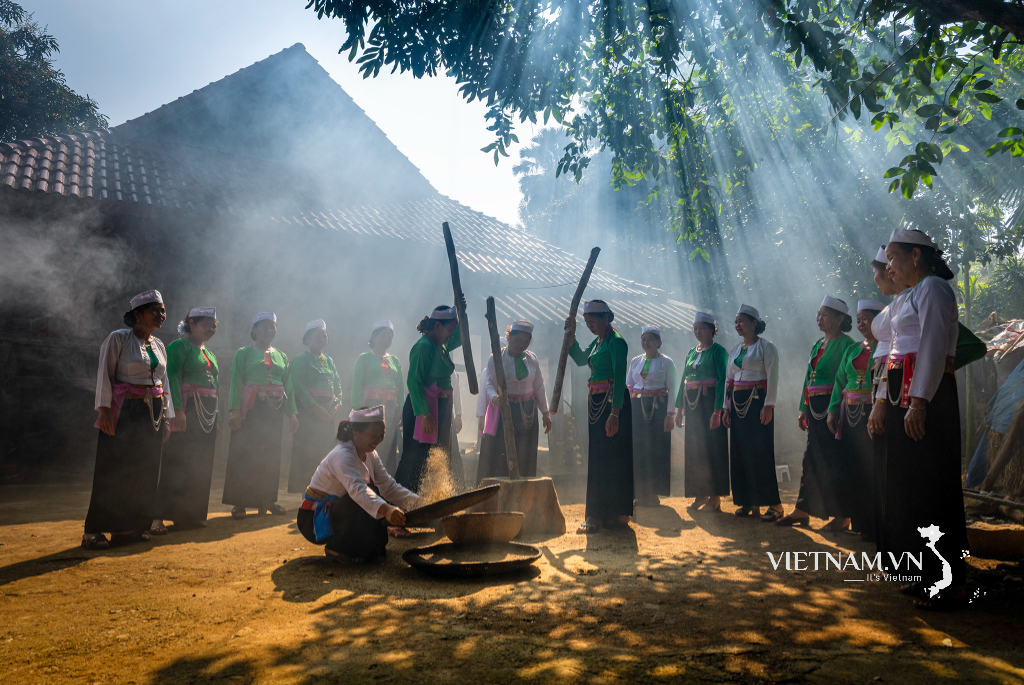
The same is true during village festivals. Somewhere in the forest, drums and gongs can suddenly rise up. Regardless of age or gender, everyone in the village has the right to rejoice, to get drunk, and to participate as a key element of the festival. At that time, the sound of the gongs and drums is not just music ; it's the villagers' way of communicating with the spirits.

But not everywhere is the cultural space, life, and identity of the mountain people preserved intact. Barefoot steps on the stage, with colored lights and an unfamiliar space outside the familiar village of the people. The sound of gongs, drums, and dances is different now.
And most importantly, there's the attitude of those performing the festival. They don't sing and dance for themselves; their gaze isn't directed towards the sky and each other, but towards the crowd of spectators. Vague losses will occur if culture is practiced for performance, instead of serving the life of the village and its people.
Every community has the right to embark on a new life. But more than anyone else, the community itself will know and choose the life it wants. Whether it's bustling or quiet, it's all possible, because in the mountains, there shouldn't be a single model for all the villages…
Source: https://baodanang.vn/o-phia-xa-xanh-3331670.html
![[Photo] General Secretary and President To Lam and his wife begin their official visit to Thailand.](https://vphoto.vietnam.vn/thumb/1200x675/vietnam/resource/IMAGE/2026/05/27/1779881249412_anh-man-hinh-2026-05-27-luc-18-10-51.png)
![[Photo] The courage of new recruits of Brigade 144 on the training ground.](https://vphoto.vietnam.vn/thumb/1200x675/vietnam/resource/IMAGE/2026/05/27/1779881651341_anh-man-hinh-2026-05-27-luc-18-32-52.png)








































































Comment (0)