

At a roadside stall, a few old men were sipping coffee while intently watching a chess piece being attacked, yet still managing to look up and nod in approval.
The funeral procession moved slowly, as it couldn't go any faster. On either side of the street, shops were obscured by crowds of people jostling and clamoring for the funeral, considered a strange event in a city that had just recovered from a severe illness following the pandemic. An old, humble restaurant owner, with no significant social standing or fame, yet so many people were attending his funeral. The mournful music blared, followed by a long, drawn-out procession of people, their clothes stained and dirty, causing a long traffic jam. As long as the old man's life.
Over thirty years ago, he left his village to start a new life in the city. He called it starting a new life, but back then he was quite uncertain. He'd spent his whole life as a farmer, confined to his village, living in a house made of bamboo and thatched walls, and barely having enough to eat. He heard people talking about the many opportunities for a better life in the city. After many sleepless nights of contemplation, he discussed it with his wife, and together they set off to find a new horizon, filled with fragile hopes.

Illustrative image
With no relatives nearby, the couple rented a makeshift, dilapidated room, not much different from the old man's house back in his hometown. Every day, the wife stayed home to look after their baby boy, not yet a year old, while the old man worked as a construction laborer, earning a few pennies, but no matter how frugal he was, they still struggled to make ends meet. Thus, in their cramped room of less than twenty square meters, arguments, the cries of adults, and the cries of children echoed every evening, creating a suffocating, oppressive atmosphere. At such times, the old man would often go out onto the porch and sit lost in thought, mainly to escape the constant sobbing that echoed in his chest. He couldn't stand the sound of women crying.
Around him, the men from the boarding house were leisurely sipping wine and chatting about everything under the sun after a tiring day of work. They invited him to join them, but he kept politely postponing it. He absolutely refused to touch a drop, because, in his opinion, one should only drink when happy; drinking when sad was a sign of weakness and cowardice. Eventually, they got used to it and left him alone, gazing into the distance.
One twilight afternoon, the old man dragged his weary body back home. The landlady handed him over to her son:
- She left her child with me this afternoon, saying she was going out for a little while and would be back, but I've been waiting forever.
The old man was stunned, and the little boy stared at his face, bewildered. That night was a long night that he would never forget.
In the days that followed, sometimes taking his child with him, sometimes leaving him with the landlady, the old man wandered the streets searching for the child's mother. He didn't know if the boy, out of affection or understanding his father's feelings, didn't demand her return, or perhaps it was the landlady's skillful care and gentle persuasion. He heard that, disappointed in love, having been betrayed by some man, she no longer dared to trust men. She lingered, her youth fading. This boarding house was left to her by her parents before their death, as a way to compensate for the shortcomings and anxieties of a daughter without a husband. Sometimes, seeing the children playing in the boarding house, her heart would ache. He hesitated, leaving the child with her for a few more days. He also made a trip back to his hometown, but there was no sign of her. Completely lost, he returned to the bustling city, where he couldn't find anyone. While busy, he overheard people whispering: "That afternoon, we saw her get into a car, then disappear into the distance." Before that, his wife had hinted that she'd heard at the market that women who go abroad for work earn a lot of money, and she'd send money back to her husband and son. In a few years, they'd be reunited in happiness, free from the hardships of poverty. He glared at her, but she didn't say another word. Could it be…?
He was known as a man abandoned by his wife. It was humiliating, but not because of the whispers, but because he felt ashamed that, as a man, he couldn't provide a decent meal and clothing for his wife and children. Night after night, watching his little boy huddled on a thin mat against the damp, moldy cement floor, he couldn't help but feel heartbroken. Sometimes, in his dreams, the child would cry out for his mother. The boy was too young. He couldn't bear the sound of a child crying.
Because of his young son, the old man couldn't go to work. The contractor, out of pity, assigned him the job of cooking for the workers. After all, for a countryman like him, cooking was second nature. And indeed, his childhood and the hardships of his village had given his dishes a rustic yet flavorful taste. The workers kept praising the food, and he got to be near his son, who chattered all day long, which eased the overwhelming guilt that constantly haunted him. Then, the other tenants in the surrounding rooms, all busy with work and with no time for cooking, also asked him for help, and so he ended up cooking for the whole neighborhood. With him in charge of the meals, the neighborhood became much livelier. The landlady would occasionally visit. Sometimes, seeing him busy, she would smile knowingly.
- Ugh, let me look after the boy. He's so dirty, you bathe him!
The boy jumped up with joy; it had been so long since a woman's gentle hands had rubbed his back. The old man looked on with concern. He was no different from the boy; it had been so long...
One day, during a regular meeting of the boarding house residents, someone suggested: "Why don't you open a restaurant, old man? The entire boarding house community could pool their money and lend it to you; it wouldn't be much." He scratched his head repeatedly. Seeing his hesitation, the landlady quickly chimed in:
- Yeah, that's a good idea. Without trade, there's no wealth. If things continue like this, when will this area ever prosper? I have the space, I'll lend it to you.
The whole boarding house erupted in applause, some even shouting loudly:
- Do you have anything else? Please give it to him as well.
Damn you all! That's all you're good at.
A few days later, a humble eatery opened. It contributed to the vibrant cityscape and carried a unique mission: first and foremost, it had to serve the poor, like the old man. He earned his living by working, paying for his son's school fees. Yet, somehow, through his frugality, after nearly ten years, he managed to save a considerable sum. Adding to that the money from selling his small garden in the countryside, he bought a makeshift one-story house nearby.
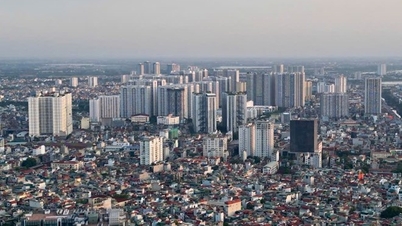
Time passed, and everything changed at a dizzying pace. After a period of urban renewal, the old man's neighborhood was now bustling with the honking of cars and the glittering shops that lit up the city at night. His small, one-story house remained, his small eatery still there, nestled among the towering buildings, looking rather pathetic. It was as dilapidated as his own life, if not detracting from the modern aesthetic of the city. Many real estate agents tried to entice him, many real estate companies went to great lengths to buy it at exorbitant prices, but all were met with his摇头 (shaking of the head) and a resolute look of refusal. His son, now successful and settled, would visit him, and seeing him alone, toiling day and night around his old, humble eatery, filled him with sorrow. Time and time again, the old man became accustomed to his son's whispered words:
- Dad, please sell this house. You're getting old and need to rest. Then come live with us so we can have a happy home, and it will be easier for your children and grandchildren to take care of you.
Each time, he would go out to the front yard and sit there deep in thought. If he sold it, where would people eat? For over a decade, it had remained a humble eatery, catering to ordinary people. His customers were diverse, mostly self-employed laborers. There were motorbike taxi drivers at the intersections, street vendors carrying their wares, lottery ticket sellers wandering the streets, and students with chronic financial difficulties… you name it. Every lunchtime, the place would be bustling with laughter and chatter. Stories from the countryside to the city were present during each simple meal, and he listened with delight, like a child listening to a fairy tale. For all these years, he hadn't dared take a single day off, even when the terrible disease afflicted him.
When whispering didn't work, the boy resorted to pleading:
- How about we rebuild the house for Dad, something more spacious and airy, because it's so uncomfortable like this.
He immediately dismissed the idea:
- Now that the house is so nice and spacious, who would dare come over for dinner anymore, my child?
I don't know what led him to that idea, but it seems that having experienced hardship, he had come to a very simple truth: poor people often feel inferior. Ultimately, he was still worried about people not having a place to eat. His meals were the cheapest in the city, and he even offered free iced tea. Those who had money could donate; those who didn't could just take their time, and he would meticulously record it in a notebook hanging by his tea table, implicitly a ledger of debts. Sometimes, he would overhear students needing money for tuition that their parents hadn't sent yet, or someone needing money to go home, or another with an elderly mother in the hospital. Without hesitation, he would straighten out a few coins, telling them to take them home and use them when they had the money. He never reminded them, and never demanded payment. The most important thing for him was hearing the lively sounds of low-income residents gathering from all directions, a joyful reunion. He never ships meals anywhere, no matter how many orders are placed.
But even that simple joy vanished when the Covid-19 pandemic struck. During those days of city mourning, with QR code scanning required everywhere to prevent the spread of the disease, the old man's shop dwindled in numbers. Most of his customers were low-income laborers; where would they get a smartphone to scan the code? He looked at his deserted shop, his heart heavy with despair.
The old man fell ill. Six months of medicine had no effect. He passed away one early morning during a light drizzle. On his bedside table, several notebooks lay open:
- The motorbike taxi driver, a family of six, lives in an old apartment complex.
- He's a construction worker, his eldest daughter is a third-year university student, and his son is a first-year university student.
- The lottery ticket seller's mother is in the hospital.
- He's a student, his parents are farmers, and he has two younger siblings...
A long list of countless people, their names unknown, their hometowns unknown, and without any numbers on it. All that was known was that they appeared among the raggedly dressed crowd behind the hearse...
Rules
Live beautifully with total prizes up to 448 million VND.
With the theme "Loving Heart, Warm Hands," the 3rd "Living Beautifully" contest is an attractive platform for young content creators. By contributing works in various formats such as articles, photos, and videos , with positive and emotional content and engaging, lively presentations suitable for the different platforms of Thanh Nien Newspaper, participants can create engaging content.
Submission period: April 21 - October 31, 2023. In addition to essays, reports, notes, and short stories, this year the competition has expanded to include photos and videos on YouTube.
The 3rd "Living Beautifully" contest organized by Thanh Nien Newspaper emphasizes community projects, charitable journeys, and good deeds by individuals, entrepreneurs, groups, companies, and businesses in society, especially targeting young people of Generation Z. Therefore, it has a separate competition category sponsored by ActionCOACH Vietnam. The presence of guests who own works of art, literature, and young artists beloved by young people also helps to spread the contest's theme widely and create empathy among young people.
Regarding entries: Authors can participate in the form of essays, reports, notes, or reflections on real people and events, and must include accompanying photos of the subjects. The entries should depict a person/group that has performed beautiful and practical actions to help individuals/communities, spreading heartwarming, humane stories and an optimistic, positive spirit. For short stories, the content can be based on real-life stories, characters, or events, or fictional. Entries must be written in Vietnamese (or English for foreigners, with translation handled by the organizers) and should not exceed 1,600 words (short stories should not exceed 2,500 words).
Regarding the prizes: The competition has a total prize value of nearly 450 million VND.
Specifically, in the category of feature articles, reports, and notes, there are: 1 first prize: worth 30,000,000 VND; 2 second prizes: each worth 15,000,000 VND; 3 third prizes: each worth 10,000,000 VND; and 5 consolation prizes: each worth 3,000,000 VND.
1 prize for the most popular article among readers (including views and likes on Thanh Niên Online): worth 5,000,000 VND.
For the short story category: Prizes for authors with short stories submitted: 1st prize: 30,000,000 VND; 2nd prize: 20,000,000 VND; 2 3rd prizes: 10,000,000 VND each; 4 consolation prizes: 5,000,000 VND each.
The organizers also awarded one prize of 10,000,000 VND to the author of an article about exemplary entrepreneurs, and one prize of 10,000,000 VND to the author of an article about an outstanding charitable project of a group/organization/business.
Specifically, the organizing committee will select 5 individuals to be honored, each receiving 30,000,000 VND; along with many other awards.
Entries (articles, photos, and videos) for the contest should be sent to: songdep2023@thanhnien.vn or via postal mail (only applicable to the Article and Short Story categories): Thanh Nien Newspaper Editorial Office: 268 - 270 Nguyen Dinh Chieu, Vo Thi Sau Ward, District 3, Ho Chi Minh City (please clearly indicate on the envelope: Entry for the 3rd SONG DEP (Beautiful Life) Contest - 2023). Detailed information and rules are posted on the " Living Beautifully" section of Thanh Nien Newspaper.

Source link

![[Photo] General Secretary and President To Lam presides over a meeting on preparations for the review of one year of operation of the three-tiered government system.](https://vphoto.vietnam.vn/thumb/1200x675/vietnam/resource/IMAGE/2026/06/02/1780391821195_a1-bnd-4595-9717-jpg.webp)
























































































Comment (0)