

There would be nothing to worry about if the materials used for the competitions were repurposed from scrap by the "contestants" rather than... purchased new.
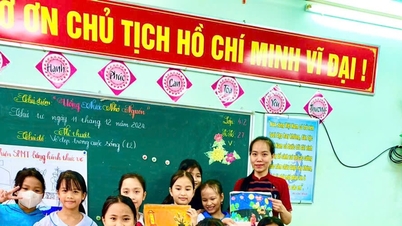
A quick search online reveals numerous recycled fashion contests held in middle and high schools, with participation from teachers and students alike. There are even competitions for "child models" in elementary schools. Through the skillful hands of teachers and students, many outfits are meticulously designed, elaborate, and eye-catching.
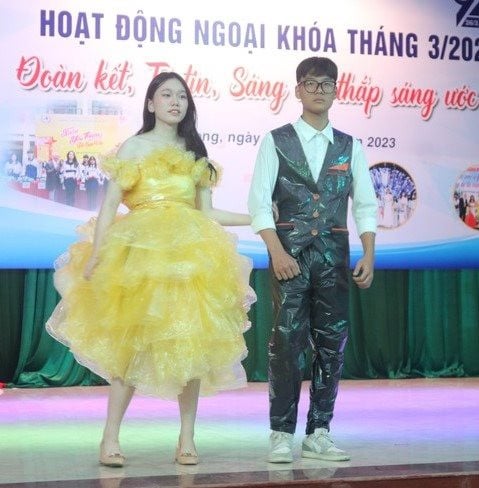
Organizing these competitions, of course, stems from the schools' aim to raise awareness among teachers and students about the life cycles of waste if properly utilized by humans; and about the harmful effects of waste in general, and plastic waste in particular, on the environment if not properly sorted, collected, and processed. Through presentations, scenarios, and performances, information about plastic waste is conveyed to students in a more understandable and accessible way.
However, recently, I was quite surprised when I spoke with a janitor at a high school in Hanoi . Instead of enthusiastically praising the effect of the competition, the janitor's response was: "The kids reused the old newspapers, but they didn't reuse the plastic bags; they bought everything new." Regarding the products after the competition, the janitor's response was: "The kids only keep them as souvenirs for a few days; once the fun is over, the clothes and dresses all go into the trash. We have plenty to clean up."
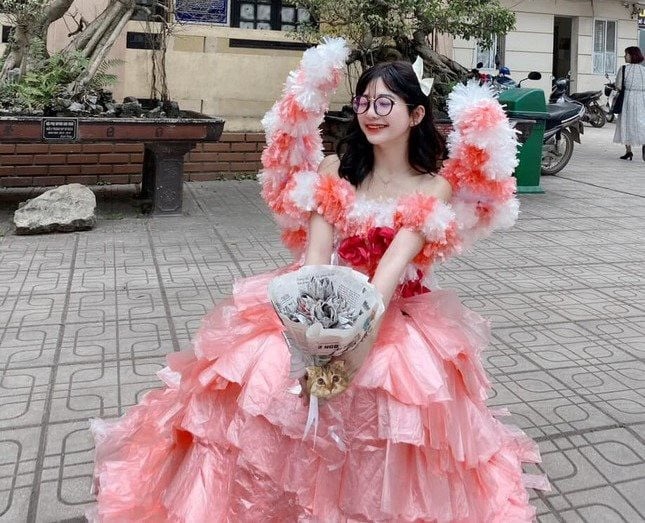
Not long ago, after a recycled fashion contest went viral on social media on a high school's fan page, a comment from a member named Vo Minh Tien sparked a heated debate with many conflicting opinions. "Protecting the environment or littering it?" was a question frequently raised. Or, "We don't see any benefits yet, all we see is trash. If they're using recycled materials for the contest, that's truly commendable, but buying new plastic bags and sacks to make clothes and then throwing them in the trash is worse than not holding the contest at all."
In an interview, Mr. Vu Xuan Thanh (a teacher at Hoang Van Thu High School for the Gifted) frankly stated: "Essentially, recycling competitions are very welcome because they help students develop environmental awareness and highlight their creativity and teamwork skills. However, the competition is only truly meaningful when the products are made entirely from recycled materials. As for the practice of buying brand-new plastic products and labeling them 'recycled,' I personally find such competitions to be merely 형식적인 (formalistic), wasting money and time."
Sharing the same viewpoint, student Hoai Thanh commented: "Is recycling really recycling, or is it simply buying new products to generate even more waste for the environment? I think competitions like this should be abolished."
That's not to say we should deny the good intentions and effectiveness of these competitions in raising awareness. Many competitions have seen teachers and students fully utilize discarded materials such as old newspapers, sacks, and used plastic bags to create eye-catching fashion outfits. Giving waste a new lease on life like this clearly impacts many students, helping them realize that waste also has value if used properly.
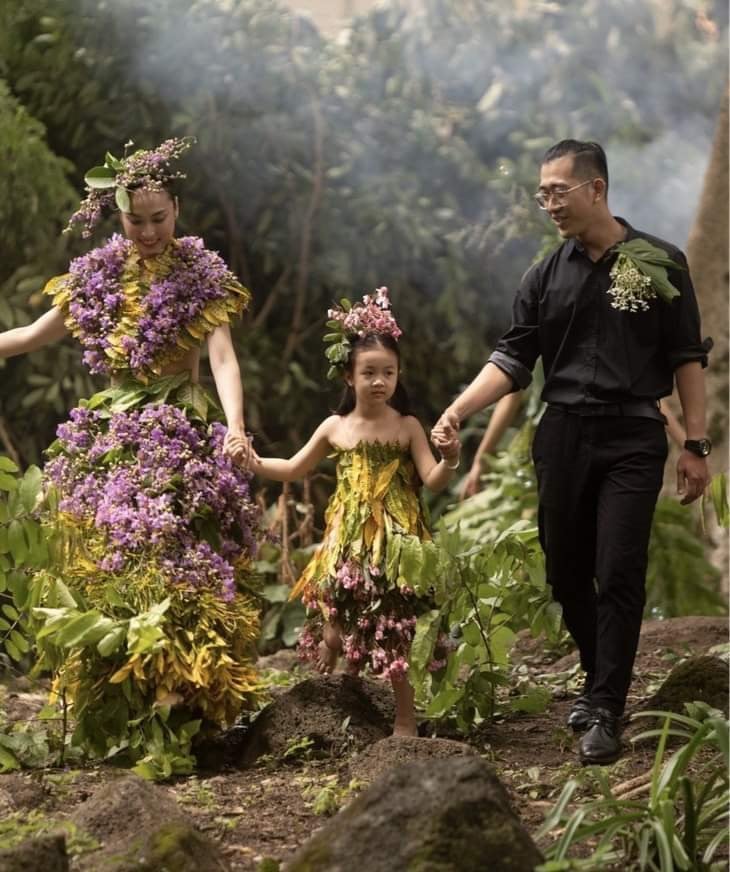
However, ultimately, to hold the details of the costume together, a lot of tape and glue, which are still plastic-based, are needed. Furthermore, these costumes will eventually end up in the trash and will have no practical use in daily life. In short, while there are benefits, the drawbacks are equally significant.
Many movements and activities against plastic waste are still being implemented in schools, not just recycled fashion shows, such as the "House for Plastic Waste" model; "Exchange Plastic Waste for Gifts", "Trash for Me - Books for You", "Let Me Eat Plastic"... Notably, at the end of 2022, Lao Cai province inaugurated a school made entirely from recycled plastic products. These meaningful activities can only receive admiration and praise.
It's not too difficult to recognize the negative aspects of the aforementioned competitions. Because the organizers and implementers have good intentions, I won't offer any harsh criticism. I'd like to conclude this article by quoting a young man named Hoang Hiep – the creator of a video criticizing these "distorted" recycling competitions: "Let's carry out environmental protection activities in a practical and meaningful way, without straying too far from their original purpose."
Source
![[Photo] Prime Minister Pham Minh Chinh receives the Chinese Ambassador to Vietnam](https://vphoto.vietnam.vn/thumb/1200x675/vietnam/resource/IMAGE/2026/04/05/1775397481797_ndo_br_dsc-5512-jpg.webp)





























































Comment (0)