


Prosperity begins in the villages and hamlets.
In Khuon Bo village, Hung Khanh commune, 97% of the population are ethnic Mong people. Yet, in 2018, it became the first Mong village in the former Yen Bai province to achieve the new rural standard, and three years later it was recognized as a model new rural village.
In the early 2000s, when they first settled in Khuon Bo under the government's policy, the Hmong people were still accustomed to nomadic farming practices and backward agricultural methods; transportation infrastructure was difficult; and awareness of environmental hygiene was limited...

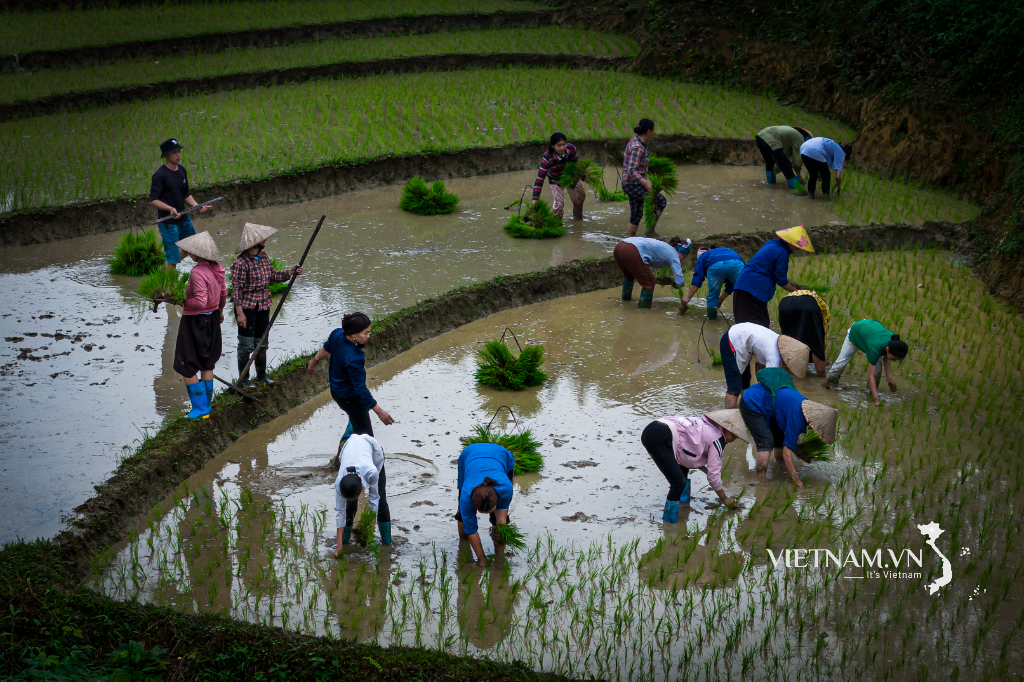
The people of Khuon Bo village are diligently working and producing in their new homeland.
Mr. Song A Dung, one of the early migrants from Mo Vang commune to Khuon Bo, recalled: "Back then, transportation was very difficult, and life was still very hard. I never imagined the village would change so quickly."
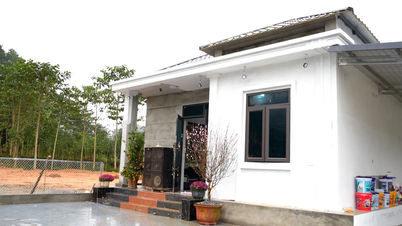
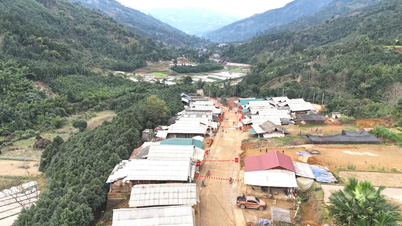
Now, the concrete road running through the village is clean, lined with green trees on both sides, creating a peaceful atmosphere. The houses are sturdy and spacious. The cinnamon hills and bamboo groves are lush and green. The national power grid and internet have reached the village.
Speaking about the achievements in building new rural areas, the Party Secretary of Khuon Bo village, Chang Thi Nha, shared: “Building new rural areas in Khuon Bo is a process of persistent propaganda and mobilization to change people's mindset, from production to daily life. When people understand the meaning of the program, along with the support of the State, everything becomes easier. For example, with road construction, along with cement provided by the State, people have joined hands to complete the main village roads and branch roads leading right to their yards.”

A clean and beautiful corner of Khuon Bo village today.
Village officials not only disseminate information but also directly guide people on maintaining hygiene in their homes, avoiding keeping livestock near their houses; they innovate in organizing weddings and funerals, gradually forming a new way of life. More importantly, the people's production mindset has changed. Instead of fixed farming, they have diversified their crops and livestock, such as cinnamon, Bat Do bamboo shoots, fruit trees, raising black chickens, pigs, etc. Mr. Song A Dung's family is currently one of the most economically prosperous households in the village.
"With improved roads and the cultivation of medicinal plants, cinnamon, and Bat Do bamboo shoots, my family's economic situation has improved significantly," Mr. Dung happily shared.
Currently, Khuon Bo has 95 households with nearly 460 inhabitants, and the average income reaches 47 million VND/person/year. The poverty rate has decreased from 80% to nearly 5%. Khuon Bo has not only changed in appearance but also fundamentally transformed its lifestyle and development mindset.
Consensus creates a new look.
Established through the merger of Ban Cam commune and Phong Hai agricultural town, Phong Hai commune is a clear example of the power of consensus in building new rural areas.
"For the sake of the village, even precious land is donated," "Building houses and kitchens comes after building roads," "Wide roads, bright lights, many flowers/People united, rural development," "Wide roads, spacious sidewalks, civilized/Villages free of garbage, every household working together" - these slogans have deeply permeated the consciousness of the people through the propaganda work of the Vietnam Fatherland Front Committee and political and social organizations in the commune.
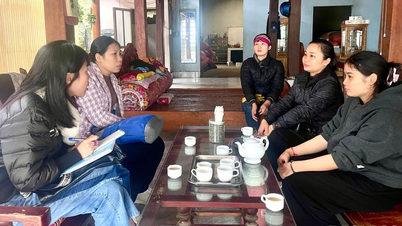
Mr. Dang Minh Long, Chairman of the Vietnam Fatherland Front Committee of the commune, said: "The dissemination of information is carried out through various forms so that people understand the purpose, meaning, mechanisms, and policies of the new rural development program, linked with emulation movements at the grassroots level."

The people of Phong Hai commune have unanimously supported the new rural development program, creating a new look for the locality.
That consensus was concretized by impressive results: more than 90 households donated 3.7 hectares of land, including forest land they had been attached to for many years, to expand transportation routes, resulting in the construction of nearly 80 km of new rural roads; people donated land and contributed over 15 billion VND.
Along the newly constructed roads, 33 km of flower-lined streets and over 30 km of flag-lined streets have been created. More than 50 km of streetlights have been installed, and 3 km of sidewalks have been renovated with a total investment of over 2.6 billion VND, of which the people contributed over 600 million VND.
In addition, 99 security cameras were installed through social mobilization, contributing to maintaining security and order. The campaign to eliminate temporary and dilapidated houses helped 39 households have solid housing, essentially eliminating temporary and dilapidated houses in the area.
To date, the average income of the commune has reached 68 million VND/person/year, and the poverty rate is only 3.4%. Phong Hai has achieved 15 out of 19 criteria for advanced new rural communes. The new face of Phong Hai has been created not only through infrastructure but also through the trust and unity of the people.
Shaping a livable countryside.
In the process of building new rural areas, Quy Mong is currently the only advanced new rural commune in the province. Upon arriving here, the most striking impression is the peacefulness and prosperity of a truly livable countryside.
According to Pham Van Hoan, Chairman of the People's Committee of Quy Mong commune: "After many years of consolidating and improving the criteria, by 2023, Quy Mong completed the construction of an advanced new rural commune, and the rural landscape is becoming increasingly vibrant."

Quy Mong is currently the only commune in the province that has achieved advanced new rural status.
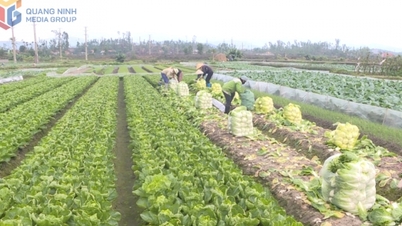
The hilly and agricultural areas of Quy Mong are now covered in greenery thanks to key economic models. This includes the vast green expanse of 5,746 hectares of cinnamon, including organic cinnamon; the Bat Do bamboo shoot growing area; and the mulberry growing area, all providing stable income.
Thanks to sustainable development orientation, average income will reach 64 million VND/person/year (in 2025), an increase of nearly 1.5 times compared to 2020; the multidimensional poverty rate will be only 1.11%. The living environment will be given attention through concrete actions: 100% of waste is collected and processed, 176 pesticide packaging storage tanks have been built; village roads and alleys are "green, clean, and beautiful".
The spiritual life has been enhanced, with all 30 villages achieving the title of "Cultural Village". The "Security Camera" and "Zalo Security" models have been effectively maintained, contributing to maintaining order and creating peace of mind for the people... The reality in Quy Mong shows that as the new rural development program deepens, the quality of life for the people is sustainably improved.
Keeping pace with change
Following the merger, Lao Cai province has 37 out of 89 communes meeting the new rural standards, and 1 commune meeting the advanced new rural standards; 255 villages and hamlets have been recognized as meeting the new rural standards (including 132 villages in particularly difficult communes); and 533 villages and hamlets have been recognized as model new rural standards.

New, bright, green, clean, and beautiful rural roads are now a reality in many countryside areas.
Thanks to the New Rural Development Program, rural infrastructure has been gradually improved; people's income, material and spiritual lives have been enhanced; the environment is becoming increasingly "bright, green, clean and beautiful"; cultural identity is preserved and promoted; political security and social order are maintained...

Building new rural areas is a journey of creating new countryside regions.
It's truly a great place to live for the people.
Building new rural areas is not just about fulfilling criteria or achieving titles, but also a persistent journey of creating new rural areas, so that these rural areas are not only "new" in appearance, but also truly "livable" for the people.

The New Rural Development program has transformed the appearance of villages in the highlands.
With post-consolidation efforts, it is estimated that by 2025, 41 out of 89 communes in the province will have met the new rural standards, and 1 commune will have met the advanced new rural standards. Lao Cai aims to have 55 out of 89 communes meet the new rural standards by 2030, with at least 2 communes meeting the modern new rural standards. The achievements already made, along with the political determination of the political system and the consensus of the people, will be the foundation for Lao Cai's new rural development goals to be achieved as planned, continuing to create new rural areas.
Source: https://baolaocai.vn/kien-tao-nhung-vung-que-moi-post890557.html





















































Comment (0)