Each architectural work in Hue is a complete work of art, expressing its own philosophical, spiritual and aesthetic values. The architecture in Hue is rich, reflected in the massive constructions under the Nguyen Dynasty, along with folk architecture, religious architecture and temples... In which, Hue Citadel is one of the relics belonging to the Complex of Hue Monuments recognized by UNESCO as a World Cultural Heritage. Hue Citadel was built on an area of over 500 hectares in three circles in order: Kinh Thanh, Hoang Thanh and Tu Cam Thanh. King Gia Long ordered the construction of the citadel from 1805, and completed it in 1832 under King Minh Mang. The Nguyen Dynasty kings also ordered the construction of many citadels, palaces... The overall architecture is still quite intact with nearly 140 large and small works over more than 200 years. The flagpole is located in front of the Hue Citadel, built in 1807. The structure is made of bricks, three floors like three truncated towers stacked on top of each other. On the top of the tower, there were previously two watchtowers and four artillery workshops to arrange four cannons. On top of the flagpole, there is also an observation post called Vong Dau. In necessary cases, the guards will climb Vong Dau and use the Thien Ly telescope to observe activities on the coast. The National School Stele is located on the southern bank of the Perfume River, in front of the National School of Hue. This structure is the Monument to the Fallen Soldiers, commemorating the French and Vietnamese soldiers who died in World War I. Because the memorial is located in front of the National School, people often call it the National School Stele or the National School Screen. The architecture of the structure is in the form of a scroll-shaped screen inserted in the middle of a three-door gate. The main block is placed on a wide platform with a surrounding railing and an entrance on four sides. The highlight is the two pillars about 10 m high in the front. Phu Van Lau is near the north bank of the Perfume River. The building is located on the main axis of the architectural complex of the ancient capital of Hue, including Thai Hoa Palace - Ngo Mon Gate - Ky Dai - Phu Van Lau - Nghinh Luong Dinh - Huong Giang - Ngu Binh. This is where Nguyen Dynasty court documents that needed to be announced to the people were posted, such as the king's decrees, the results of the Hoi and Dinh examinations; or ceremonies were held with the presence of the king, courtiers and people. This building is printed on the 50,000 VND note. Opposite Phu Van Lau is Nghinh Luong Dinh - a floating house on the north bank of the Huong River. The structure is made of brick and stone pavement, with 13 steps leading down to the river surface, to serve the Nguyen Dynasty kings to enjoy the cool breeze and take a boat trip on the Huong River when the weather is hot. In terms of architecture, Nghinh Luong Dinh is built in the form of a four-room house, with a crab shell house extending in front and behind, with elaborately carved wooden details. The main house has a roof covered with yellow glazed tiles, the two crab shell houses are covered with yellow glazed tiles. Trang Tien Bridge is located in the heart of Hue city. Other names are Truong Tien Bridge, Thanh Thai Bridge, Clémenceau Bridge... The bridge connects the two banks of the Perfume River with the northern end belonging to Phu Hoa ward, the southern end belonging to Phu Hoi ward. This is the first bridge in Indochina built using new techniques and materials imported from the West. The steel bridge has a total length of 402.6 m, consisting of six steel girder spans in the shape of a comb, each span has a span of 67 meters. In addition to hundreds of years old architectural works, Hue city also built modern places, including a lim wood pedestrian bridge on the banks of the Perfume River. The project started construction in 2018 with the support of the Korean government, as part of a detailed planning project on both banks of the Perfume River. The bridge connects Nguyen Dinh Chieu walking street, from Truong Tien bridge to Ly Tu Trong park, serving locals and tourists for entertainment and sightseeing. Source: https://baoquangninh.vn/nhung-kien-truc-noi-tieng-o-co-do-hue-3192035.html


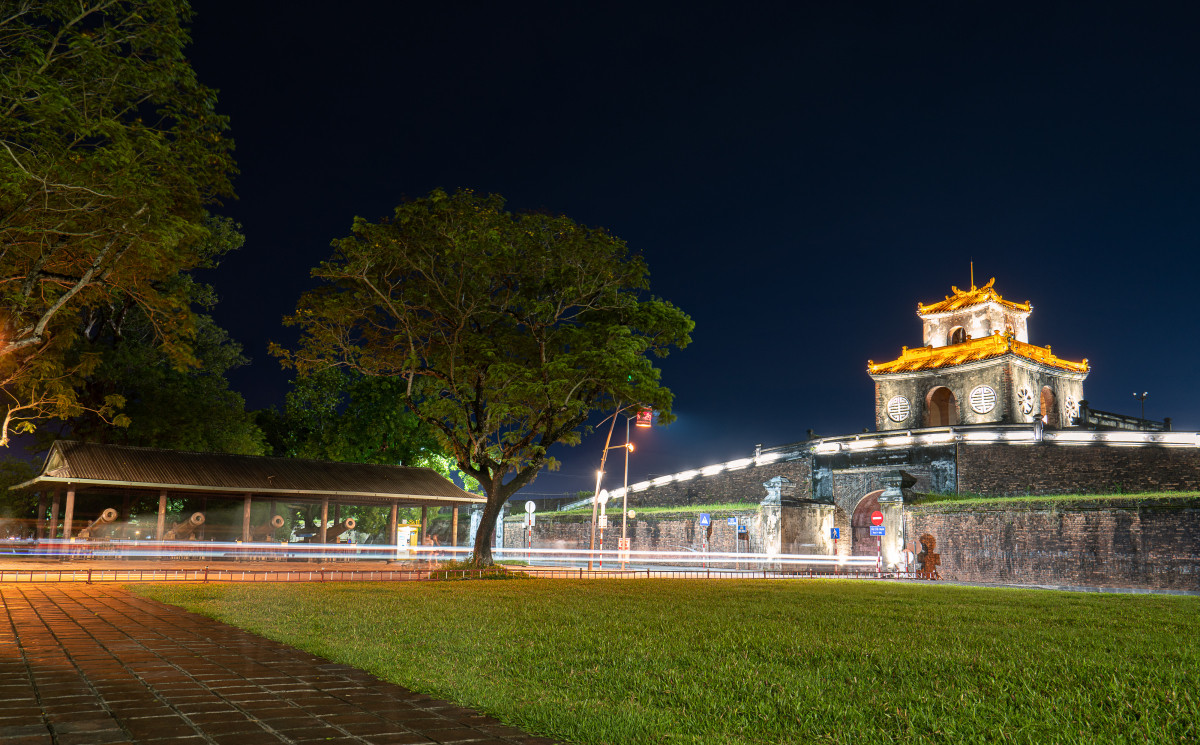 The architecture in Hue is rich, reflected in the massive constructions under the Nguyen Dynasty, along with folk architecture, religious architecture and temples... In which, Hue Citadel is one of the relics belonging to the Complex of Hue Monuments recognized by UNESCO as a World Cultural Heritage.
 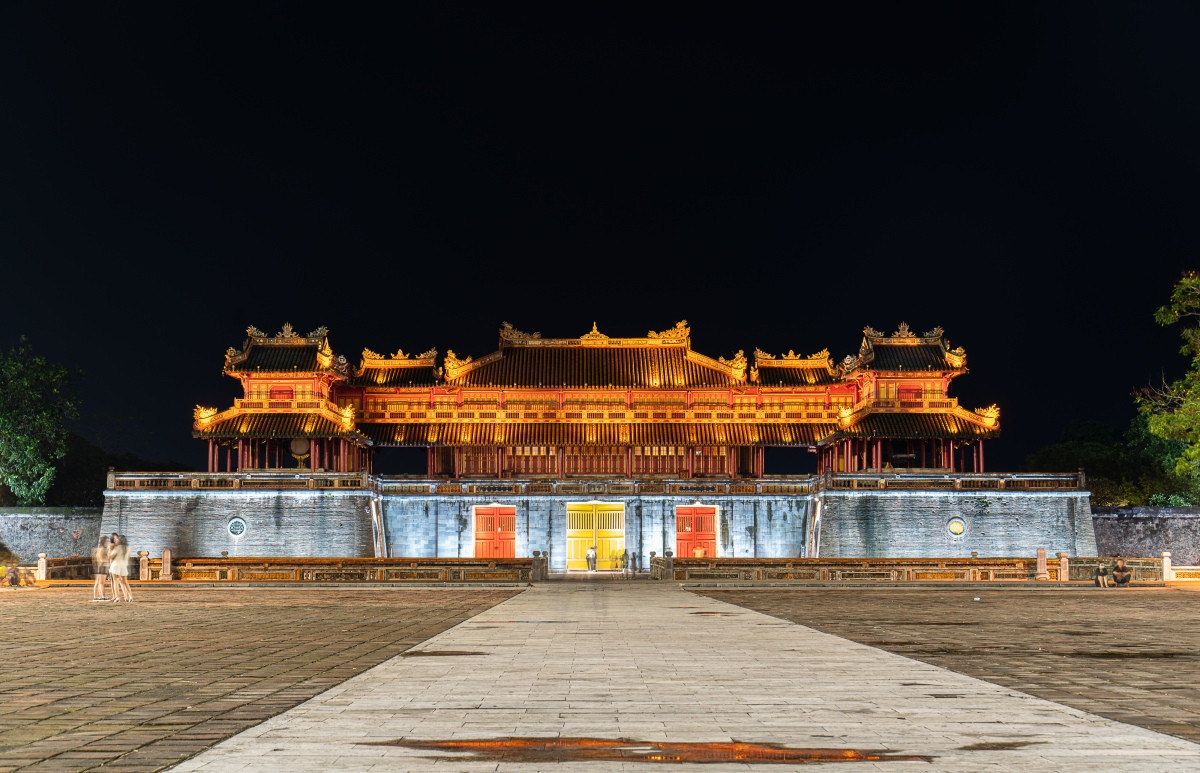 Hue Citadel was built on an area of over 500 hectares in three circles in order: Kinh Thanh, Hoang Thanh and Tu Cam Thanh. King Gia Long ordered the construction of the citadel from 1805, and completed it in 1832 under King Minh Mang. The Nguyen Dynasty kings also ordered the construction of many citadels, palaces... The overall architecture is still quite intact with nearly 140 large and small works over more than 200 years.
 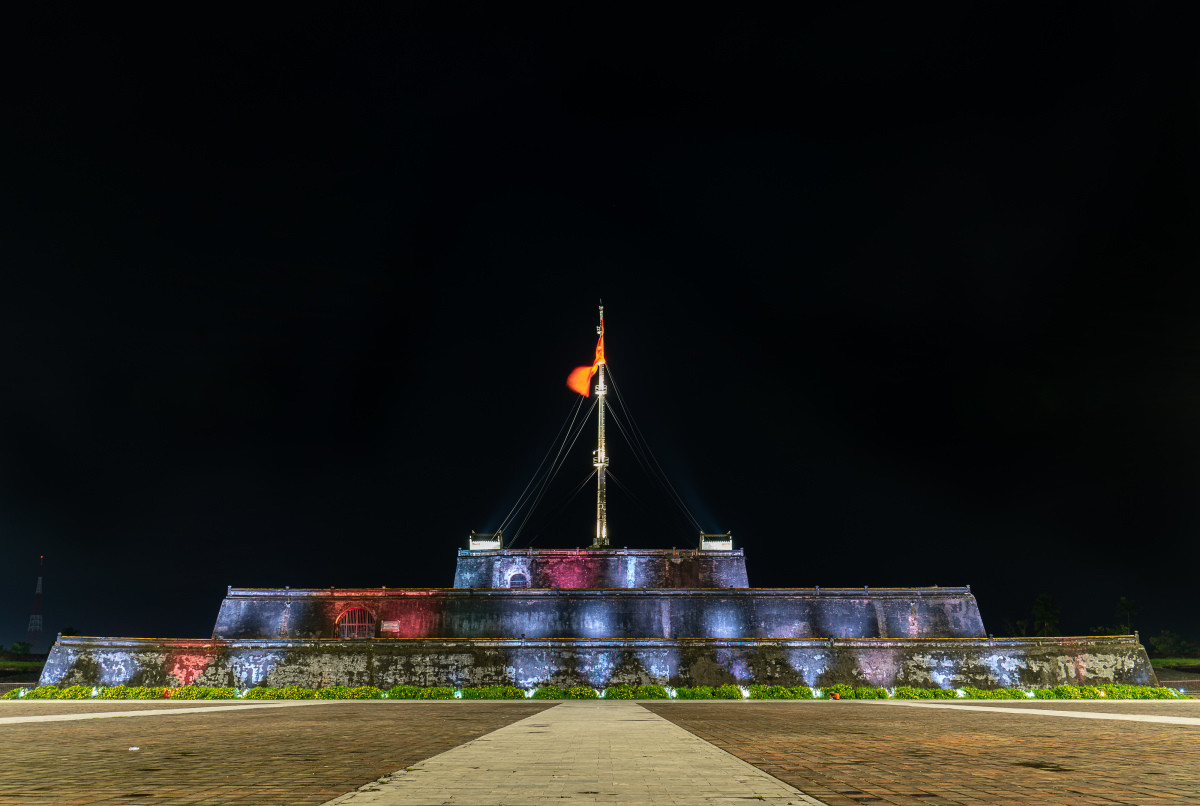 The flagpole is located in front of the Hue Citadel, built in 1807. The structure is made of bricks, three floors like three truncated towers stacked on top of each other. On the top of the tower, there were previously two watchtowers and four artillery workshops to arrange four cannons. On top of the flagpole, there is also an observation post called Vong Dau. In necessary cases, the guards will climb Vong Dau and use the Thien Ly telescope to observe activities on the coast.
 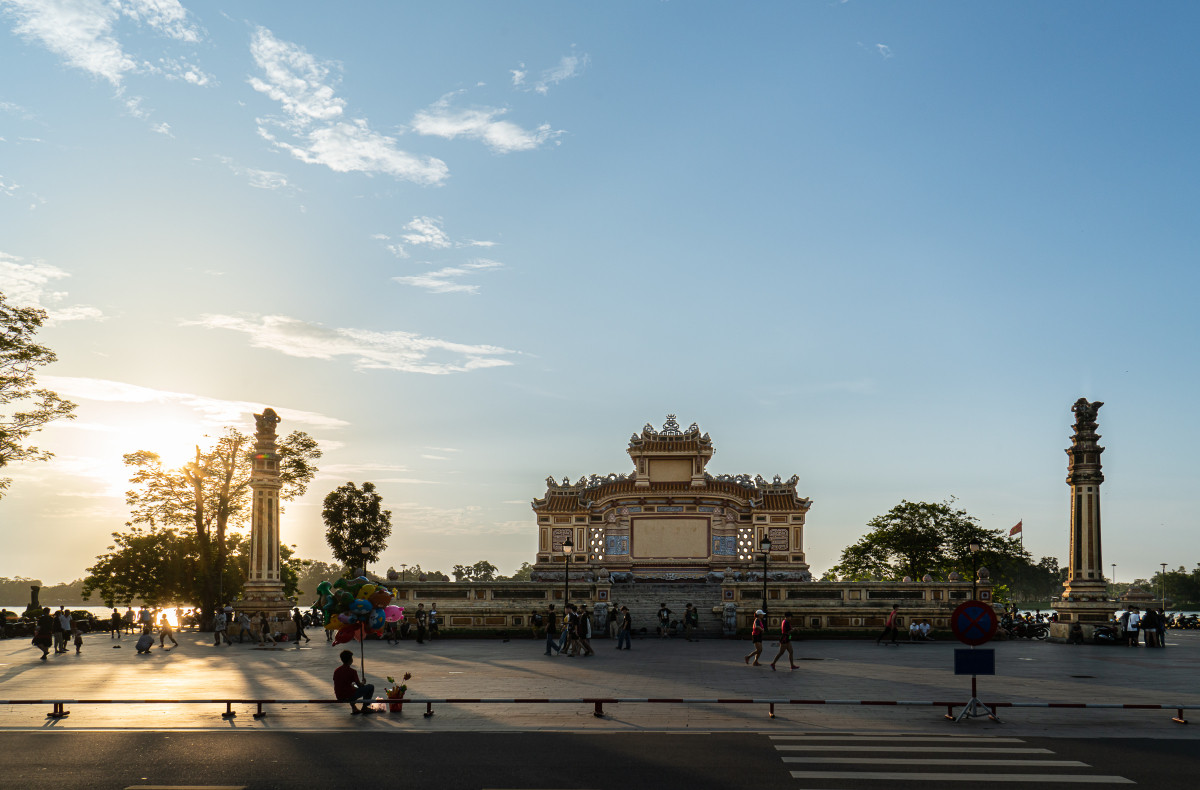 The National School Stele is located on the southern bank of the Perfume River, in front of the National School of Hue. This structure is the Monument to the Fallen Soldiers, commemorating the French and Vietnamese soldiers who died in World War I. Because the memorial is located in front of the National School, people often call it the National School Stele or the National School Screen. The architecture of the structure is in the form of a scroll-shaped screen inserted in the middle of a three-door gate. The main block is placed on a wide platform with a surrounding railing and an entrance on four sides. The highlight is the two pillars about 10 m high in the front.
 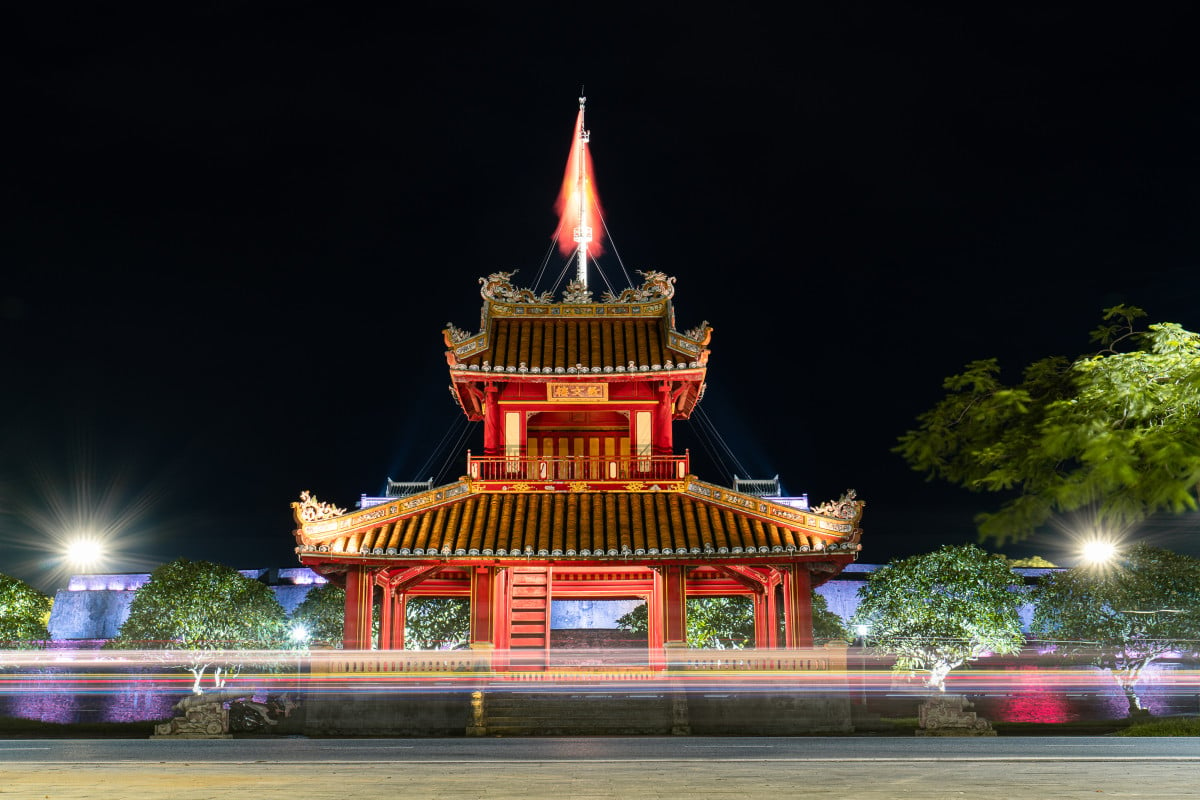 Phu Van Lau is near the north bank of the Perfume River. The building is located on the main axis of the architectural complex of the ancient capital of Hue, including Thai Hoa Palace - Ngo Mon Gate - Ky Dai - Phu Van Lau - Nghinh Luong Dinh - Huong Giang - Ngu Binh. This is where Nguyen Dynasty court documents that needed to be announced to the people were posted, such as the king's decrees, the results of the Hoi and Dinh examinations; or ceremonies were held with the presence of the king, courtiers and people. This building is printed on the 50,000 VND note.
  Opposite Phu Van Lau is Nghinh Luong Dinh - a floating house on the north bank of the Huong River. The structure is made of brick and stone pavement, with 13 steps leading down to the river surface, to serve the Nguyen Dynasty kings to enjoy the cool breeze and take a boat trip on the Huong River when the weather is hot. In terms of architecture, Nghinh Luong Dinh is built in the form of a four-room house, with a crab shell house extending in front and behind, with elaborately carved wooden details. The main house has a roof covered with yellow glazed tiles, the two crab shell houses are covered with yellow glazed tiles.
  Trang Tien Bridge is located in the heart of Hue city. Other names are Truong Tien Bridge, Thanh Thai Bridge, Clémenceau Bridge... The bridge connects the two banks of the Perfume River with the northern end belonging to Phu Hoa ward, the southern end belonging to Phu Hoi ward. This is the first bridge in Indochina built using new techniques and materials imported from the West. The steel bridge has a total length of 402.6 m, consisting of six steel girder spans in the shape of a comb, each span has a span of 67 meters.
 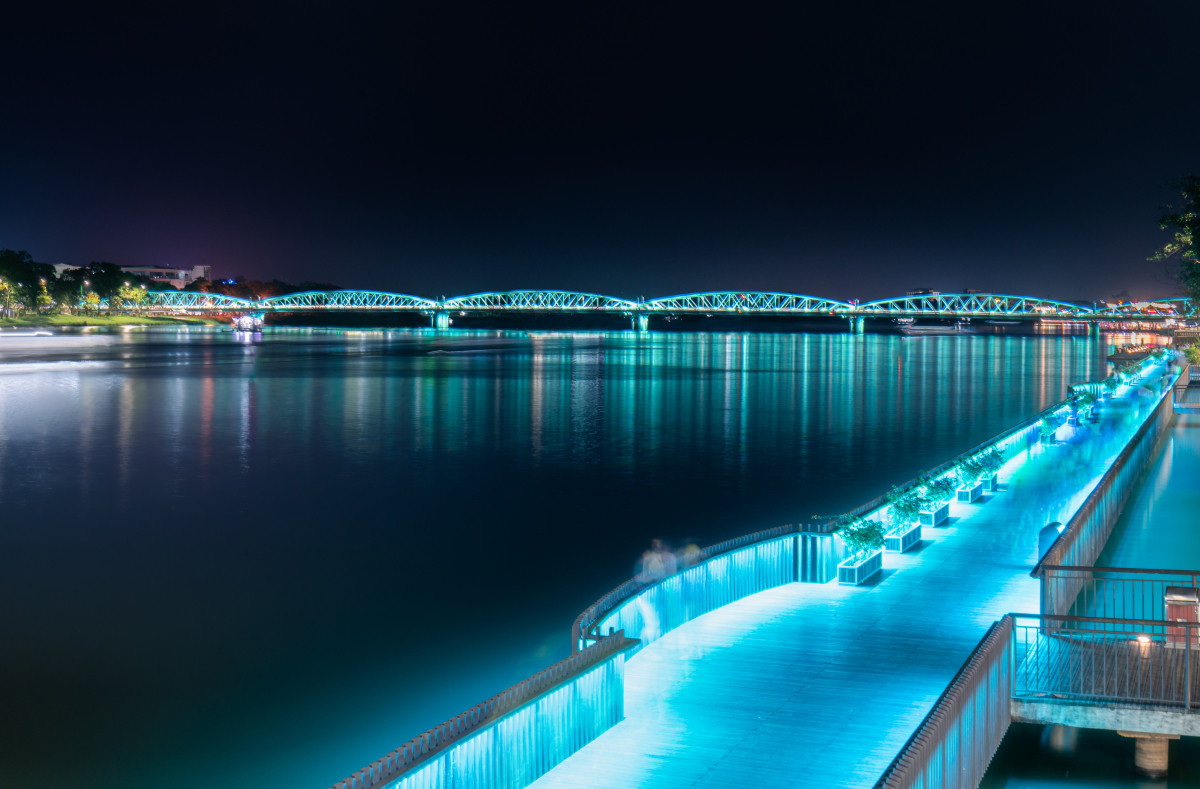 In addition to hundreds of years old architectural works, Hue city also built modern places, including a lim wood pedestrian bridge on the banks of the Perfume River. The project started construction in 2018 with the support of the Korean government, as part of a detailed planning project on both banks of the Perfume River. The bridge connects Nguyen Dinh Chieu walking street, from Truong Tien bridge to Ly Tu Trong park, serving locals and tourists for entertainment and sightseeing. Source: https://baoquangninh.vn/nhung-kien-truc-noi-tieng-o-co-do-hue-3192035.html
![[Photo] General Secretary To Lam concludes visit to Russia, departs for Belarus](https://vphoto.vietnam.vn/thumb/1200x675/vietnam/resource/IMAGE/2025/5/11/0acf1081a95e4b1d9886c67fdafd95ed)

![[Photo] National Assembly Chairman Tran Thanh Man attends the Party Congress of the Committee for Culture and Social Affairs](https://vphoto.vietnam.vn/thumb/1200x675/vietnam/resource/IMAGE/2025/5/11/f5ed02beb9404bca998a08b34ef255a6)







![[Photo] Discover the beautiful scenery of Wulingyuan in Zhangjiajie, China](https://vphoto.vietnam.vn/thumb/1200x675/vietnam/resource/IMAGE/2025/5/11/1207318fb0b0467fb0f5ea4869da5517)











































Comment (0)