

Deputy Prime Minister Tran Luu Quang said that compared to other countries, Vietnam's administrative apparatus is cumbersome, making it difficult to increase salaries; therefore, it is necessary to "overcome oneself" to successfully merge districts and communes.
Presiding over the meeting of the Steering Committee for the reorganization of district and commune-level administrative units for the period 2023-2030 on the afternoon of February 28, Deputy Prime Minister Tran Luu Quang noted that this is a difficult task, while the time for implementation is limited. From now until the planned merger of districts and communes, there are only 6 months left.
"The reorganization of districts and communes affects many localities and the policies of many people, so it requires thoroughness," Mr. Quang said, expressing that along with the cumbersome bureaucracy, the "large number of people and many opinions" also lead to inefficient work.
At the same time, Mr. Quang emphasized the spirit of finding harmonious solutions and respecting the reasonable opinions of the grassroots. "We must respect the grassroots members because they bear the consequences, whether good or bad," the Deputy Prime Minister said, and requested that procedures be as streamlined as possible.
The Deputy Prime Minister requested the Ministry of Information and Communications to strengthen communication about this policy through social media to enhance its effectiveness.
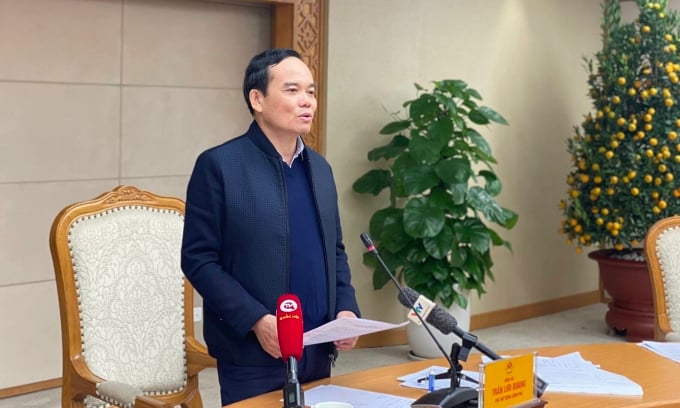
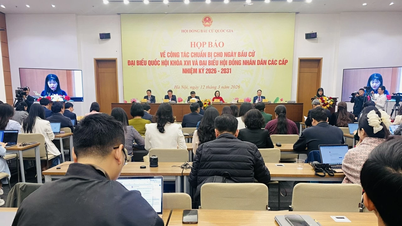
Deputy Prime Minister Tran Luu Quang chaired a meeting on the merger of districts and communes on the afternoon of February 28. Photo: VT
At the meeting, Deputy Minister of Construction Nguyen Tuong Van stated that among the districts to be merged in the next two years, 17 will subsequently become urban areas, with 11 of them becoming cities. However, he expressed concern that the quality of urban areas in these merged districts would face many difficulties in meeting the necessary criteria.
He cited the example of Cao Loc district, which will be merged into Lang Son city (Lang Son province), but this district is eight times larger than the city. So, after the merger, how will the new Lang Son city meet the criteria for an urban area?
Deputy Minister of Finance Vo Thanh Hung suggested that when localities develop plans for merging districts and communes, they should immediately have solutions in place for arranging public offices and assets to avoid waste.
According to Minister of Home Affairs Pham Thi Thanh Tra, from now until 2025, 50 districts nationwide will be merged, including 11 mandatory mergers, 16 encouraged mergers, and 23 adjacent units. After the mergers, the number of districts nationwide is expected to decrease by 14. Nineteen districts are slated for merger but have requested that the process not be carried out due to specific circumstances.
From now until 2025, the whole country will reduce the number of communes by more than 600 after merging 1,243 communes (738 mandatory communes, 109 encouraged communes, and 396 adjacent units). More than 500 communes were subject to restructuring but were not reorganized due to their specific characteristics.
According to regulations, the standards for mountainous and highland districts are a population of 80,000 and an area of 850 km2 or more; for lowland districts, 450 km2 or more; and for urban districts, 35 km2 or more with a population of at least 150,000. The population size of a commune is 5,000 to 8,000 or more, with an area of 30 km2 or more. Districts and communes subject to mandatory mergers have areas and populations below 70% of the standards; districts have areas below 20% and populations below 200%; and communes have areas below 20% and populations below 300%.
During the period 2019-2021, the Standing Committee of the National Assembly issued 48 resolutions to reorganize 21 district-level units and 1,056 commune-level units in 45 provinces and cities. As a result, the whole country reduced 8 district-level units and 561 commune-level units. This reorganization helped reduce 3,437 agencies at the commune level and 429 agencies at the district level, saving 2,000 billion VND in state budget expenditures.
Source link








![[Infographic] Biography of the new Head of the Central Economic Committee, Tran Luu Quang](https://vphoto.vietnam.vn/thumb/402x226/vietnam/resource/IMAGE/2025/1/20/c35e0fe6275d4a15abd4ab3cbc2ca8ab)


![[Photo] Ceremony announcing the Decision on assigning Central Committee members to the positions of Head of the Central Economic Committee and Head of the Central Committee for Mass Mobilization](https://vphoto.vietnam.vn/thumb/402x226/vietnam/resource/IMAGE/2025/1/20/3e6dbf4973c94c9abcb6f4f819949bca)












































































Comment (0)