

On the afternoon of July 31st, at the Government Headquarters, Deputy Prime Minister Tran Hong Ha received Mr. Graham Stuart, Minister for Energy Security and Net Zero, United Kingdom.
The Deputy Prime Minister highly appreciated the proactive spirit of the UK Government , as well as Minister Graham Stuart, in implementing the Joint Fair Energy Transition Partnership Agreement (JETP).
Over the past period, Vietnam has undertaken many concrete activities to promote the implementation of the JETP roadmap, such as: establishing a Secretariat; exchanging views with leaders of several countries that have expressed great interest in JETP; and exchanging views with representatives of partners and international organizations within the framework of multilateral cooperation mechanisms such as the Glasgow Financial Alliance for Net Emissions Zero (GFANZ) and the Asian Net Emissions Zero Community (AZEC)... According to the Deputy Prime Minister, the most important thing is to quickly select projects and tasks for practical implementation to achieve tangible results.
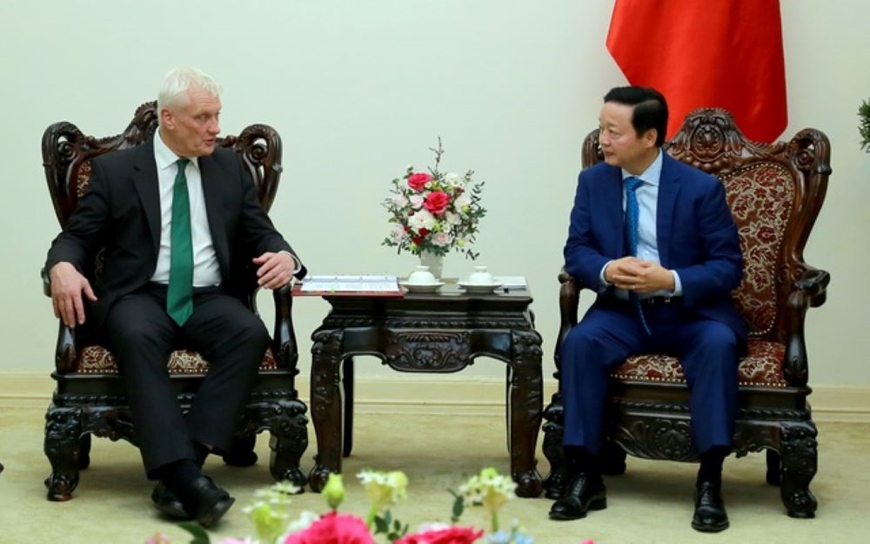 |
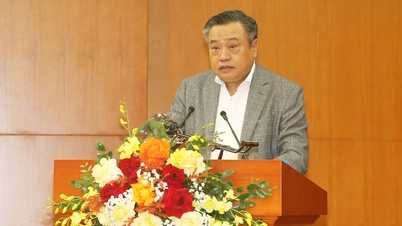
Deputy Prime Minister Tran Hong Ha and Minister Graham Stuart agreed to promote a number of specific renewable energy projects with the participation of leading businesses from both countries. Photo: VGP |
The Deputy Prime Minister expressed his admiration for the results achieved by the United Kingdom in developing renewable energy sources (wind power, solar power) to replace fossil fuels since 2012. These are invaluable experiences for Vietnam to accelerate the process of awareness, unified action, and harmonizing the interests of businesses, the government, the people, and the global community in implementing the energy transition.
The Deputy Prime Minister requested that the United Kingdom share its approach to implementing rooftop solar power policies; introduce businesses that have successfully invested in wind power, solar power, smart grids, green hydrogen production, green ammonia production, large-scale energy storage systems, etc., with the highest efficiency and lowest costs. The Deputy Prime Minister also hoped that the United Kingdom would share its experience in developing policies and criteria for selecting investors to ensure the best overall benefits, and mechanisms for direct electricity purchase and sale from renewable energy sources.
Thanking the Deputy Prime Minister for the time, Minister Graham Stuart provided information on the process and results of the transition from coal and fossil fuel-based power sources in the UK since 2012 to renewable energy sources. Accordingly, in 2012, coal-fired power plants accounted for 40% of total electricity production, and it is expected that all coal-fired power plants in the UK will cease operation by 2024. Meanwhile, the share of electricity from renewable energy sources increased from 10% (in 2010) to 40% of total electricity production in 2023 and is expected to continue to increase significantly in the coming years.
The lessons learned for the UK Government include the need to build a legal framework and long-term, stable policy commitments for investors to reduce risks and capital costs; support businesses through working groups on solar and wind power, create jobs in the green energy sector, etc., with the participation and coordination of many ministries and agencies; and unlock investment capital from major financial institutions.
VNA
*Please visit the Politics section to view related news and articles.
Source


























































































Comment (0)