

Combating agricultural by-product waste is not only an economic challenge but also a green path towards a sustainable future for the country; it aligns with the trend of developing green, circular agriculture that many countries around the world are implementing.
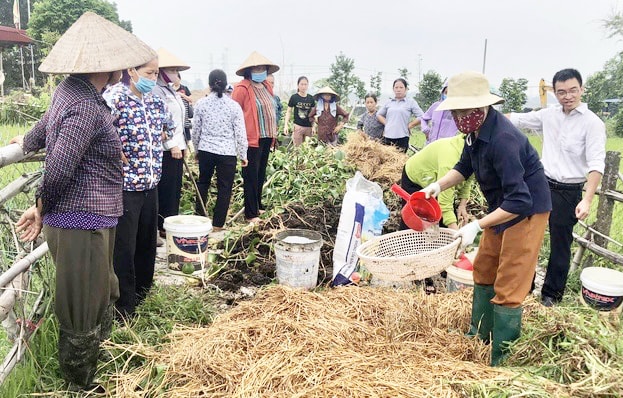
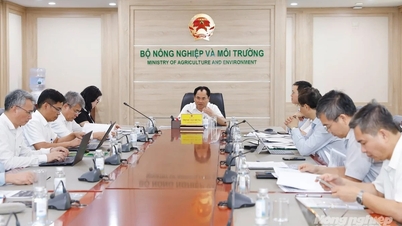
According to a report by the Ministry of Agriculture and Environment , on average, Vietnam's agriculture generates over 156 million tons of by-products annually, ranging from straw, rice husks, sugarcane bagasse, coffee husks, and livestock waste. This represents a huge biological resource that could be reused as animal feed, organic fertilizer, or raw material for biotechnology production. However, a large portion of these by-products is not effectively utilized; only about 10% is recycled, and even in some sectors, the highest rate is only 35%; the remainder is often burned or directly discharged into the environment. This results in both economic losses and contributes to environmental pollution.
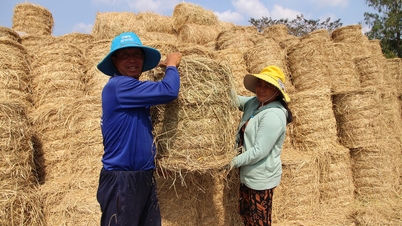
According to Tran Manh Bao, Chairman of the Vietnam Seed Trade Association, each type of agricultural by-product possesses significant value if properly exploited. Rice straw can be used as animal feed, compost, or processed into biomass pellets for clean energy. Rice husks can be used to produce activated carbon and insulation materials. Even rice water and wastewater from processing can be treated to provide nutrients for fish farming or as microbial enzymes for sustainable organic agriculture.
Unfortunately, a large portion of the aforementioned enormous agricultural by-products is becoming an ecological burden due to improper utilization. While the world is moving towards circular agriculture, in Vietnam, the burning of rice straw directly in the fields after each harvest remains common. This practice, while seemingly convenient, has serious consequences. Specifically, up to 45.9% of rice straw is burned directly in the fields, only 29% is used as animal feed, about 8.6% is buried in the fields, 5% is composted, 4.1% is used for soil mulching, and 7% is used as bedding or raw material for handicrafts.
A similar situation of waste occurs in the sugar industry. On average, the industry produces 7-8 million tons of sugarcane annually, while simultaneously generating 2.3 million tons of bagasse, 0.36 thousand tons of molasses, and 400,000 tons of ash and humus. However, only 28% of bagasse is reused, 41% of molasses is used as animal feed, 20% as flavoring, and 12% in MSG production. The remainder is discarded, wasting a source of energy-rich biomass that could be converted into fuel, fertilizer, or biomaterials.
According to experts, if the by-products from rice, corn, sugarcane, and vegetables are properly utilized, Vietnam could obtain 43 million tons of organic fertilizer, 1.8 million tons of urea, 1.6 million tons of single superphosphate, and 2.2 million tons of potassium sulfate. This is a sufficient source of nutrients to replenish arable land and significantly replace imported fertilizers.
Vietnam has set a plan to increase the recycling and reuse rate of agricultural by-products to 70% by 2030. To achieve this goal, the exploitation and reuse of by-products cannot rely solely on farmers. The key factor lies in the coordinating and guiding role of regulatory agencies to create mechanisms that encourage businesses to invest in processing technology; and at the same time, help people see the concrete economic benefits of utilizing by-products.
When by-products are viewed as a secondary resource, it will help Vietnamese agriculture minimize waste and pollution, moving towards a green, circular, and sustainable production system.
Source: https://hanoimoi.vn/phu-pham-nong-nghiep-kho-bau-sinh-hoc-bi-lang-phi-747512.html








































































Comment (0)