

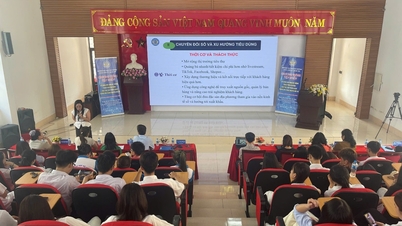
In the process of building a digital society, popularizing digital skills among the people is becoming a fundamental task. In Phu Tho , the "Digital Literacy Movement" is being implemented with many flexible approaches, among which the "classroom without a blackboard" model has proven to be remarkably effective.
Not confined to traditional classrooms, digital skills classes are being held right in community cultural centers, public administrative centers, cafes, and even in people's homes or workplaces. Using a hands-on approach, people are directly guided on how to use smartphones, make cashless payments, access online public services, and gradually become familiar with the digital environment.
The unique aspect of this model is its hands-on, people-centered approach. The core force of the movement consists of over 2,300 community -based digital technology groups. They persistently go door-to-door to support people in accessing technology and using essential digital applications.
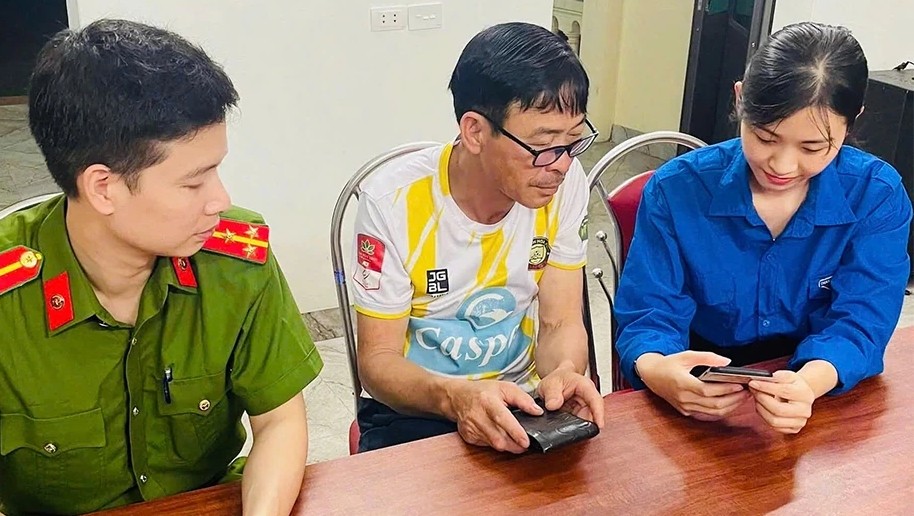
Members of the community digital technology team in Phu Tho guide people on how to use digital services.
A new development starting in July 2025 is the introduction of the "students teach their grandparents and parents" model. Most secondary schools in the area have integrated digital skills content into extracurricular activities, encouraging students to guide their family members on using technology at home. This approach not only fosters closeness but also helps to eliminate the fear of technology among older generations.
From those simple classes, people have gradually mastered technology in their lives. Many small traders have used QR codes for payments; numerous businesses and farmers have learned to utilize social media to promote and sell their products. In particular, local specialties such as Đoan Hùng pomelo, Long Cốc tea, and Thanh Sơn fermented pork have become available on e-commerce platforms. Farmers have started using "livestream selling," thereby contributing to increasing the value of agricultural products by 15-20% by reducing intermediary costs.
Beyond economic benefits, the movement has also brought about significant changes in administrative reform and social welfare. Citizens accessing public services online from home has helped reduce the burden on local "one-stop" service centers. The satisfaction rate with government services has reached over 95%. Simultaneously, cashless payment of pensions and allowances has been widely implemented, increasing transparency and saving time for citizens, especially the elderly.
Ms. Nguyen Thi Nhat, a retired official from Zone 7, Viet Tri Ward, shared: "We now receive our salaries through bank accounts and use our phones to shop. We no longer have to queue to receive our salaries at the community center like before, so it saves a lot of time and is extremely convenient."
The experience in Phu Tho shows that when digital transformation is implemented based on the most practical needs of the people, with appropriate methods and the participation of the whole society, the results go beyond simply "knowing how to use technology," and create concrete, sustainable socio-economic value.
From "classrooms without blackboards," a digital citizenship platform is gradually taking shape, starting from each family and each community, contributing to the development of the digital economy and digital society in the coming period.
Source: https://mst.gov.vn/phu-tho-tu-lop-hoc-khong-bang-den-den-nen-tang-cong-dan-so-197260504002424149.htm



![[Image] Hanoi's urban life under the challenge of a "scorching hot" environment](https://vphoto.vietnam.vn/thumb/1200x675/vietnam/resource/IMAGE/2026/05/25/1779706979265_nang-nong-t5-2026-minh-duy-7-4636-jpg.webp)


































































Comment (0)