

 |
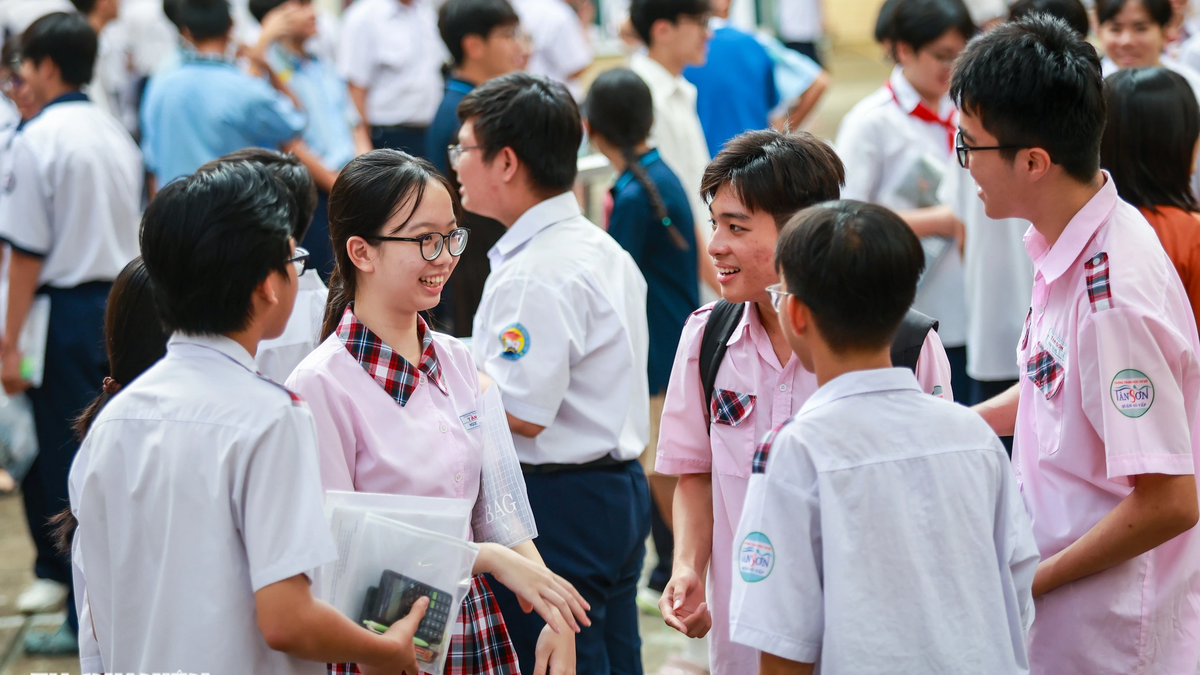
| Students are a group directly affected by cyberspace. Equipping them with "digital resilience" helps them proactively identify, filter information, and protect themselves from harmful information. |
From "vulnerable subjects" to "defenders of ideological foundations"
Never before has cyberspace had such a profound and comprehensive influence on all aspects of social life as it does today. According to reports on digital user behavior, the average young Vietnamese person spends 5 to 7 hours a day accessing the internet. With just a smartphone, each individual is facing tens of thousands of pieces of information floating around.
Besides its positive values, this borderless digital environment is also becoming an ideal breeding ground for hostile forces, reactionary elements, and political opportunists to thoroughly exploit and spread false information and distort history in order to undermine the Party and the State.
While in the past, these groups mainly created reactionary websites and blogs, publishing long articles with direct, dogmatic propaganda, their tactics have completely changed today.
They shifted their attacks to social media platforms with powerful content distribution algorithms and a huge young user base, such as Facebook, TikTok, and YouTube Shorts, to spread misinformation, sow doubt, influence the perceptions and beliefs of a segment of young people, incite discontent, and push young people into a state of "apathy towards the Party, indifference towards the Youth Union, and alienation from politics."
In this complex context, students are the group most directly and severely affected. However, in the context of Resolution No. 35-NQ/TW on strengthening the protection of the Party's ideological foundation and combating erroneous and hostile viewpoints in the new situation, the core issue is not about blocking or restricting young people's access to information, but rather about building "digital resilience" so that they can protect themselves and proactively spread positive values.
 |
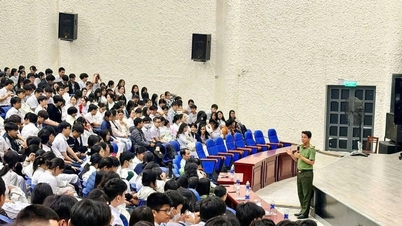
| The support from the university helps Thai Nguyen University students not only develop their professional skills and confidently integrate into the global community, but also cultivate strong political character. |
Thai Nguyen University currently has a stable training scale of approximately 75,000 - 85,000 people per year. Its member universities and colleges own and operate an extensive internal digital media ecosystem.
Preliminary statistics show that the official Fanpage network, YouTube channels, and TikTok accounts of core units such as the University of Science , the University of Education, the University of Information Technology and Communications, etc., attract hundreds of thousands of regular followers.
Notably, member universities and colleges of Thai Nguyen University have simultaneously established and promoted the core role of the Young Theorists Club. Discussing this strategy, representatives of the Thai Nguyen University Youth Union have repeatedly emphasized the viewpoint: We must empower and transform students into direct participants in protecting the Party's ideological foundation using their specialized knowledge, creative skills, and technological advantages.
For example, at the University of Information Technology and Communications, students not only learn coding and design, but they are also equipped with knowledge of digital media ethics and appropriate behavior in the online environment. From there, they use technology to design hundreds of infographics and motion graphic videos each year to refute fake news, creating a clean information filter right from the grassroots level.
From combating misinformation to creating a positive information flow.
Experience shows that simply refuting false information through technical or administrative measures is insufficient. A piece of false information may be removed, but the "information gap" it leaves in public perception will persist.
Without a constant stream of accurate and positive information, distorted information will continue to infiltrate and influence recipients. Based on this reality, many educational institutions in Thai Nguyen are shifting from a "information defense" mindset to proactively building trust, using positive examples to overcome negative ones.
 |
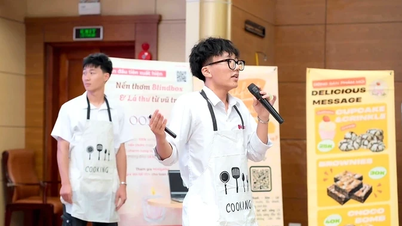
| The University of Science is a shining example with its innovative communication models, encouraging students to shift from being recipients to actively creating positive mainstream information flows. |
One clear example is The Next Journalist media competition organized by the University of Science (Thai Nguyen University) in 2026. Instead of receiving knowledge in a one-way manner, students were able to embody young journalists, directly creating multimedia communication products that reflect the issues of social life and their generation.
According to Dr. Nguyen Thi Tra My, Deputy Director of the Institute of Journalism, Communication and Interdisciplinary Science, University of Science, students are encouraged to participate in the competition from their first year as a way to hone their professional thinking skills and social responsibility. To ensure professionalism, the university invites experienced journalists to participate in the expert panel, accompanying students throughout the process of creating their works.
The value of the competition lies not in the technical aspects of media production, but in how young people choose topics and approach issues with a responsible mindset.
Many student groups explored practical topics such as artificial intelligence in learning, personal financial management skills, identifying fake news online, mental health, and career guidance. Through these activities, students gradually developed the ability to identify problems, verify information, and approach reality objectively.
From the perspective of protecting the Party's ideological foundation, the greatest value of models like The Next Journalist lies not only in training communication skills.
More importantly, it's a process that helps students develop the ability to identify information, verify sources, and proactively create positive media products. When young people know how to tell authentic, humane stories using the language of the digital age, they are directly contributing to building a healthy mainstream information flow, creating "resistance" against false and harmful information on the internet.
At first glance, allowing students to freely choose topics about psychology, emotions, or everyday life issues seems unrelated to protecting the Party's ideological foundation.
However, this approach is more about early and proactive prevention. In the Podcast category, the works "What if life is never brilliant?" by students Pham Nhu Ngoc and Bui Nam Duong (Journalism K22), and "What worries are gradually suffocating the enthusiasm of a young person?" by Nguyen Minh Chau (Journalism K23B) addressed the invisible pressures that many students are facing.
Through sincere sharing and positive perspectives, these works contribute to encouraging young people to accept their differences, nurture aspirations for self-improvement, and build a lifestyle that is responsible to themselves and the community.
Besides fostering inner strength in young people, many works also aim to cultivate love for their homeland and social responsibility. The video "Ho Ghenh Che - Peace in the Heart" by students Dang Hoang Phuong Thao, Do Hong Le, and Nguyen Thi Van Minh showcases the natural beauty, culture, and lifestyle of Thai Nguyen using modern media language that resonates with young people...
It is noteworthy that the works do not opt for rigid propaganda or imposing messages. Instead, positive values are spread through authentic stories that are close to real life.
When students take it upon themselves to film, write scripts, gather data, and tell stories about their people, homeland, and generation using the language of the digital age, they are directly participating in creating a positive mainstream information flow. This is also one of the effective ways to "green" the online space, contributing to strengthening social trust and enhancing resistance to misinformation and harmful content.
Building a digital ecosystem for schools - a fundamental and sustainable solution.
Protecting the Party's ideological foundation in cyberspace is a long-term task requiring the participation of the entire political system and society. For higher education institutions, this task is only effective when implemented within a synchronized digital ecosystem where official information, educational activities, and the active participation of learners are closely interconnected.
 |
| Students of the University of Industrial Technology (Thai Nguyen University) during a practical session. Mastering technology and possessing solid knowledge are crucial foundations for the younger generation to confidently defend their ideological front in the digital age. |
First and foremost, schools need to create an environment of transparent, timely, and reliable information. In the context of the rapid spread of fake news, providing accurate information from the outset is especially important.
Each school's official website, fanpage, or communication channel serves as both a source of reliable information and a tool for shaping public perception and opinion in the digital environment.
Furthermore, the role of the teaching staff needs to be strengthened. In the digital age, teachers not only impart knowledge but also guide students' approaches to learning, helping them develop critical thinking, information verification skills, and the ability to identify deceptive tactics in cyberspace. This is the fundamental "cognitive immunity" for learners.
The experience from the University of Science's The Next Journalist competition demonstrates the crucial role of professional guidance. Besides evaluating the quality of the entries, the judging panel focused on analyzing common shortcomings such as lack of data, lack of verification of sources, or confusion between journalistic products and emotionally charged social media content.
These suggestions help students understand that the responsibility of media professionals extends beyond simply attracting viewers; it also lies in ensuring the accuracy, objectivity, and social value of the information disseminated.
Another crucial component of the digital ecosystem in schools is creating opportunities for students to actively participate in content creation. Media competitions, academic forums, youth theory clubs, and practical experiential activities become environments for students to hone their digital skills, enhance their civic responsibility, and spread positive values.
Building "digital resilience" for the younger generation is not just a matter for the education sector or propaganda work. It is a process of cultivating political acumen, critical thinking, digital skills, and civic responsibility in the online environment.
When young people have access to official information, are equipped with methods for identifying and verifying information, and have the opportunity to participate in creating positive media products, they will gradually shift from information recipients to value creators.
 |
| Building a synchronized and secure digital ecosystem at Thai Nguyen University is a fundamental and sustainable solution to "green" the online space early and from afar. |
Based on experiences gained at universities and colleges in Thai Nguyen, three important pillars can be identified in building digital resilience for students: official information sources from the school and relevant authorities; guidance from faculty and student organizations; and the students' own proactive and creative ability to spread positive information.
These three pillars are closely interconnected, forming a solid foundation for creating a healthy online learning environment.
Ultimately, the struggle to protect the Party's ideological foundation in the digital age is a struggle for faith. This faith is not built on imposed slogans, but is nurtured by correct understanding, accurate information, and the positive values that are disseminated daily.
As more and more students proactively share heartwarming stories about their homeland, country, and generation using the language of the digital age, the process of "greening" the online space with positive information will become a natural and sustainable flow. This also forms the foundation for maintaining the Party's ideological stronghold early on, from afar, and through the very generation that will shape the country's future.
Source: https://baothainguyen.vn/chinh-polit/202605/phu-xanh-khong-gian-mang-bang-dong-thong-tin-tich-cuc-af11b4d/

![[Photo] General Secretary and President To Lam presides over a meeting on preparations for the review of one year of operation of the three-tiered government system.](https://vphoto.vietnam.vn/thumb/1200x675/vietnam/resource/IMAGE/2026/06/02/1780391821195_a1-bnd-4595-9717-jpg.webp)


































































Comment (0)