

Understanding the link between early sexual activity and the risk of cervical cancer can help women proactively protect their health.
1. Sexual history and risk of cervical cancer
According to the World Health Organization (WHO) , the age at which women begin having sexual intercourse is also considered a risk factor for cervical cancer because damage can be inflicted on the cervix while it is still developing.
Regarding the risk of cervical cancer related to sexual history, according to the American Cancer Society , several factors related to sexual history may increase the risk of cervical cancer. This risk is more likely to be influenced by increased exposure to the HPV virus, including:
- Having sex at a young age (especially under 18 years old);
- He had many sexual partners;
- Having a partner who is considered high-risk (someone infected with HPV or having multiple partners)...

Having sex at an early age increases the risk of cervical cancer.
2. Why does having sex at an early age increase the risk of cervical cancer?
Cervical cancer often develops due to a persistent infection with the HPV virus. High-risk HPV infections that last for many years can lead to changes in cervical cells that cause precancerous or cancerous lesions.
According to the American Cancer Society, HPV infection is fairly common, but in most people the body can clear the infection on its own. However, sometimes the infection doesn't clear up and becomes chronic. Chronic infections, especially those caused by certain high-risk HPV types, can eventually lead to certain types of cancer, such as cervical cancer.
When a person begins having sex at an early age, they are more likely to be exposed to HPV for a longer period. Additionally, the cells in the cervix of young people are more vulnerable to infections. This vulnerability can lead to the development of abnormal cells, and if left untreated, these can become cancerous.
3. The role of having multiple sexual partners and HPV exposure
Early sexual activity often leads to having more sexual partners throughout life or partners in a "high-risk" group (someone who has been infected with HPV or has had multiple partners). Each new partner is an opportunity for the body to be exposed to new strains of HPV.
Furthermore, a lack of knowledge and skills in protection among young people leads to a higher rate of sexually transmitted infections, which weakens the vaginal environment and creates favorable conditions for HPV to thrive.
It's important to note that HPV infection doesn't always cause symptoms. The vast majority of infected people show no signs at all. Therefore, a person can transmit the virus without even knowing it. Thus, if possible, delaying the start of sexual activity can reduce the risk of early HPV exposure. Using safe sex practices like condoms can also reduce the risk of HPV infection and other sexually transmitted diseases.
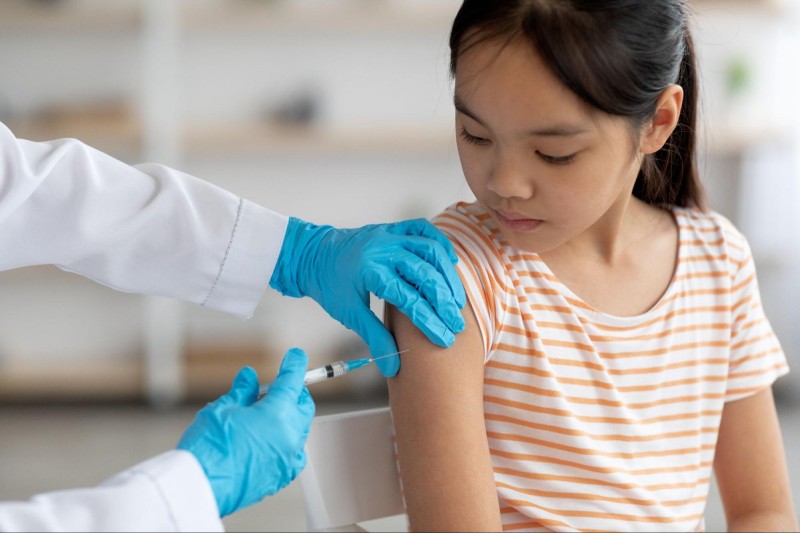
The ideal time to vaccinate girls against HPV is between the ages of 9 and 14.
According to health experts, one of the most effective ways to prevent cervical cancer is through HPV vaccination. The HPV vaccine is most effective when administered before a person becomes sexually active because it protects against high-risk HPV strains that cause most cases of cervical cancer.
In addition, regular screening remains crucial with HPV testing and Pap tests. These tests aim to detect high-risk HPV infections, abnormal cell changes, and precancerous lesions so that they can be treated before they develop into cancer.
Source: https://giadinh.suckhoedoisong.vn/quan-he-tinh-duc-som-va-nguy-co-ung-thu-co-tu-cung-172260430064609497.htm


![[Image] Close-up view of the interchange connecting the two expressways and Long Thanh Airport.](https://vphoto.vietnam.vn/thumb/1200x675/vietnam/resource/IMAGE/2026/05/25/1779703378210_ndo_br_z7863716673926-224453a31600126cce10622af6290afd-4549-jpg.webp)


![[Image] Hanoi's urban life under the challenge of a "scorching hot" environment](https://vphoto.vietnam.vn/thumb/1200x675/vietnam/resource/IMAGE/2026/05/25/1779706979265_nang-nong-t5-2026-minh-duy-7-4636-jpg.webp)
























































































Comment (0)