

The Muong ethnic people in Quang Lac commune (Nho Quan district) have very unique customs and traditions, creating a rich and diverse cultural identity. These beautiful aspects have been carefully selected by the local authorities and incorporated into village regulations and conventions, so that all citizens are responsible for implementing and preserving them.

Over 70% of the population in Quang Lac commune are ethnic Muong people. While many traditional cultural aspects need preserving, numerous outdated customs also persist. Over the years, the local authorities have made significant efforts to "separate the bad from the good," promoting the unique cultural features of the Muong people while boldly eliminating outdated customs, aiming to build a new cultural lifestyle, especially in wedding and funeral practices.
Mr. Bui Hong Y, former village head and a long-time respected figure in Dong Bai village, recounts that for the Muong ethnic group, wedding ceremonies are a very important event, highly significant in terms of community bonding, but also plagued by many outdated customs. The family organizing the wedding doesn't prioritize economic matters, but rather strives to make the ceremony joyful and well-attended. The ceremonies are quite elaborate, including the engagement day, the wedding proposal day, the betrothal day, the request for marriage day… and after each ceremony, the family has to prepare dozens of dishes to entertain the villagers. Therefore, a wedding usually takes one to two weeks to organize. Such extravagant weddings are wasteful of time, effort, and money.
To afford a wedding for their child, some families have to borrow money or even pigs. It's a tradition that regardless of whether a family is well-off or struggling, they must hold the wedding ceremony in the same way. Therefore, for many families, alongside the joy and happiness of holding a wedding for their child, there is also a worry that is difficult to share with anyone. Furthermore, in the past, child marriage and forced marriages were still common. It was rare for young men and women to marry based on love. Most marriages were arranged by parents who deemed them "compatible," even when the couples were very young. Not to mention, weddings often involved a lot of cigarette smoke, affecting health, the economy, and the environment.
But that was a story from many years ago. Now, the Muong people in Quang Lac have eliminated many outdated customs in weddings and funerals thanks to closely following and effectively implementing Directive No. 27-CT/TW dated January 12, 1998, of the Politburo "On implementing a civilized lifestyle in weddings, funerals, and festivals" (referred to as Directive 27), and considering it a useful "handbook" accompanying the Party Committee, government, and people of Quang Lac in the fight to eliminate outdated customs. The core contents have been distilled and incorporated into village regulations so that people understand and are responsible for following them.
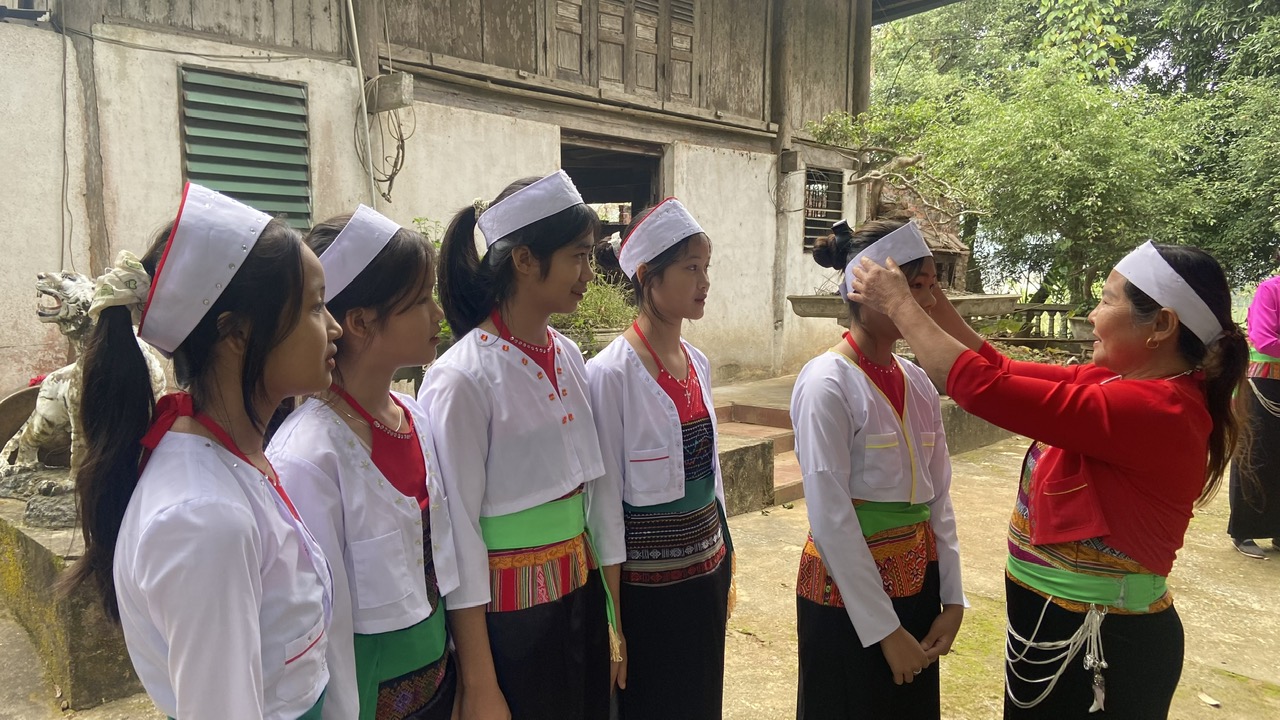
Thanks to these efforts, Quang Lac commune has now completely eliminated some outdated and cumbersome customs and traditions, shortening the wedding ceremony to only 1 to 1.5 days. Traditional wedding rituals have been reduced to just 2 to 3 steps: the initial meeting between the families, the engagement ceremony, and the wedding itself. In weddings, many unique cultural aspects have been revived, such as folk singing, courtship rituals, and wearing traditional costumes.
In particular, the marriage age is strictly adhered to in the Law on Marriage and Family: men must be 20 years old or older and women 18 years old or older. In many villages and hamlets, community organizations have played their role in promoting civilized lifestyles, such as prohibiting smoking at weddings, which has helped many families save unnecessary expenses. Another positive change is that parents are paying more attention to their children's marital happiness by creating conditions for them to freely get to know each other and marry based on love.
Recently, Quang Lac commune, in coordination with the district's functional departments, has also restored the traditional wedding ceremony of the Muong ethnic group. Young people today can admire and experience a traditional wedding that is rich in Muong ethnic colors, with many elaborate procedures, but without the outdated customs of the past.
Mr. Bui Van Gac, Vice Chairman of the People's Committee of Quang Lac commune, shared: "In recent years, villages and hamlets with a large ethnic minority population have paid great attention to propaganda and education to help people understand and preserve their ethnic cultural identity. In particular, the villages have promoted the self-governance role of the community in participating in the development and implementation of village regulations and customs, which include specific provisions on preserving cultural values."
Based on the village regulations and conventions established by each village, the commune actively directs the villages annually to revise and supplement these regulations with content on cultural conduct and the construction of new rural areas. Outdated content and regulations are replaced with new content that is more suitable for modern, civilized life. As a result, community awareness, solidarity, responsibility, and neighborly bonds are fostered and revived in each residential area. Outdated customs are significantly reduced. People are more enthusiastic and conscious of complying with the Party's guidelines and policies, and the State's laws.
In particular, to preserve and promote traditional cultural values, for many years now, all the villages in Quang Lac commune have established Muong ethnic cultural, artistic, and sports clubs. These clubs have attracted a large number of members of all ages. Club members voluntarily contribute funds to strengthen the gong ensemble, purchase costumes, and perform during festivals, New Year celebrations, and village gatherings.
Ms. Bui Thi Thuy, Head of Dong Bai village and a respected figure in the village, shared: " During holidays and Tet (Lunar New Year), many recreational activities and traditional cultural activities of the Muong people take place at the village cultural centers, such as gong playing, stick pushing, stilt walking, folk singing, and throwing the 'con' (a type of ball)... which are loved and enthusiastically participated in by the people. Especially in recent years, the distinctive cultural features of the Muong ethnic group have always been very attractive to domestic and international tourists. This cultural identity also opens up opportunities for us to develop community tourism by exploiting unique cultural values, creating resources for economic development and improving the quality of life. Besides performing for local tourists, the club also accepts invitations to perform at many events in other localities inside and outside the province."
Thanks to these efforts, the Muong people in Quang Lac have now restored many unique cultural features that were once in danger of disappearing. Specifically, the Muong people have brought back the sound of gongs and drums in community cultural activities. Over 80% of Muong people wear traditional clothing when participating in community activities; 90% of Muong households regularly communicate in the Muong language in their daily lives, with a focus on organizing activities to teach the language to younger generations.
Dao Hang



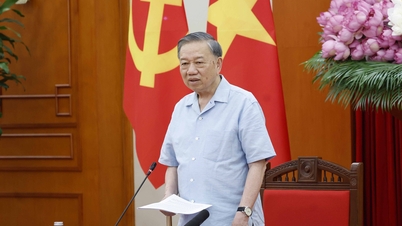
![[Photo] General Secretary and President To Lam presides over a meeting on preparations for the review of one year of operation of the three-tiered government system.](https://vphoto.vietnam.vn/thumb/1200x675/vietnam/resource/IMAGE/2026/06/02/1780391821195_a1-bnd-4595-9717-jpg.webp)

































































Comment (0)