

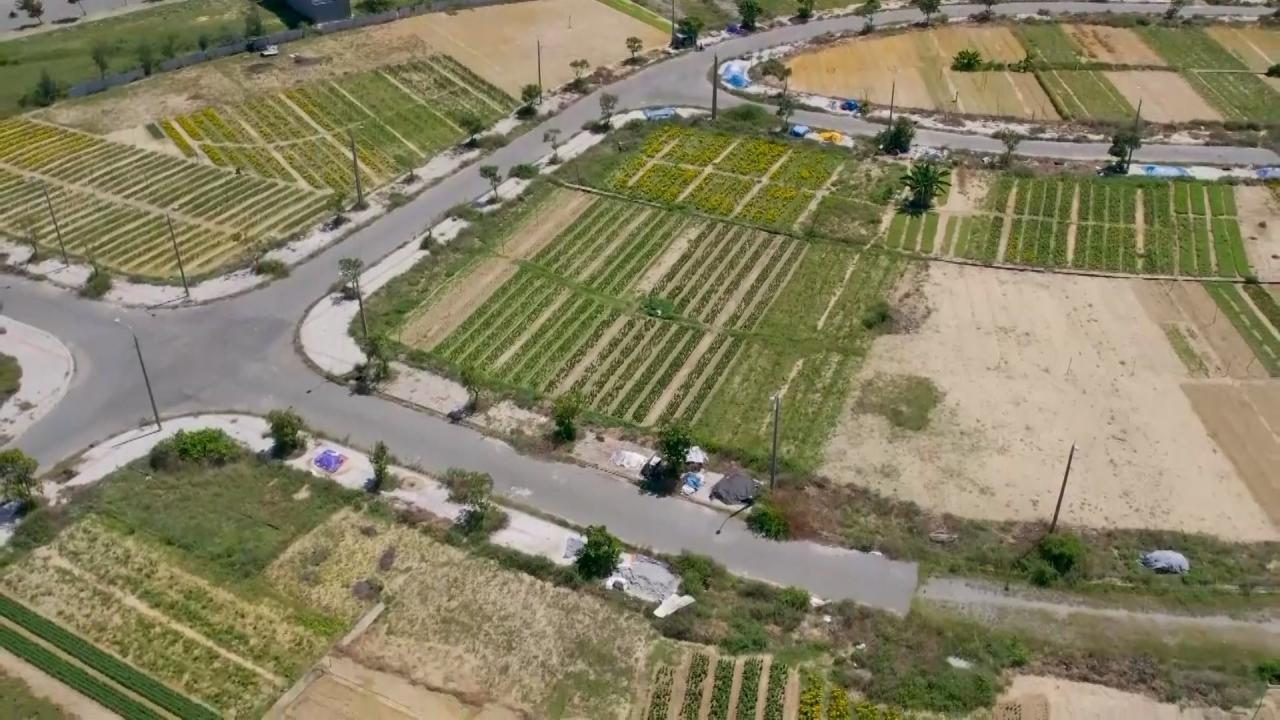
Problems arising from "land history"
One phrase we often hear when discussing land clearance issues with relevant agencies is "due to historical land conditions."
That phrase, in essence, describes a very noteworthy situation: land management in many localities has long been lax and inconsistent. Specifically, this includes ambiguity in the management of public land; incorrect determination of land ownership when granting land use rights to citizens; and the ambiguous appearance of the letter "T" (residential land) in land use right certificates, causing much controversy...
The most obvious consequence of these discrepancies is that they have created confusion for authorities and led to widespread public disagreement when implementing compensation, support, and resettlement policies.
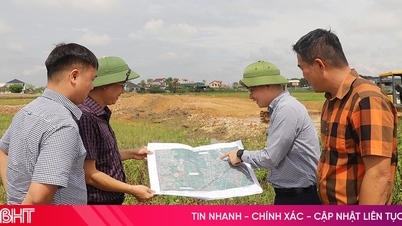
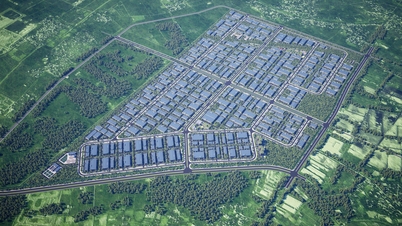
The Thaco - Chu Lai Industrial Park project, with a land clearance scale of 451 hectares in Tam Anh Nam commune (Nui Thanh district), is a "typical example of slow progress," mainly due to "history" of land management and use.
The land clearance process for this project began in late 2019 and has been extended several times following "ultimatums" from provincial leaders, but the cleared land is still not continuous.
According to the latest report, the project has so far cleared over 351.3/451 hectares (78%), but the land plots are not yet contiguous. Specific obstacles listed in this project include public land; land consolidation and exchange; construction of houses on agricultural land; households disagreeing with compensation for production forest land, and demanding compensation for land with perennial crops...
The Land Development Center of Nui Thanh District is one of the three units responsible for land clearance for the Thaco - Chu Lai Industrial Park Project. Through various handover phases, the center has now handled the land clearance for approximately 50% of the project's area.
Mr. Doan Thanh Tri, Deputy Director of the Land Development Center of Nui Thanh District, acknowledged the "historical" obstacles that are very difficult to resolve in the land clearance work for this project; he also stated that the regulation that houses built on agricultural land are not eligible for resettlement land (according to Decision 42 of the Provincial People's Committee on compensation, support, and resettlement when the State recovers land) "is a problem that every project faces, but the 2024 Land Law has provided a way to resolve it."
Disassembly instructions
Improving land management and developing practical compensation, support, and resettlement mechanisms in accordance with the 2024 Land Law are two key tasks that Quang Nam province is focusing on implementing with a strict and timely approach to meet the land clearance needs in the province.
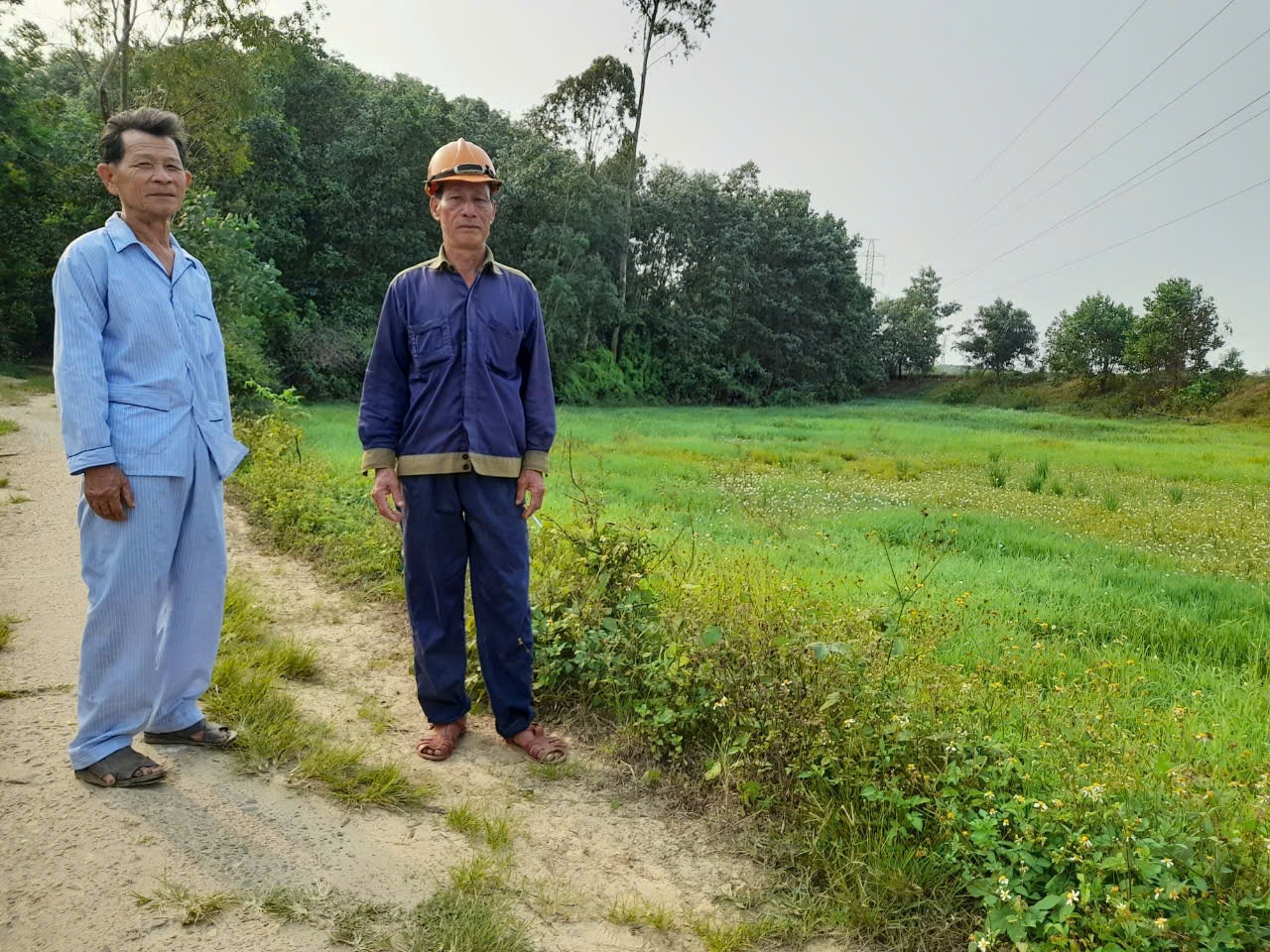
Regarding land management, the first priority is to definitively resolve the ambiguity in the "records" of public land management. According to the report, the province currently has 225,045 plots of public land, covering an area of 11,763.3 hectares, accounting for 3.14% of the total agricultural land area; of which 15,447 households with an area of 1,720 hectares have land lease contracts, while the remaining 10,043.3 hectares (accounting for 85.5% of the area) do not have land lease contracts.
In a recent interview with Quang Nam Newspaper, Mr. Bui Ngoc Anh, Director of the Department of Natural Resources and Environment, stated that the 2024 Land Law continues to not recognize the issuance of "red certificates" (land ownership certificates) for public land, and that when the State reclaims the land, there will be no compensation for the land.
However, an important opening is to allow consideration, recognition, and compensation when the State reclaims agricultural land that does not meet the conditions for issuing "land use certificates" for cases where households and individuals have been using the land stably and directly for production before July 1, 2004.
To implement this new provision in the 2024 Land Law and related regulations, the public land fund must first be "transparent." According to the proposal from the Department of Natural Resources and Environment, for cases where public land lacks a lease contract (only established on cadastral records, the State does not manage the public land fund according to regulations, and people use the land in violation of land regulations), the Provincial Party Committee is requested to direct localities to focus on accelerating the review of public land funds in each locality.
This includes reviewing and removing from the public land fund those previously established improperly; and addressing the issue of public land exceeding 5% (this task must be completed in the first quarter of 2025).
Specifically for key projects, localities are required to urgently organize preliminary reviews and implement the procedures for reviewing and approving the review results as a legal basis for land acquisition and compensation in accordance with regulations. This should be considered a key task to definitively resolve existing problems and inadequacies in the management of public land funds in general, as well as to address obstacles in the issuance of land certificates, compensation, and land clearance for projects in particular within each locality...
Regarding land acquisition mechanisms, Quang Nam province has directed the early implementation of the task of developing regulations on compensation, support, and resettlement. Immediately after the Land Law 2024 came into effect and the Government issued the Decree on compensation, support, and resettlement when the State acquires land (Decree 88, dated July 15, 2024), the provincial authorities began developing, soliciting feedback, and advising the Provincial People's Committee on the draft Regulations on compensation, support, and resettlement when the State acquires land in Quang Nam province.
A notable point in this draft regulation is that households whose agricultural land is confiscated may be compensated with residential land under various options, including "compensation with land of other uses besides agricultural land" as stipulated in the 2024 Land Law.
The draft regulations on compensation, support, and resettlement when the State reclaims land in Quang Nam province stipulate many mechanisms, which are expected to create a "new impetus" for land clearance work in the province. These regulations will be considered and approved by the Provincial People's Council at its upcoming session; and the construction of land management "corridors" in the province will continue to be implemented with many other contents in accordance with the 2024 Land Law.
--------------------------
Proposals to improve the legal framework for land clearance.
Land clearance is considered the most "troubled" area when implementing the Land Law regulations in the province. The compensation, support, and resettlement policies established previously, as acknowledged by specialized agencies, are under pressure to be closely aligned with the practical realities of land management and use – which have many shortcomings. In implementing the 2024 Land Law, Quang Nam is urgently developing a legal framework, especially regulations on compensation, support, and resettlement when the State acquires land. Quang Nam Newspaper has recorded some feedback from the grassroots level.
Mr. Tran Duy Quoc Viet - Deputy Head of the Department of Natural Resources and Environment of Dai Loc District: Many regulations regarding compensation and support policies need to be added.

The 2024 Land Law and Government Decree No. 88/2024/ND-CP dated July 15, 2024, have basically provided specific guidance to resolve obstacles and difficulties in land clearance work. Regarding matters under the authority of the Provincial People's Committee, the Department of Natural Resources and Environment has drafted regulations on compensation, support, and resettlement when the State recovers land in Quang Nam province and has sent them to localities for comments.
Based on this, the Department of Natural Resources and Environment of Dai Loc district advised the District People's Committee to provide feedback and add content to the draft. Notably, the district requested that regulations be clearly and specifically defined regarding the recovery of agricultural land for one or multiple projects when the State recovers land at a single point in time or cumulatively from the past to the present, in order to provide a basis for implementation.
The electricity sector is tasked with determining which houses and structures serving the living needs of households and individuals do not need to be relocated from the safety corridor of overhead high-voltage power lines, as stipulated by the Government.

Dai Loc District has suggested adding content beyond the draft prepared by the Department of Natural Resources and Environment. Specifically, they proposed reviewing the regulations on expenditure levels to ensure the organization and implementation of compensation, support, and resettlement as stipulated in Clause 8, Article 27 of Decree No. 88. They suggested that the expenditure level be determined as a percentage multiplied by the value of compensation, support, and resettlement.
Dai Loc District also requested clarification on the policy regarding the support for the difference in minimum resettlement allowance for households allocated resettlement plots from the second plot onwards.
Currently, some families have houses built on land originally used for perennial crops, which originated from garden or pond land within the same residential plot. Therefore, it is necessary to add specific regulations on support levels or establish specific compensation rates for this type of land in the annual land price list of the Provincial People's Committee.
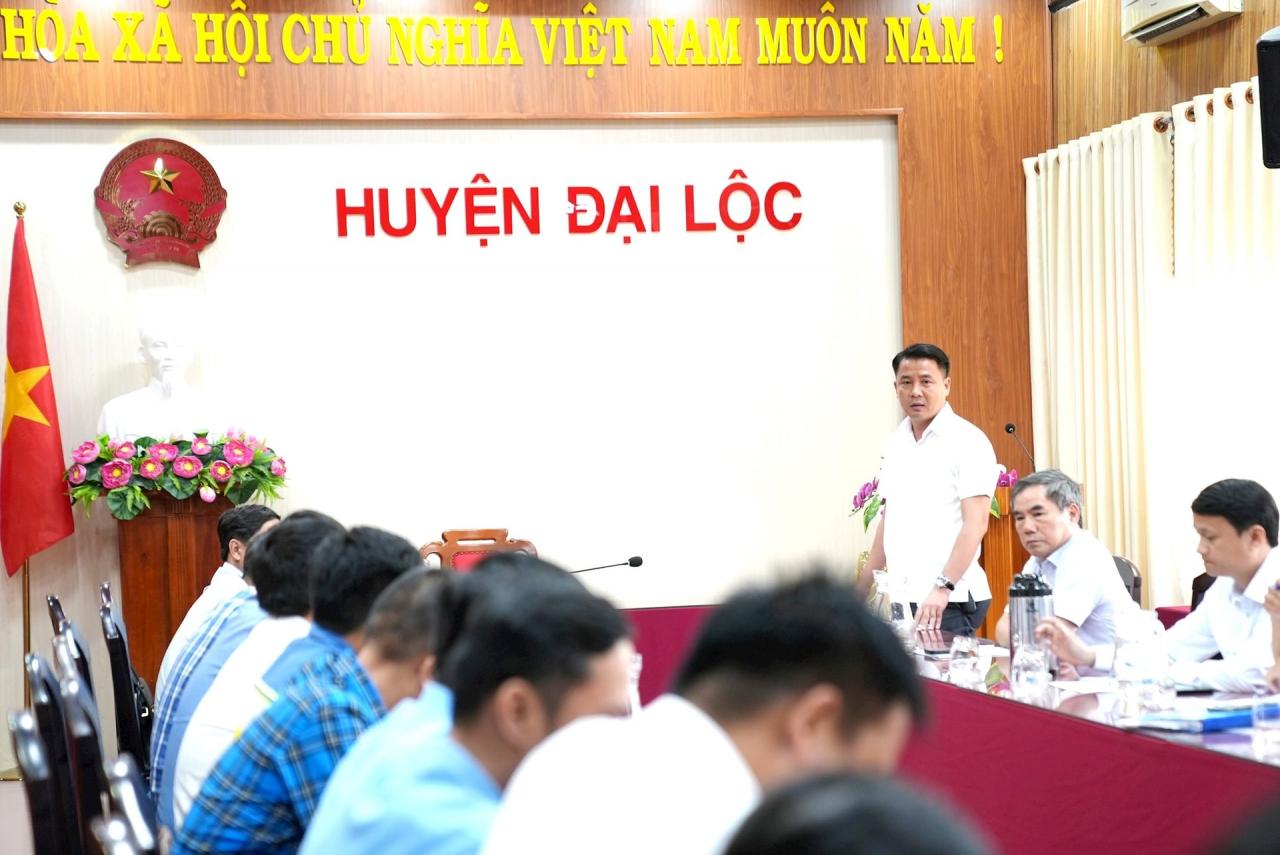
In reality, households constructing houses often exceed the area of land designated for expropriation. This includes cases of construction on land previously used for perennial crops, such as gardens or ponds, within the same plot of land as the house. Therefore, the People's Committee of Dai Loc District has suggested that the draft should specify a timeline for construction to determine appropriate compensation or support levels...
CONG TU (recorded)
Mr. Nguyen Minh Ly – Vice Chairman of the People's Committee of Hoi An City: Proposed institutionalization in the regulations on resettlement.
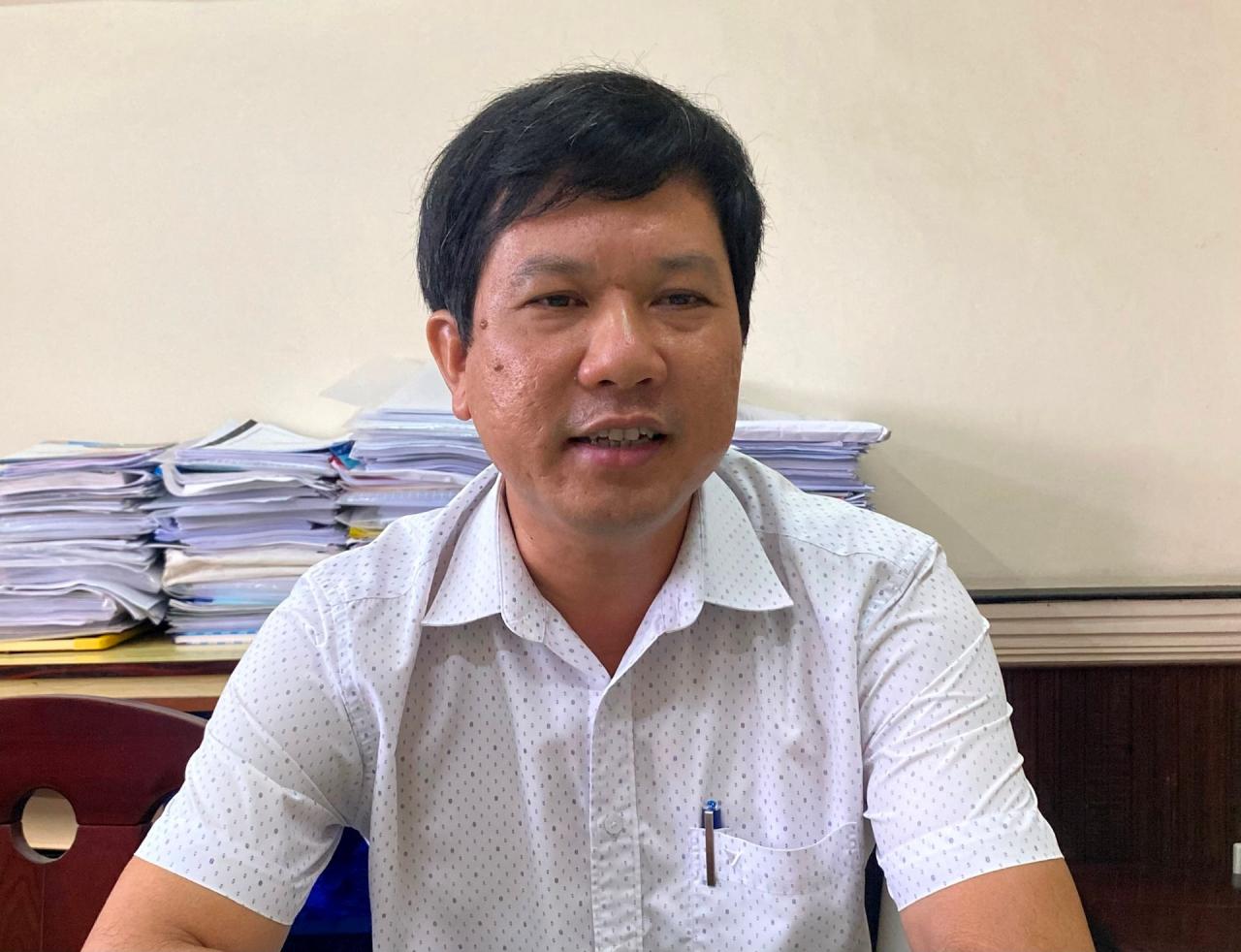
According to the 2024 Land Law, the province will be granted the authority to issue certain documents, including regulations on compensation, support and resettlement, and regulations on the conditions for land subdivision. Currently, the province is focusing on drafting these regulations for early issuance.
Currently, due to the lack of regulations, implementation for new cases will certainly face obstacles. While awaiting new regulations, Hoi An is focusing on resolving old outstanding issues. For cases where compensation plans have been established, efforts are being made to persuade residents to proceed with compensation payments and address issues related to resettlement policies. New cases are temporarily awaiting new provincial regulations.
Previously, compensation faced many obstacles such as resettlement unit prices or issues related to the recognition of residential land for people due to the implementation of Directive 299 (people without land registration records despite long-term use, leading to disadvantages when subject to land clearance). However, the 2024 Land Law has expanded this to increase people's rights, such as arranging resettlement before land acquisition.
At the same time, the province is also drafting regulations stipulating that in cases where a large amount of land is reclaimed, resettlement will be allocated at a corresponding level instead of only according to a category, which is also an advantage in land clearance.
In a recent submission to the Department of Natural Resources and Environment, Hoi An proposed further improvements to the resettlement policy, specifically suggesting a fairer approach to differentiating between large-scale land acquisition cases. Specifically, they argued against lumping together large-scale families with small-scale families in resettlement arrangements, as this would create policy inconsistencies.
Furthermore, the calculation based on married couples also needs consideration, as there is no policy on this in the provincial draft. The 2024 Land Law stipulates that in cases where married couples are actually living together, they will be allocated a residential plot of land depending on the local land availability. This also needs to be institutionalized in the provincial regulations (currently, the province only regulates based on the number of household members, not on married couples who meet the conditions for household separation).
Regarding the issue of land clearance, compensation, and resettlement for urban development projects, we propose that instead of providing temporary housing for 12 months, the land must be handed over within 36 months.
In fact, some regulations guiding the implementation of the 2024 Land Law are still incomplete, leading to many difficulties in land clearance and resettlement. Therefore, to ensure that land clearance and resettlement are not interrupted, the City People's Committee requests the Department of Natural Resources and Environment to promptly issue guiding documents while awaiting the issuance of related documents (regarding the application of compensation and land clearance policies; methods for determining specific land prices, resettlement land prices, and consulting costs for determining specific land prices...).
KHANH LINH (recorded)
Mr. Tran Uc – Chairman of the People's Committee of Dien Ban town: Quickly issue new policies.
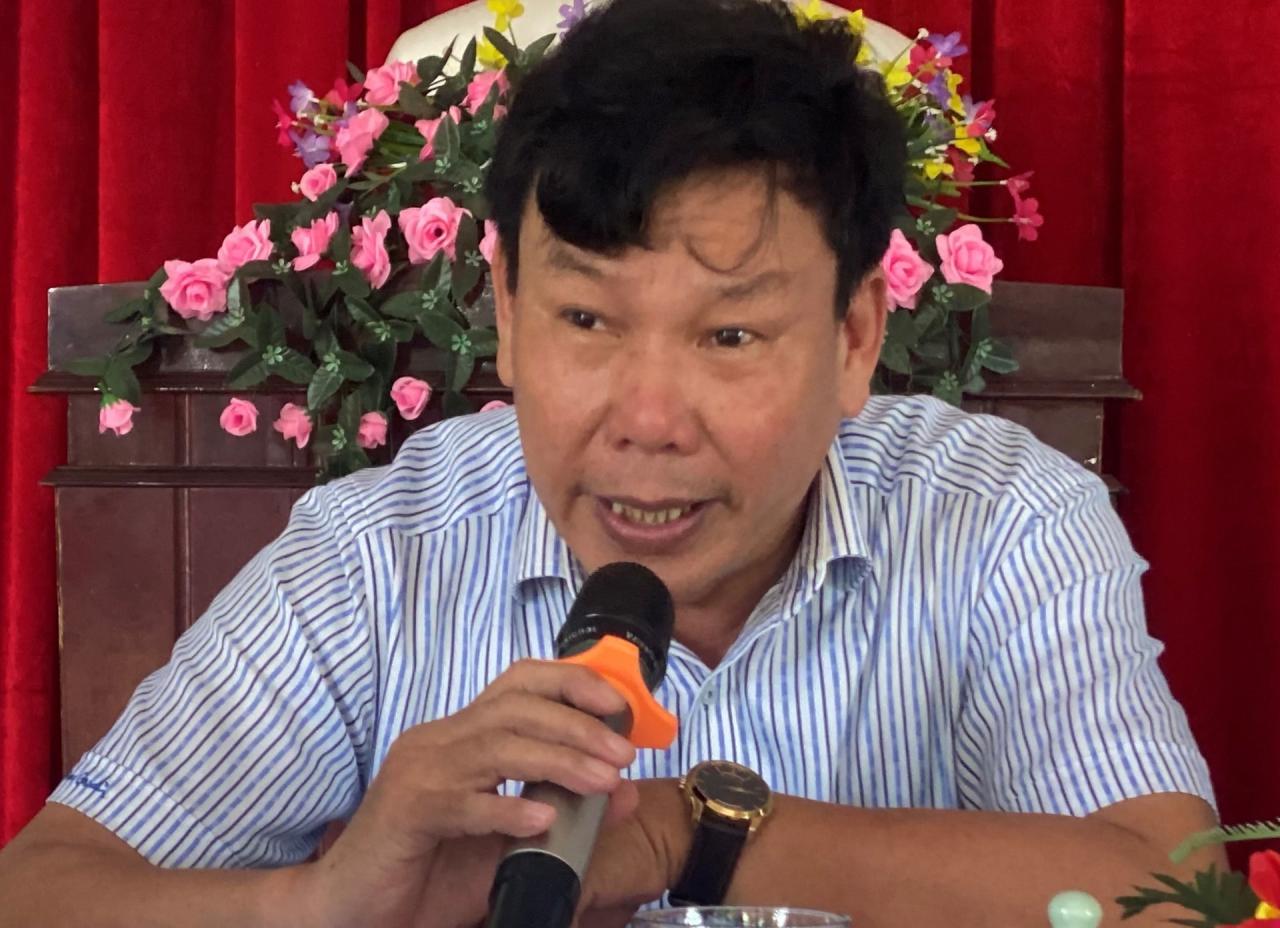
The new Land Law, with its policy mechanisms, is geared towards benefiting the people. However, the procedures are currently incomplete. Firstly, the land classification for residential land in the province has not yet been determined when reclaiming old residential land. Even the mechanism to replace the province's Decision 23 on resettlement land prices has not yet been established. Furthermore, the provincial People's Committee has not yet determined the residential land classification according to the new Land Law…
Regarding specific policy mechanisms, such as Circular 61 of the Ministry of Finance on determining the costs for consulting units established for compensation (land fund development centers), although it has been replaced by new regulations, no agency has yet provided guidance on the basis for determining these costs.
According to the old regulations, when a compensation plan needed to be prepared, a fee of 2% was charged to the units responsible for preparing the plan. However, the new regulations (Circular 61) prohibit this practice.
Besides all the proposed plans, a budget must also be prepared to support those plans and submitted to the competent authority for approval and payment. As a result, for more than a year, the Dien Ban Land Development Center has essentially been receiving advances without any formal settlement procedures.
In short, the biggest obstacle currently is the untimely issuance of policies and mechanisms; the old ones have expired, but the new ones have not yet been introduced. Therefore, from August 1st until now, all land clearance and compensation activities have had to stop and wait, mainly dealing with some transitional issues from the old ones.
The government has already issued a decree, so the first priority is for the province to finalize the institutional framework and promulgate new regulations on land clearance and resettlement to replace the old ones. Once these regulations are in place, everything will follow; as it stands, there is no legal framework to begin with. Of course, if any problems arise during implementation, we will provide further feedback.
VINH LOC (recorded)
Mr. Nguyen Ngoc Trai – Director of the Land Development Center of Tam Ky City: Support for resettlement price differences and adjustments to account for changes are needed.
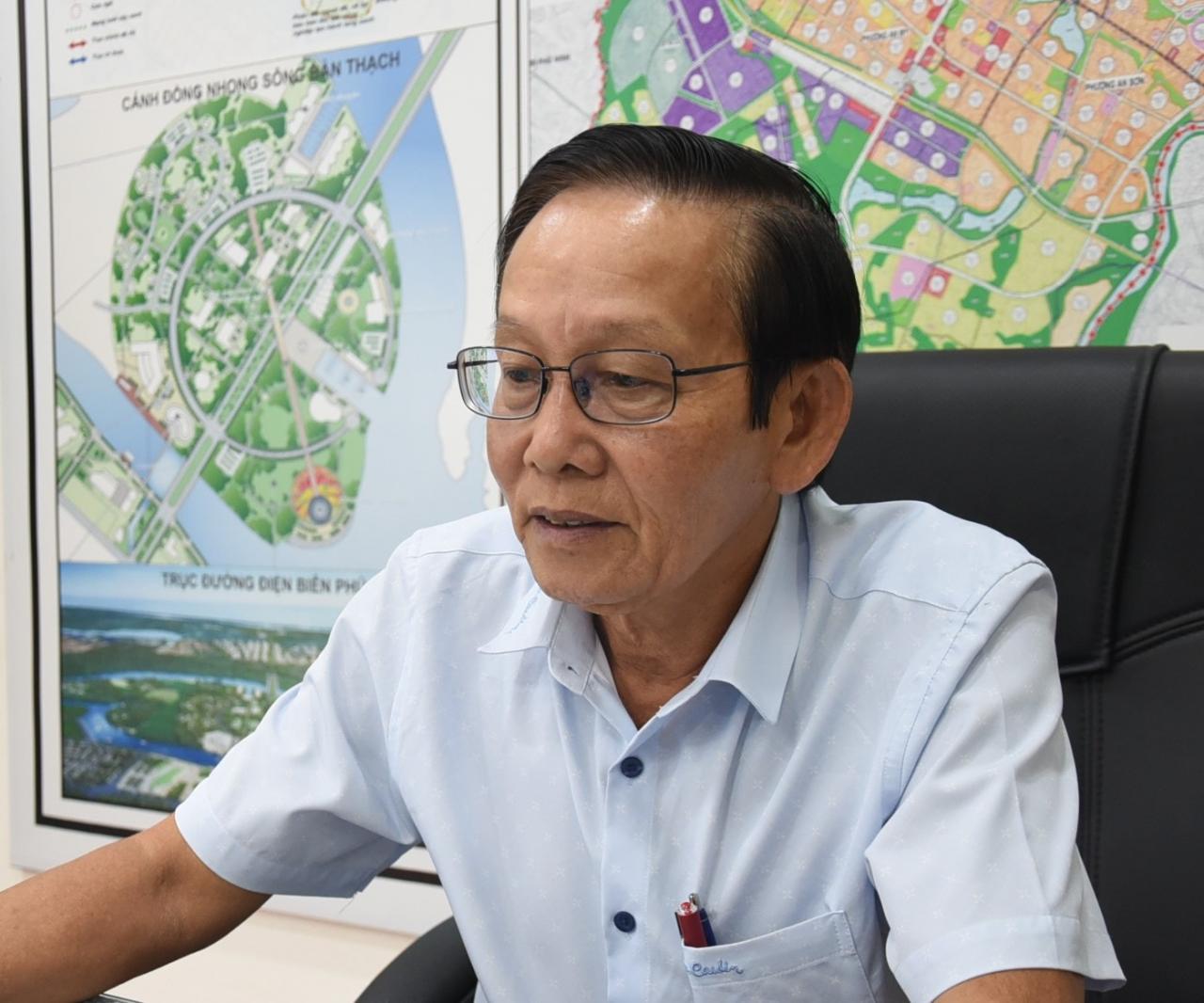
Previously, in implementing the 2013 Land Law, the province issued Decision (QD) 43 in 2014. In 2016, Decision 02 was issued, and in 2017, Decision 19 was further amended and supplemented to address the previous decisions.
It can be said that from 2017 to the end of 2020, the compensation policy in the province was stable and operated very well. However, in December 2021, the Provincial People's Committee issued Decision 42, which has many shortcomings and difficulties for compensation and land clearance work.
For example, in cases of land use before July 1, 2004, if houses were built on agricultural land, garden land, or land inherited from parents, these were previously recognized as valid if not affected by planning regulations, and compensation for residential land and resettlement difference were provided. However, Decision 42 does not include this, considering the act a violation of the law. This is the biggest shortcoming of Government Decree 91 dated November 19, 2019, on administrative penalties for land violations.
For those who owned residential land but did not have a previous permanent residence registration, they were also eligible for compensation for the difference in resettlement costs when the land was confiscated. However, under Decision 42, this is no longer possible; they are now required to have a permanent residence registration in the commune or ward where the land was confiscated.
This is also completely illogical. Furthermore, previously, under Decision 43, compensation for garden land was 50% of the value of residential land, but Decision 42 reduced this to 50% and no longer provided residential land...
Following Government Decree 88 dated July 15, 2024, regulating compensation, support, and resettlement when the State reclaims land, the Provincial People's Committee will issue new regulations.
The new regulations have several notable advantages, such as allowing the reclamation of over 750m2 of agricultural land to be reallocated for other uses, such as one resettlement plot. Or, reclaiming 400m2 of garden land can result in the reallocation of one resettlement plot.
In my opinion, compensation for the difference in resettlement costs should be considered, as there is a significant gap between compensation prices and resettlement prices (currently, the gap is 70% and 90% of market prices). Without compensation for the difference in resettlement costs, people's residential land would have to be returned to them when their land is confiscated.
Secondly, compensation for garden land should not be based on a fixed amount because garden land in urban areas is different from that in districts. Many households in districts have 5,000-7,000 square meters of garden land, but it is not of high value, while urban garden land is very valuable; if not affected by planning or land use conversion, 100 square meters can be worth billions of VND.
Regarding land management records, we have records from 1985 (Record 299), records under Decree 64 from 1992, records under Decree 60 from 2024, and the 2010 database. If land use changes were properly updated, land clearance would no longer require surveying and updating, which is currently a very complex process, causing significant difficulties in compensation work and leading to complaints and lawsuits. Therefore, in the future, it is necessary to update land use changes to create records that certify the area of land reclaimed from people and confirm the origin of land use.
XUAN PHU (recorded)
Source: https://baoquangnam.vn/quang-nam-xay-dung-hanh-lang-quan-ly-dat-dai-3141704.html













































































Comment (0)