

Citizens are entitled to request information from agencies and units.
The Law on Access to Information (amended) consists of 4 chapters and 31 articles regulating the exercise of citizens' right to access information; and the responsibilities of state agencies and public service units tasked with providing basic and essential public services (hereinafter referred to as agencies and units) in ensuring citizens' right to access information.
This law will come into effect on September 1, 2026.

The law stipulates that citizens have the right to be provided with accurate, complete, timely, transparent, and convenient information; and to file complaints, denunciations, and lawsuits against acts violating the law on access to information as prescribed in Article 13 of this Law.
Citizens access information through the following methods: freely accessing information publicly available from agencies and organizations; and requesting information from agencies and organizations.
Agencies and units are responsible for providing information they create, except as stipulated in Article 15 of this Law; in the case stipulated in Article 16 of this Law, they shall provide information when the conditions prescribed are met.
At the same time, the Law on Access to Information (amended) also clearly stipulates that agencies and units are responsible for providing information they possess when such provision is necessary to protect public interests and public health.
For records and documents containing both inaccessible and accessible information, and parts of information that can be reasonably separated, agencies and units shall consider and decide whether to provide only the portion of the records and documents containing accessible information.
Regarding the responsibilities of agencies and units in ensuring the exercise of the right to access information, the Law stipulates that agencies and units are responsible for implementing measures to ensure the right to access information; creating favorable conditions for people with disabilities, ethnic minorities, people living in border areas, islands, mountainous areas, ethnic minority areas, and areas with difficult and extremely difficult socio -economic conditions to exercise their right to access information.
Agencies and units shall create conditions and encourage businesses, organizations, and individuals to research and apply scientific and technological advancements in building public information systems; they are responsible for upgrading and investing in specialized equipment to serve the information provision activities of agencies and units in border areas, islands, mountainous regions, ethnic minority areas, and areas with difficult and extremely difficult socio-economic conditions as prescribed by relevant laws.
Agencies and units are responsible for maintaining, storing, and updating information databases, ensuring that the information is systematic, complete, comprehensive, and easily searchable, downloadable, and usable. Agencies and units are also responsible for reviewing, classifying, verifying, and ensuring the confidentiality of information before providing it.
Expand the scope of information that must be made public.
Earlier, presenting a summary of the Report on the acceptance, explanation, and revision of the draft Law on Access to Information (amended), Minister of Justice Hoang Thanh Tung stated that, regarding the principles of ensuring the right to access information (Article 3), incorporating the opinions of National Assembly deputies, the draft Law has added provisions to better ensure citizens' right to access information in the digital environment, in line with the trend of scientific and technological development and digital transformation. The forms of public disclosure and provision of information have been expanded and diversified, encouraging the application of electronic methods.
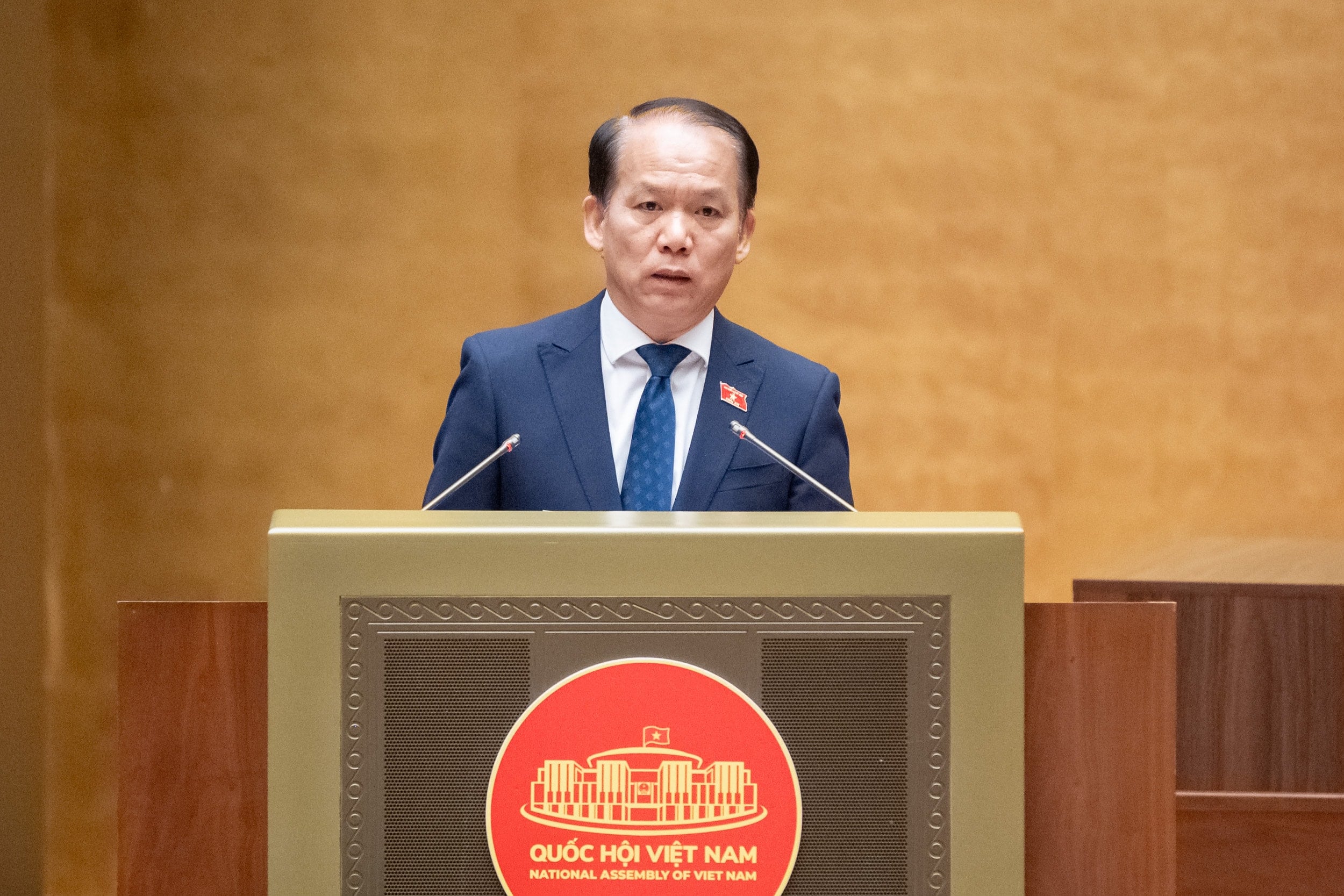
At the same time, Article 24 was revised to stipulate that agencies and units are responsible for providing information in the form requested by the applicant, appropriate to the nature of the information and the capacity of the agency or unit to provide it. The Government will continue to provide detailed regulations in sub-laws on appropriate support measures for vulnerable groups (the elderly, children, the poor, people in difficult circumstances, etc.) to ensure inclusiveness and fairness in access to information.
Regarding the scope and responsibility for providing information (Article 10), the Minister stated that, for commune-level People's Committees, the draft Law stipulates the responsibility to provide information they generate themselves, excluding information received from other agencies (except in certain legally defined cases), in order to ensure reasonableness and feasibility in the context of restructuring and expanding the functions and tasks of the commune level. The draft Law also strengthens decentralization and delegation of authority by giving provincial and commune-level People's Committees the autonomy to identify information providers, creating flexibility in implementation.
Regarding partial access to records and documents, the draft Law has added a provision requiring agencies and units to review and classify information before providing it; ensuring a clear distinction between accessible and inaccessible information. Technical details will be specifically guided in operational documents to ensure consistency in implementation.

Regarding information that must be made public (Article 17), the draft Law has been revised to expand the scope of information that must be made public, by listing and adding important information groups that are directly related to people's lives, production and business activities of citizens and businesses.
"For information not listed but required to be made public by specialized laws, the draft Law stipulates that it will continue to follow the provisions of those specialized laws. This approach ensures completeness, avoids duplication, and maintains the flexibility of the legal system," Minister of Justice Hoang Thanh Tung affirmed.
At the same time, based on feedback from National Assembly deputies, according to Minister Hoang Thanh Tung, the draft Law stipulates that the Minister of Finance shall specify the actual costs for printing, copying, photographing, and sending information. Cases eligible for fee exemption or reduction will be detailed in sub-laws. This regulation aims to ensure transparency and consistency in application; and at the same time create a flexible basis for adjustment to suit socio-economic conditions in each period, ensuring that citizens' right to access information is not restricted by cost factors.
Source: https://daibieunhandan.vn/quoc-hoi-thong-qua-luat-tiep-can-thong-tin-sua-doi-10414722.html
![[Image] Hanoi's urban life under the challenge of a "scorching hot" environment](https://vphoto.vietnam.vn/thumb/1200x675/vietnam/resource/IMAGE/2026/05/25/1779706979265_nang-nong-t5-2026-minh-duy-7-4636-jpg.webp)

![[Image] Close-up view of the interchange connecting the two expressways and Long Thanh Airport.](https://vphoto.vietnam.vn/thumb/1200x675/vietnam/resource/IMAGE/2026/05/25/1779703378210_ndo_br_z7863716673926-224453a31600126cce10622af6290afd-4549-jpg.webp)
































































































Comment (0)