

 |
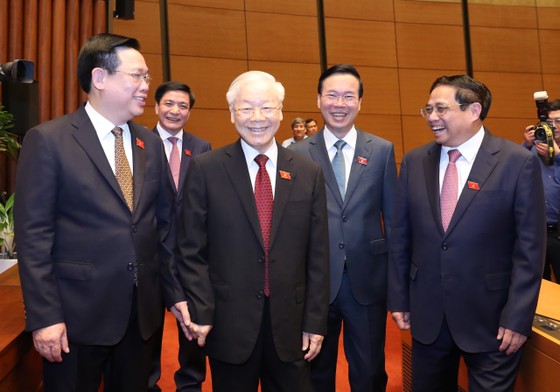
General Secretary Nguyen Phu Trong, President Vo Van Thuong, Prime Minister Pham Minh Chinh, and National Assembly Chairman Vuong Dinh Hue attended the closing session of the 5th session of the 15th National Assembly on the afternoon of June 24. Photo: QUANG PHUC |
According to the draft Resolution, there are two main groups: the first group includes policies already stipulated in Resolution 54 and resolutions on specific mechanisms that have been applied in other localities or are being stipulated in draft laws submitted to the National Assembly.
The new policy framework, stipulated for the first time in the draft resolution, comprises four groups of issues: investment; finance and budget; land management and planning; and the organizational structure of Ho Chi Minh City and Thu Duc City.
Pilot project for the TOD (Transit-Oriented Development) urban development model.
Specifically, regarding the pilot model of transport-oriented development (TOD), the Ho Chi Minh City People's Council decided to use local budget funds to implement an independent public investment project to carry out compensation, support, and resettlement for investment projects.
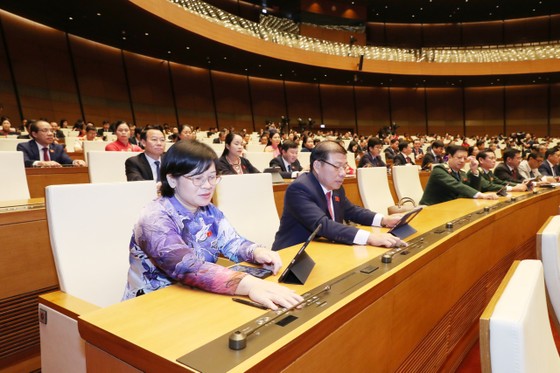 |
Members of Parliament press the button to approve the resolution. Photo: QUANG PHÚC |
The city reclaims land, renovates and develops urban areas, implements resettlement, and creates land reserves for auctioning to select investors for urban development, commercial, and service projects in accordance with the law. The People's Committee of Ho Chi Minh City organizes bidding to select investors to implement projects using land.
Regarding investment projects under the public-private partnership (PPP) method, Ho Chi Minh City is permitted to apply the PPP method to investment projects in the fields of sports and culture. The minimum total investment scale for PPP projects in the fields of health, education and training, sports, and culture is stipulated by the City People's Council.
 |
Members of the National Assembly press the button to approve the National Assembly Resolution piloting a number of special mechanisms and policies for the development of Ho Chi Minh City. Photo: QUANG PHUC |
In addition, Ho Chi Minh City is allowed to apply the BOT (Build-Operate-Transfer) contract type for investment projects to upgrade, expand, and modernize existing road infrastructure, in accordance with the approved planning for main urban streets and elevated roads. The Ho Chi Minh City People's Council issues a list of projects as stipulated in this clause. The Ho Chi Minh City People's Committee ensures full transparency and public disclosure of project information to facilitate public oversight.
Ho Chi Minh City also applies the BT contract type. For BT contract projects signed in accordance with the law at the time of signing the BT contract before the Law on Investment in the Public-Private Partnership method came into effect, and which have not yet completed payment to the investor, the use of land managed by the State falls under the category of rearranging and disposing of public assets to pay the investor.
Investing in infrastructure development
Regarding mechanisms and policies related to finance and the state budget, the Ho Chi Minh City budget is entitled to 100% of the increased revenue from the adjustments to fees and charges stipulated in point a of this clause, to invest in socio -economic infrastructure and other expenditure tasks within the city's budget responsibilities.
Ho Chi Minh City implements a mechanism to generate funds for salary reform as stipulated. Specifically, the Ho Chi Minh City People's Council decides on the use of surplus funds from the city budget allocated for salary reform, allowing lower-level budgets to use these surplus funds to invest in socio-economic infrastructure development within their budgetary expenditure responsibilities and to pay additional income.
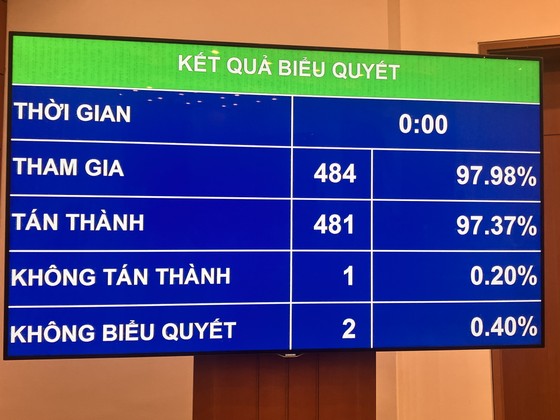 |
The National Assembly delegates voted to approve the Resolution on piloting a number of special mechanisms and policies for the development of Ho Chi Minh City. Photo: VAN MINH |
At the same time, it decides on the use of the City budget to implement regional and inter-regional road transport projects and works located on the administrative boundaries between the City and other localities, national highway and expressway projects passing through the City's territory; and to provide support to other localities in the country, and to localities in other countries when necessary.
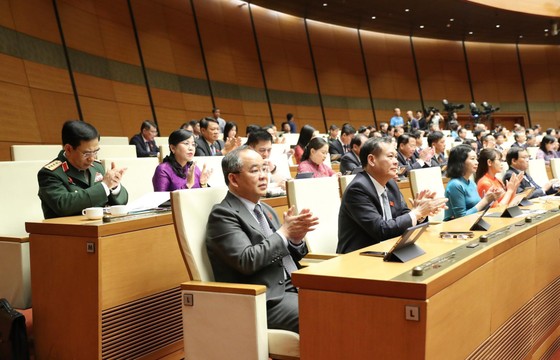 |
Members of the National Assembly applauded immediately after pressing the button to approve the National Assembly Resolution on piloting a number of special mechanisms and policies for the development of Ho Chi Minh City. Photo: QUANG PHÚC |
For projects using rice-growing land for other purposes, the Ho Chi Minh City People's Council decides on the conversion of rice-growing land under 500 hectares in accordance with the land use plan and scheme approved by the competent authority. The procedures for converting rice-growing land under 500 hectares are stipulated by the Ho Chi Minh City People's Council.
For social housing construction investment projects, the Ho Chi Minh City People's Committee approves the planning and allocates land for social housing within the scope of commercial housing projects, or approves the planning and allocates land for social housing in other locations outside the scope of commercial housing projects to meet the social housing needs in the area.
The Ho Chi Minh City State Financial Investment Company (HFIC) is a wholly state-owned limited liability company functioning as a local development investment fund. Based on a proposal from the Ho Chi Minh City People's Committee, the Ho Chi Minh City People's Council is authorized to allocate public investment capital from the city budget to subsidize interest rates for investment projects financed by HFIC in priority socio-economic development sectors within the city, according to the criteria, conditions, procedures, and regulations stipulated by the Ho Chi Minh City People's Council.
Compensation for land when the State reclaims land must ensure that those whose land is reclaimed have housing and living conditions equal to or better than their previous residence. Ho Chi Minh City is considering providing support to those whose land is reclaimed and owners of assets attached to the land to create conditions for them to have jobs, income, and stable lives, production, and business.
Support for innovation and entrepreneurship in the City's priority sectors is stipulated, with exemption from corporate income tax for a period of 5 years from the time income tax becomes payable on income from innovative startup activities of innovative startup businesses, science and technology organizations, Innovation Centers, and intermediary organizations supporting innovative startups operating within the City.
Individuals and organizations with income from the transfer of capital contributions or investment rights in innovative startup businesses in the city are exempt from personal income tax and corporate income tax.
Regarding the organizational structure of the government, according to the draft resolution, the Ho Chi Minh City People's Council will establish the Department of Food Safety as a specialized agency under the Ho Chi Minh City People's Committee.
The regulations define the functions, tasks, powers, and organizational structure of the Department of Food Safety based on the transfer of state management functions regarding food safety, inspection, examination, and handling of administrative violations related to food safety, and the issuance of animal product quarantine certificates outside the city from the Department of Health, the Department of Agriculture and Rural Development, and the Department of Industry and Trade to the Department of Food Safety.
The People's Committee of a district in Ho Chi Minh City may have no more than 3 Vice Chairmen. For wards, communes, and towns with a population of 50,000 or more, the People's Committee of the ward, commune, or town may have no more than 3 Vice Chairmen.
The People's Council of Thu Duc City decided to establish the Urban Affairs Committee under the People's Council of Thu Duc City. The People's Council of Thu Duc City has no more than 2 Vice-Chairmen and no more than 8 full-time representatives. The People's Committee of Thu Duc City has no more than 4 Vice-Chairmen.
Earlier, the National Assembly heard a report on the acceptance and explanation of the draft Resolution of the National Assembly on piloting a number of special mechanisms and policies for the development of Ho Chi Minh City.
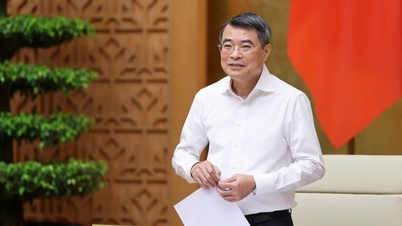
According to Le Quang Manh, Chairman of the National Assembly's Finance and Budget Committee, most National Assembly deputies agreed on the necessity of issuing and passing a Resolution to replace Resolution 54 on piloting some specific mechanisms and policies for the development of Ho Chi Minh City at the 5th session of the 15th National Assembly.
The Chairman of the Finance and Budget Committee stated that the Resolution takes effect from August 1, 2023. The Resolution also stipulates that a preliminary review of the implementation over the next three years will be conducted and reported to the National Assembly at the end-of-year session in 2026. A final review of the Resolution's implementation will be reported to the National Assembly at the end-of-year session in 2028.
In cases where there are differing provisions on the same issue between this Resolution and other laws or resolutions of the National Assembly, the provisions of this Resolution shall apply. If other legal documents provide more favorable or advantageous mechanisms or policies than this Resolution, the beneficiary may choose to apply the most beneficial level of preferential treatment.
The issuance of this Resolution aims to institutionalize Resolution 31 of the Politburo and implement Resolution 76 of the National Assembly. This will contribute to perfecting the institutional framework, removing obstacles in mechanisms and policies, creating a foundation for unleashing potential and advantages, and achieving breakthroughs in socio-economic development to build Ho Chi Minh City into a civilized and modern city, playing the role of a special urban center, leading the way in industrialization and modernization, and making increasingly significant contributions to the region and the country.
The policies outlined in the draft resolution are quite comprehensive across many areas, ensuring continuity with Resolution 54 of the National Assembly. In addition, it integrates several new policies that are similar to the specific policies of provinces and cities that have already been approved by the National Assembly.
Source
![[Photo] Secretary of the National Assembly Party Committee, Chairman of the National Assembly presides over the meeting of the Standing Committee and Executive Committee of the National Assembly Party Committee.](https://vphoto.vietnam.vn/thumb/1200x675/vietnam/resource/IMAGE/2026/06/03/1780480353201_ndo_br_bnd-2585-jpg.webp)


![[Photo] First session of the 14th Congress of the Vietnam Trade Union](https://vphoto.vietnam.vn/thumb/1200x675/vietnam/resource/IMAGE/2026/06/03/1780465947883_ndo_br_img-3852-jpg.webp)
![[Photo] General Secretary and President To Lam presides over a meeting with the Central Organizing Committee.](https://vphoto.vietnam.vn/thumb/1200x675/vietnam/resource/IMAGE/2026/06/03/1780482764658_a1-bnd-4741-3342-jpg.webp)






































![[Video] Sunset at Lap An Lagoon – Where the sun sets over the fishing nets](https://vphoto.vietnam.vn/thumb/1200x675/vietnam/resource/IMAGE/2026/05/31/1780192137701_beach-landscape-sea-water-nature-grass-745871-pxhere-com.jpeg)























Comment (0)