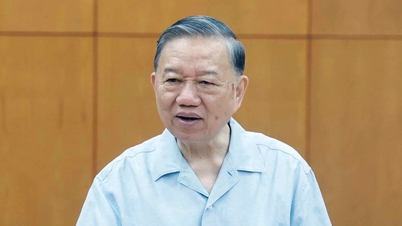
Therefore, shifting the focus of social housing policy from the goal of ownership to ensuring the right to secure housing through the development of rental housing, as directed by General Secretary and President To Lam, is a landmark decision in development thinking.
Ultimately, the most important aspect of housing policy is not to force everyone to own a home at all costs, but to ensure they have stable, safe, and affordable housing. For a young worker, a migrant worker, or a lower-middle-income family, being able to rent a quality apartment at a reasonable cost to focus on work, raising children, and saving is perhaps far more practical than being burdened with a mortgage for decades.
This shift aligns with the development trends of many countries. It is no coincidence that in many developed economies , housing policies increasingly prioritize accessibility to housing rather than promoting ownership at all costs. When house prices outpace income growth, mass home ownership can lead to increased household debt, reduced labor market flexibility, and significant long-term pressure on social security. Meanwhile, a healthy rental housing market facilitates easier mobility for workers, reduces financial pressure, and improves the quality of urban life.
However, the path from idea to reality will not be easy. The first challenge is investment resources. Developing large-scale social housing for rent requires very large capital and a long payback period. A greater difficulty likely lies in management and operational capacity. Rental housing is a long-term public service system, encompassing resident management, property maintenance, quality control, rental price coordination, and maintaining a stable living environment. If management is weak, social housing areas can easily deteriorate quickly, forming "concentrated poverty zones" and giving rise to additional social problems. This is a lesson many countries have learned from experience.
Therefore, for social housing for rent to become a strategic pillar, the leading role of the State is crucial. This doesn't mean the State must do everything directly, but more importantly, it must play a role in creating institutions, coordinating supply and demand, and designing long-term financial mechanisms. The experiences of Singapore and Malaysia show that the success of social housing lies not only in budget funding, but also in the ability to build strategic land reserves, an effective population data system, long-term financial mechanisms with low interest rates, and a professional operating system.
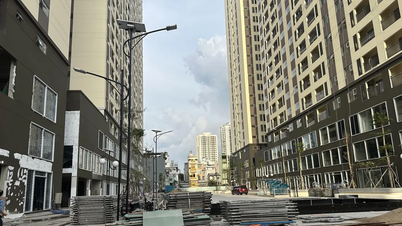
In this context, land availability and planning are particularly important issues. Social housing for rent is only truly meaningful when located in convenient locations, connected to public transportation, industrial zones, schools, hospitals, and essential services. Workers need more than just an affordable apartment. What they need is access to employment and a living environment that allows them to regenerate their energy. Therefore, if planning is done mechanically, projects are located far from the city center, lack infrastructure, or rental prices remain unaffordable, the risk of "supply not meeting demand" is entirely possible.
Another crucial issue is identifying the right beneficiaries and ensuring fairness. When social housing becomes a scarce resource, the risk of exploiting the policy is ever-present. This necessitates a transparent and open selection criteria system, utilizing technology and population data to ensure housing reaches those who truly need it.
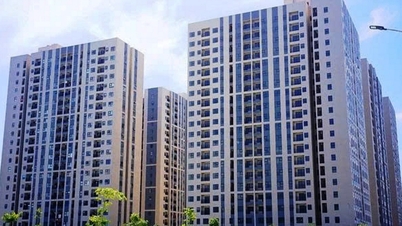
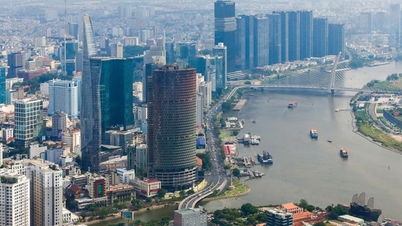
Despite the many challenges, the shift from a "home ownership" mindset to one focused on "guaranteeing the right to secure housing" remains a promising direction. This is not simply a change in housing policy, but also reflects the nation's capacity to create social security in this new phase of development. Ultimately, a livable city is not measured by the number of high-rise buildings, but by the fact that ordinary workers have the opportunity to find stable, safe housing and feel secure in their jobs and the city.
Source: https://daibieunhandan.vn/quyen-an-cu-10417880.html

































![[Photo] General Secretary and President To Lam receives Amazon's Senior Vice President David Zapolsky](https://vphoto.vietnam.vn/thumb/1200x675/vietnam/resource/IMAGE/2026/05/22/1779466547770_a1-bnd-3513-6601-jpg.webp)






























































Comment (0)