

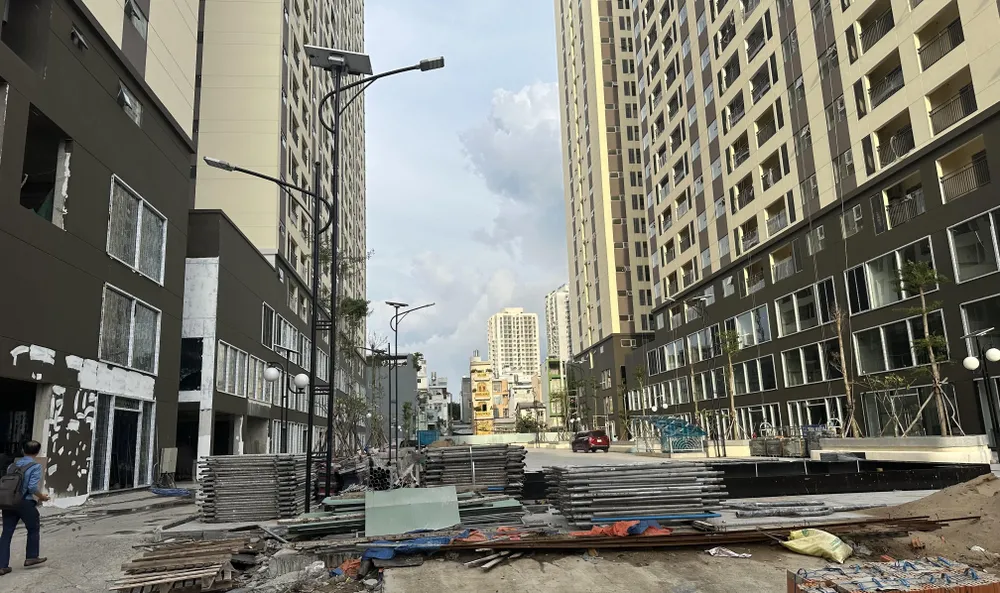
Clearly, there is a significant gap between the actual implementation and the social housing targets for 2030. The delays mainly stem from systemic barriers such as a lack of coordination in planning, insufficient clean land, unreasonable investment procedures and financial mechanisms, and unattractive incentive mechanisms. Notably, in the total social housing demand, rent-to-own demand accounts for 68.1%, purchase demand 26%, and pure rental demand only 5.9%.
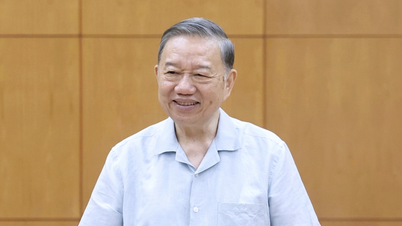
Of these, the salaried group (civil servants, public employees, workers, armed forces personnel, etc.) accounts for 82% of the long-term rental model; the student group accounts for 14% of the socialized dormitory and mini-apartment model. Thus, 96% of the target group has a stable income and is fully capable of paying rent if prices are reasonably controlled. However, the rental market is severely undersupplied and has not been properly exploited. This is the basis for identifying rental housing as a strategic pillar, as recognized and directed by General Secretary and President To Lam.
To achieve 90% of the social housing target in the next five years, and to fulfill the "common ground" set by the General Secretary and President, Ho Chi Minh City must simultaneously implement key, highly feasible solutions. Specifically, it is necessary to build a "one-stop-shop" mechanism, addressing both supply issues (investment, construction, land, planning) and demand issues (identifying, verifying, and allocating housing to eligible beneficiaries in a transparent, fair, and reasonable manner). The legal procedures should be shortened to approximately 60 days (from the investment approval stage to the construction permit stage).
Leverage the new provisions (currently being proposed in the Draft Law on Special Urban Areas) to address land allocation issues, including allowing the city to assign social housing projects to investors on state-managed land without auctioning land use rights, changing land use purposes, or separating them into independent projects if they conform to the planning. Digitize the entire process of reviewing tenant eligibility, integrating it with the national population database to ensure speed and prevent policy abuse.
Regarding financial barriers (the leading reason for private sector participation), a comprehensive solution is needed from both the State and the market. Specifically, the Ho Chi Minh City People's Council should provide a special mechanism allowing HFIC (Ho Chi Minh City State Financial Investment Company) to lend up to 70% of the total investment for the entire project over 7 years, instead of relying on slow-disbursing central government funds.
Due to the large supply and varying needs of different groups, it is necessary to diversify the forms of social housing (buy, lease-to-own, and rent) for all beneficiaries. This includes prioritizing areas based on target groups and regions, along with the type of housing and the applicable mechanisms.
For example, industrial zones in Binh Chanh, Hoc Mon, and Cu Chi will offer rental housing primarily for workers. For large-scale industrial zones, priority will be given to integrated worker urban areas, applying the PPP model and HFIC's support in providing 70% financing…
On the one hand, a city-wide resettlement housing fund will be established; on the other hand, public property funds will be utilized to adjust and convert between different types of housing (resettlement, public housing, social housing, urban renovation) without the need for procedures to prepare, appraise, and approve functional conversion plans – a proposal from the draft Law on Special Urban Areas to fully exploit this valuable resource.
Finally, rental prices must be controlled and tenants protected. A reference rental price framework should be established for each area, approved and publicly announced by the Ho Chi Minh City People's Council. Regulations should stipulate a minimum lease term of 3 years and a maximum price increase limit of 5% per year to ensure stability for tenants and prevent sudden eviction…
Source: https://www.sggp.org.vn/giai-phap-dong-bo-cho-nha-o-xa-hoi-post853994.html

![[Image] Close-up view of the interchange connecting the two expressways and Long Thanh Airport.](https://vphoto.vietnam.vn/thumb/1200x675/vietnam/resource/IMAGE/2026/05/25/1779703378210_ndo_br_z7863716673926-224453a31600126cce10622af6290afd-4549-jpg.webp)


![[Image] Hanoi's urban life under the challenge of a "scorching hot" environment](https://vphoto.vietnam.vn/thumb/1200x675/vietnam/resource/IMAGE/2026/05/25/1779706979265_nang-nong-t5-2026-minh-duy-7-4636-jpg.webp)













































































Comment (0)