

On the evening of December 25th, the Central Internal Affairs Commission held a press conference to inform the public about the results of the 29th session of the Central Steering Committee on preventing and combating corruption, waste, and negative phenomena (the Steering Committee).
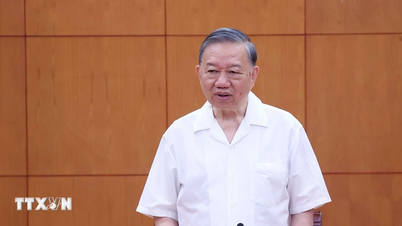
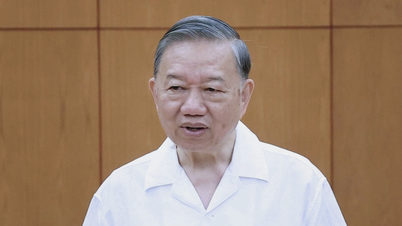
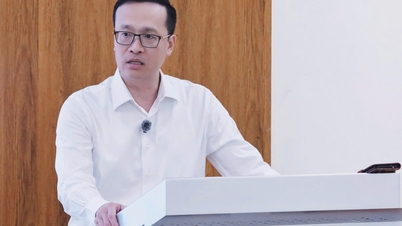
Regarding the meeting's results, Deputy Head of the Central Internal Affairs Commission Dang Van Dung stated that General Secretary To Lam assessed that most tasks in the Steering Committee's work program for 2025 had been completed according to plan, with many tasks exceeding the set targets.
The fight against corruption, negative practices, and waste continues to be led and directed decisively and vigorously, following the motto "no forbidden zones, no exceptions," becoming increasingly in-depth, systematic, and mature, making an important contribution to the successful implementation of the goals and tasks of the Resolution of the 13th National Party Congress and the successful organization of Party Congresses at all levels, leading up to the 14th National Party Congress.
The General Secretary emphasized the outstanding results in the fight against corruption, negative practices, and waste. First and foremost, a breakthrough has been achieved in building and perfecting institutions and laws with many new policies and viewpoints, not only effectively preventing and combating corruption, waste, and negative practices, but also encouraging innovation and the development of the national economy . Many serious and complex cases of public concern have been decisively handled, preventing them from dragging on into the next term and ensuring that no corrupt or degenerate officials are elected to the new Party committees.
In particular, the General Secretary emphasized that functional agencies are coordinating more effectively, closely, systematically, and proactively to identify, detect, and strictly and humanely handle many major cases and new crimes such as counterfeiting, the pharmaceutical sector, the export sector, mineral exploitation, forensic psychiatric examination, environmental impact assessment, etc., with high deterrent and preventive effects.
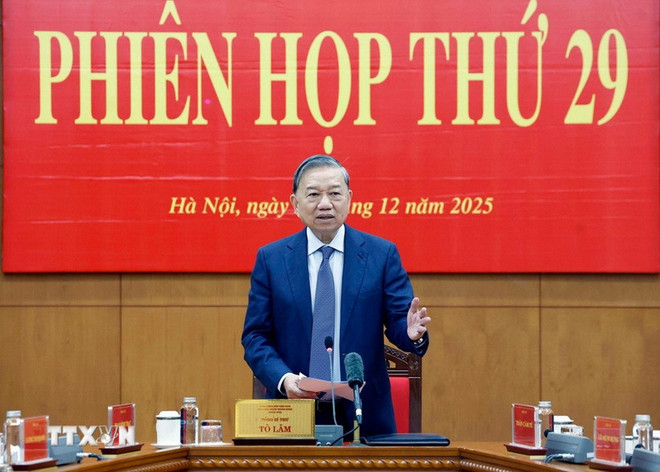
In 2025, decisive action was taken to address difficulties and obstacles, resolving many delayed and long-standing projects, in accordance with the principle of "not allowing prolonged waste, but also not legitimizing violations." This demonstrates that the fight against waste has been intensified, receiving strong support and high praise from the public and the media. Decisive and coordinated action has yielded clear results in solutions to prevent corruption, waste, and negative practices, linked to the restructuring of the three-tiered government apparatus and the operation of the government, along with the promotion of science and technology application and digital transformation; meeting the requirement of shifting the focus to prevention as directed by the Steering Committee.
The General Secretary also emphasized that the trust and solidarity of cadres, Party members, and the people in the fight against corruption, waste, and negative phenomena continue to be enhanced. In particular, the General Secretary stressed that not only the people but also international friends have recognized and highly appreciated the effectiveness of our work in combating corruption, waste, and negative phenomena.
6 key tasks and solutions
2026 is the first year of implementing the Resolution of the 14th National Congress of the Party. The Central Steering Committee requests the effective implementation of tasks and solutions on preventing and combating corruption, waste, and negative phenomena.
According to Deputy Head of the Central Internal Affairs Commission Dang Van Dung, the general spirit clearly stated by General Secretary To Lam is "we must be more decisive, more effective, and more sustainable." The General Secretary emphasized that we have created a good foundation recently, but we must do even better, and absolutely not be complacent or satisfied. At the same time, the General Secretary highlighted six key tasks and solutions.
The General Secretary demanded decisive leadership and timely and effective implementation of policies, tasks, and solutions on preventing and combating corruption, waste, and negative phenomena in accordance with the Resolution of the 14th National Congress of the Party, linked to the three strategic breakthroughs in the new revolutionary period of the country.
Within this task group, the General Secretary requested that, at the beginning of 2026, the Central Committee's Resolution on preventing and combating corruption, waste, and negative phenomena in the new phase be developed and promulgated. This aims to strongly affirm the Party and State's determination in this work, with the goal of building a clean, strong, truly ethical, and civilized Party by the time of the 100th anniversary of the Party's founding.
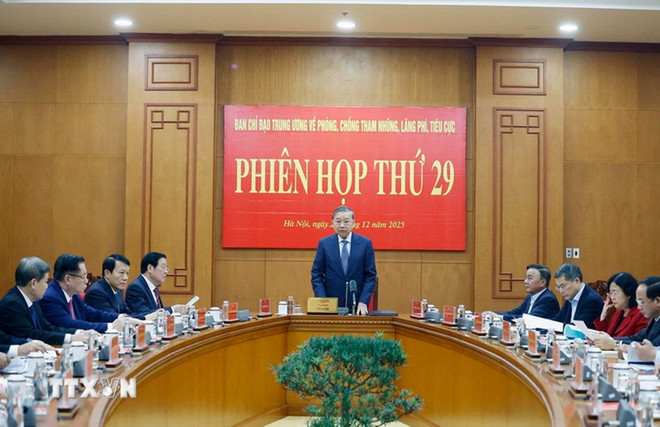
The General Secretary requested that the work of preventing and combating waste be directed to be carried out more vigorously; that the difficult, problematic, and long-standing projects be resolved definitively, as well as that surplus land and buildings remaining after the reorganization of the administrative apparatus, in order to unlock resources, promote socio-economic development, and achieve double-digit growth targets.
In the first quarter of 2026, complete the handling of projects with difficulties, obstacles, and long-standing backlogs, especially the 10 key projects as requested by the Standing Committee of the Steering Committee; in the second quarter of 2026, complete the allocation and effective and proper use of surplus land and buildings after the restructuring of the apparatus, preventing deterioration, damage, loss, and waste.
The General Secretary requested and directed the decisive handling of complex cases and incidents that attract public attention, linking this to the successful organization of the National Assembly and People's Council elections at all levels. He emphasized preventing the recurrence of past violations, and preventing corruption, waste, and negative practices in the implementation of large-scale projects...; and stressed the need for inspection, supervision, and auditing from the outset of major national projects to prevent violations, waste, and negative practices...
"The General Secretary emphasized that timely detection and handling are very good, but it's even better to prevent corruption and violations from happening in the first place," the Deputy Head of the Central Internal Affairs Commission stated.
The General Secretary also requested immediate inspection and investigation of any violations (if any) in the management and exploitation of natural resources, minerals, rare earth elements, environmental protection, and energy, to prevent manipulation, disruption, and distortion of the Party's mechanisms and policies, and the State's laws.
The prosecuting authorities must strengthen coordination and expedite the investigation and handling of cases and incidents; striving to complete the investigation and handling of 21 cases and 5 incidents under the supervision and direction of the Steering Committee in 2026. This is especially important for cases and incidents involving collusion between corrupt and degenerate officials and businesses, cases of waste, and incidents occurring in areas such as food safety and those affecting public health.
In addition, it is necessary to strengthen the control of power, prevent and combat corruption, waste, and negative practices, linking them to the effectiveness and efficiency of local governments at both levels, promoting a culture of integrity, implementing transparency and accountability, and thoroughly overcoming the situation of shirking responsibility, avoiding accountability, and petty corruption.
The General Secretary requested that propaganda work be done well, creating high consensus in society on the work of preventing and combating corruption, negative phenomena, and waste, especially before, during, and after the 14th Party Congress.
The Central Internal Affairs Commission continues to play a strategic advisory role in the fight against corruption, waste, and negative phenomena. The General Secretary highly appreciated the Central Internal Affairs Commission's excellent work in the past and emphasized the need for even better performance in the future, emphasizing close coordination with relevant agencies and proposing new approaches, innovative thinking, and practical, feasible, timely, and effective solutions.
According to Deputy Head of the Central Internal Affairs Committee Dang Van Dung, at the meeting, the Central Steering Committee agreed to include cases of violations related to the management, exploitation, processing, and trading of rare earth minerals and bauxite ore, as concluded by the Government Inspectorate, under the Steering Committee's monitoring and direction.
Also at this meeting, the Steering Committee unanimously agreed to conclude the handling of 5 cases and 4 incidents, as they had been resolved in accordance with the law.
Improving the effectiveness of waste prevention and control efforts.
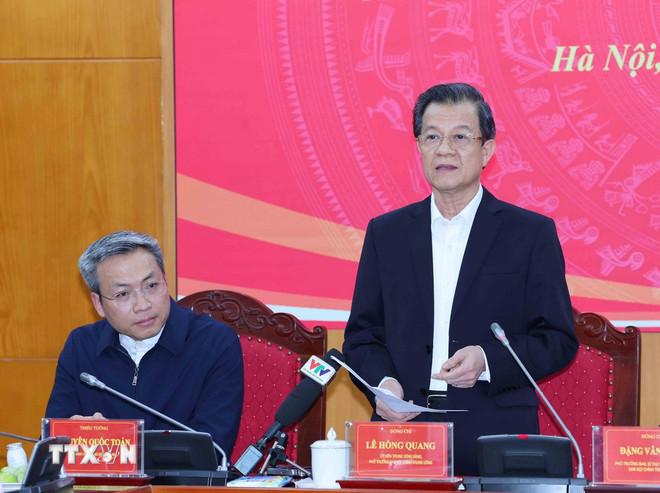
Also at the meeting of the Central Internal Affairs Commission, in response to press inquiries about the Central Steering Committee's guiding principles for combating waste in 2026, Deputy Head of the Central Internal Affairs Commission Le Hong Quang stated that on October 29, 2024, the Politburo issued Regulation No. 191-QĐ/TW on the functions, tasks, powers, working regime, and working relationships of the Steering Committee. This regulation added the task of preventing and combating waste to the Steering Committee.
On April 28, 2025, the Steering Committee issued Guidance No. 63-HD/BCĐTW on key issues regarding the prevention and control of waste, which clearly outlines seven groups of wasteful behaviors that require focused guidance and prevention. Specifically: Violations in leadership, direction, management, and use of public finances and public assets causing waste; Wasteful behaviors related to the development and promulgation of regulations on the management and use of public finances and public assets; Wasteful behaviors in the management and use of the state budget; Wasteful behaviors in the management and use of public investment capital; investment in construction, procurement, and management of public assets; Wasteful behaviors in the management, exploitation, and use of land and other resources; Wasteful behaviors in the management and use of state capital in investment projects under the public-private partnership (PPP) method; and state capital in enterprises. Other acts that cause waste in the management and use of public finances and public assets as stipulated by the Party and the laws of the State.
In the coming period, the Steering Committee will continue to direct efforts to improve the effectiveness of "waste prevention and control"; closely adhering to the contents of Guidance No. 63-HD/BCĐTW, dated April 28, 2025, of the Steering Committee; and adapting to the new situation.
Specifically, the Steering Committee continues to direct the review and clarification of the causes, and the resolution of difficulties and obstacles related to projects and works that are behind schedule, have long-standing backlogs, are inefficient, and pose a risk of loss and waste nationwide; and continues to direct the arrangement of surplus facilities and land after mergers… with the goal of unlocking, managing, and effectively utilizing resources for the socio-economic development of the country.
Source: https://www.vietnamplus.vn/quyet-liet-hieu-qua-ben-vung-hon-trong-phong-chong-tham-nhung-lang-phi-post1085120.vnp
![[Photo] General Secretary and President To Lam presides over a meeting with the Central Organizing Committee.](https://vphoto.vietnam.vn/thumb/1200x675/vietnam/resource/IMAGE/2026/06/03/1780482764658_a1-bnd-4741-3342-jpg.webp)
![[Photo] First session of the 14th Congress of the Vietnam Trade Union](https://vphoto.vietnam.vn/thumb/1200x675/vietnam/resource/IMAGE/2026/06/03/1780465947883_ndo_br_img-3852-jpg.webp)

![[Photo] Secretary of the National Assembly Party Committee, Chairman of the National Assembly presides over the meeting of the Standing Committee and Executive Committee of the National Assembly Party Committee.](https://vphoto.vietnam.vn/thumb/1200x675/vietnam/resource/IMAGE/2026/06/03/1780480353201_ndo_br_bnd-2585-jpg.webp)
































![[Video] Sunset at Lap An Lagoon – Where the sun sets over the fishing nets](https://vphoto.vietnam.vn/thumb/1200x675/vietnam/resource/IMAGE/2026/05/31/1780192137701_beach-landscape-sea-water-nature-grass-745871-pxhere-com.jpeg)

























Comment (0)