The canal running from An Minh commune to Van Khanh commune, in the early days of the rainy season, no longer has its usual clear appearance. The murky, sluggish water carries clumps of household waste to both banks. Plastic bags and bottles swirl around with each wave caused by passing boats and barges. Each time a large vehicle moves, the layer of garbage is pushed aside, in some places spilling into the shrimp and fish ponds along the canal, further polluting the already weak water source.
Not only on the main canal, but also on the small canal running from Bao Mon Bridge to Tay Yen commune, the pollution is heartbreakingly evident. The water, already dark in color, is now even thicker with floating garbage.
Bags of household waste, some still fresh, others rotting away, are thrown directly into the canal, drifting and getting stuck in clumps of grass and mangrove roots along the banks. Plastic bottles, styrofoam containers, and plastic bags are tightly intertwined into large clumps, blocking the flow of water. When the sun shines, the garbage emits a strong, foul odor; when it rains, it's all stirred up and spread throughout the canal.
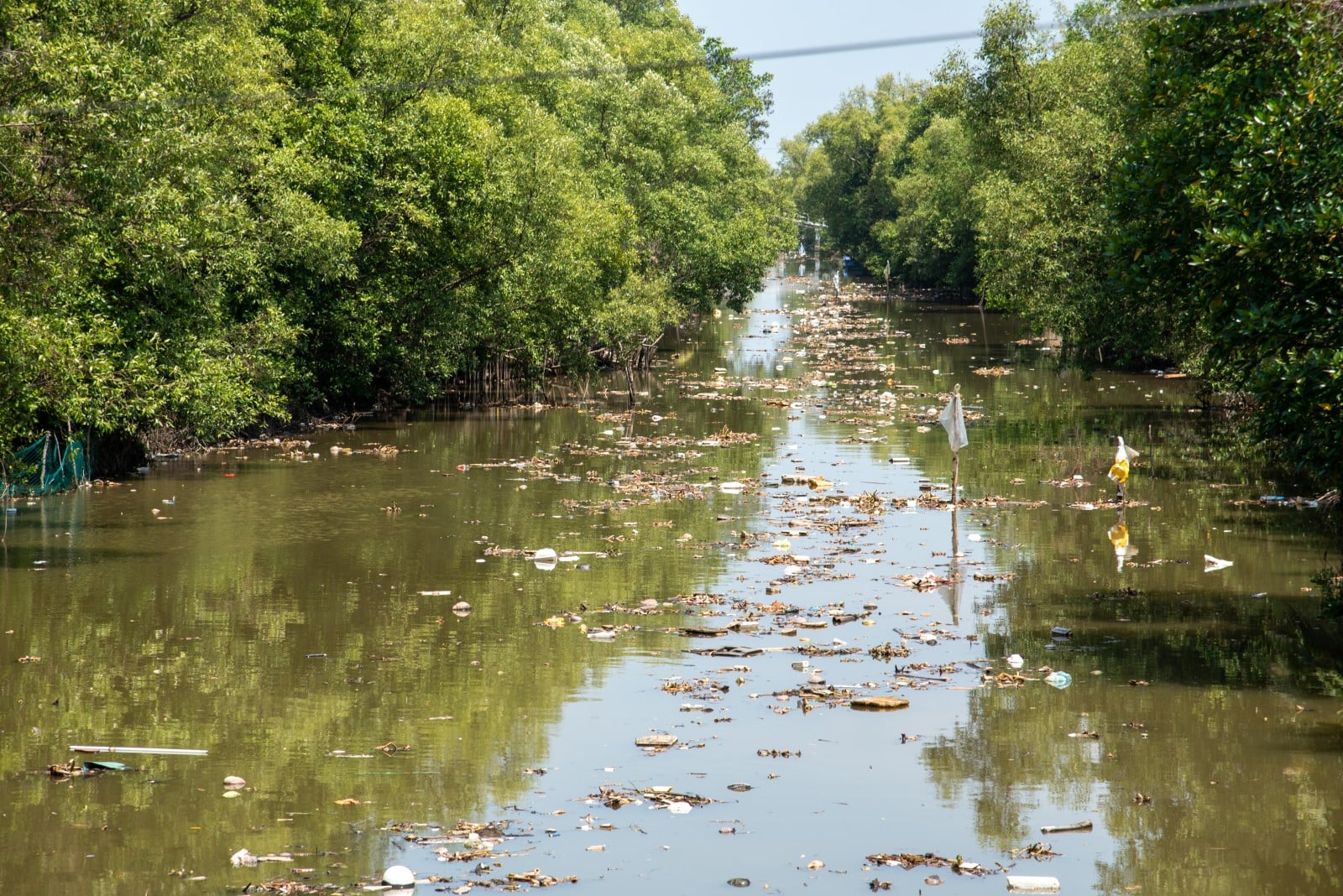
Trash is floating haphazardly on the canal running from Bao Mon Bridge to Tay Yen commune.
The consequences extend beyond the landscape and directly impact livelihoods. Mr. Nguyen Van Hai, residing in Cai Nuoc Ngon hamlet, An Bien commune, stated that to access his shrimp farm, he has to travel by motorboat across a canal only about 500 meters long, which often takes him an entire morning.
One afternoon in early May 2026, water hyacinths and plastic waste densely packed Canal 3000, making it extremely difficult for Mr. Hai and other residents to move around. After moving about 200 meters, Mr. Hai's boat propeller stopped working because the waste was so tightly wrapped around it. He had to stop, bend down into the water, and use a knife to cut away the waste, taking nearly 15 minutes to clear it.
Wiping away his sweat, Mr. Hai said, "It's all household waste dumped into the canal. Plastic waste, which doesn't decompose, sinks to the bottom, and the passing boats stir it up." Mr. Hai added that some days he has to wait until nearly 10 PM, when the high tide disperses the water hyacinths, before he can sail his boat home.
It's not hard to see that part of the reason stems from the habits of the people living along the canal. Mr. NPH, who lives near the 11th bridge slope in Hamlet 2, An Minh Commune, said: "My family also throws used garbage into the canal, letting it float away wherever it goes. The garbage here is from other places that have accumulated over time."
That seemingly innocent statement reflects a thought-provoking reality: garbage "comes from somewhere," but in fact, each family contributes to that flow of pollution, whether intentionally or unintentionally.
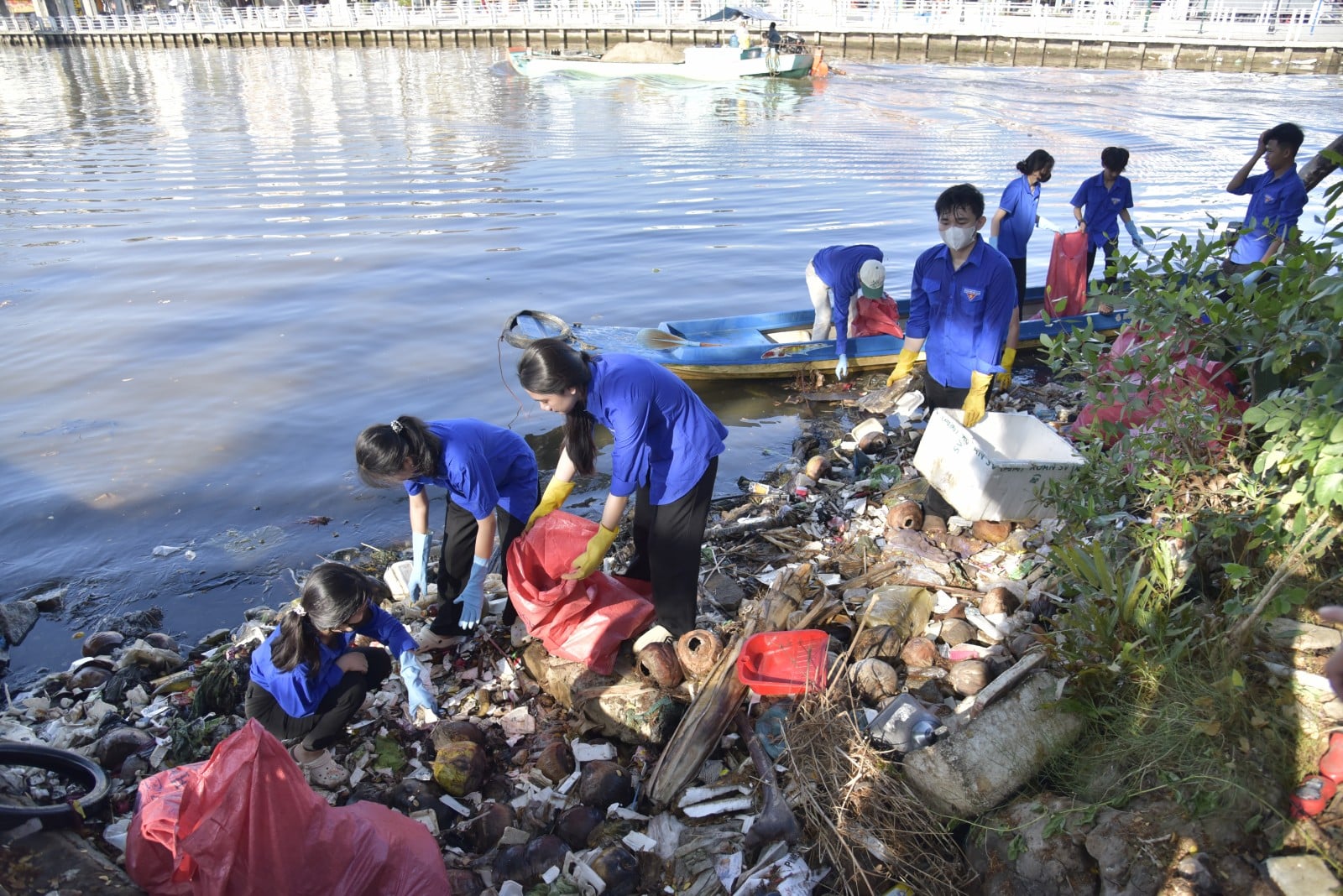
Members of the Youth Union branch in Hamlet 2, An Minh commune, launched a campaign to clean up trash in the Thu 11 canal.
Regarding this situation, Mr. Ngo Van Thua, Party Secretary and Head of Hamlet 11A, An Minh Commune, said: “When the rainy season comes, especially when barges pass through the Xeo Ro canal section between An Minh and An Bien communes, a lot of plastic bags float to the surface, obstructing the water flow and directly affecting aquaculture. The U Minh Thuong area is a key aquaculture region, and the water source is very important, so with such pollution, the people are facing many difficulties.”
According to Mr. Thua, there needs to be a mechanism for regularly removing garbage from canals, especially irrigation canals, to ensure smooth water flow and maintain clean water sources for long-term aquaculture.
In fact, efforts to address the problem have been implemented. For example, the Youth Union of Hamlet 2, An Minh Commune, organized a cleanup campaign to remove and treat the "black spot" of garbage along the Thu 11 canal. Dozens of union members participated in removing garbage and clearing vegetation, restoring some of the canal's flow. However, those involved admit that garbage removal and cleanup campaigns are only temporary solutions if people's awareness doesn't change; the garbage will quickly return.
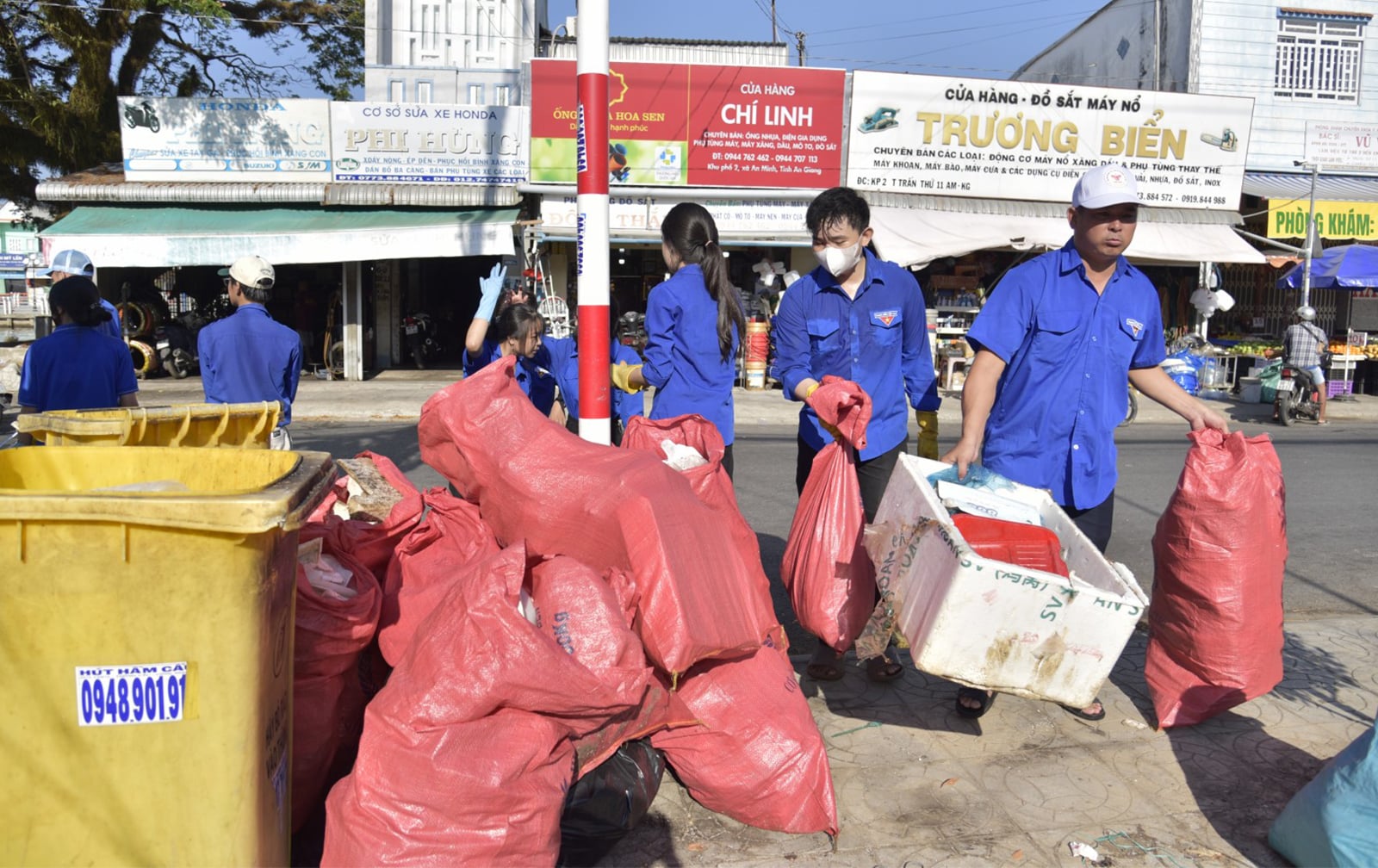
Maintaining environmental hygiene must begin with the awareness of each individual citizen.
According to Tran Quoc Nguyen, Secretary of the Youth Union of Hamlet 2, a fundamental solution requires a combination of measures, such as strengthening awareness campaigns to change behavior, applying penalties according to regulations for littering, and researching the installation of cameras at hotspots for "on-the-spot fines," as some localities have done. In addition, it is necessary to encourage residents to develop on-site waste treatment models such as household waste pits and centralized incinerators for groups of households, minimizing direct discharge of waste into canals and waterways.
Rural waste is no longer a minor issue for individual households, but has become a problem affecting the environment, livelihoods, and sustainable development of the entire community. As long as people continue the habit of simply discarding waste, the canals will continue to bear the burden of garbage. And the question, "Whose responsibility is it?", perhaps the answer begins with the awareness of each individual living along the rivers and canals.
Text and photos: AN LAM
Source: https://baoangiang.com.vn/rac-thai-nong-thon-trach-nhiem-thuoc-ve-ai-a484843.html







































































Comment (0)