

 |
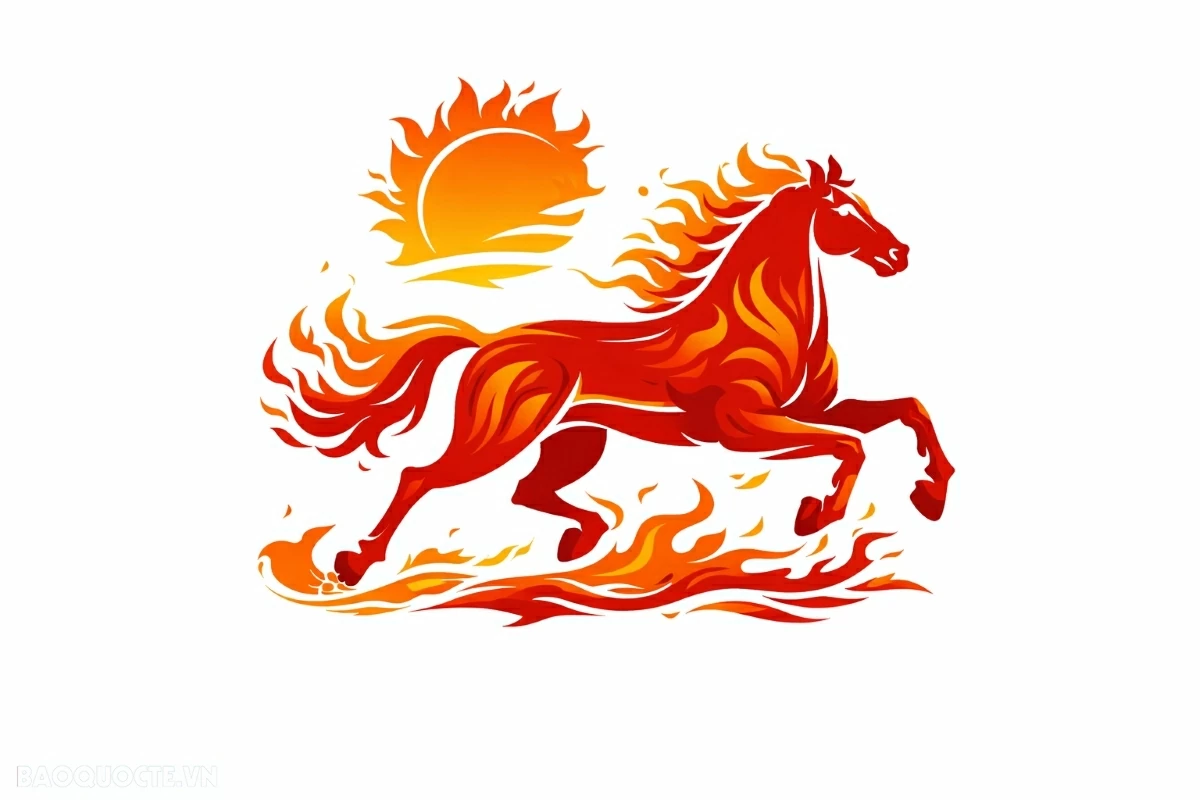
| When the Year of the Horse returns, people often hope for a more dynamic, faster-paced year with more changes. (Illustrative image created by AI) |
In the twelve zodiac animals of the East, the horse holds a very special place. Not as gentle as the buffalo, not as skillful as the monkey, and not as quiet as the cat, the horse appears majestic, tall, with a flowing mane, always ready to move. Perhaps that is why, whenever the Year of the Horse returns, people often hope for a more dynamic, faster-paced year, with more changes, in line with the increasingly hectic rhythm of modern life.
A legendary horse - a feat of exceeding limits.
In East Asian culture, horses are primarily associated with journeys—not just physical distances, but the journey of human life. Before maps, ships, or modern machinery, horse hooves were the unit of distance measurement, the rhythm of time for long journeys. Horses carried people away from their villages, across mountains and passes, through unfamiliar lands, connecting seemingly separate spaces. Along with the horses' hooves, knowledge was transmitted, news spread, and the destiny of individuals and even the nation expanded with each step of the journey.
It is precisely because of this role that horses gradually became symbols of extraordinary ability. Ancient Chinese people used the image of a "thousand-mile horse" to refer to individuals with rare talents, not easily recognized, but who, when given the right opportunity and the right people, will fully reveal their potential. A thousand-mile horse, therefore, needs not only endurance but also a kindred spirit; it needs not only speed but also the opportunity to travel far.
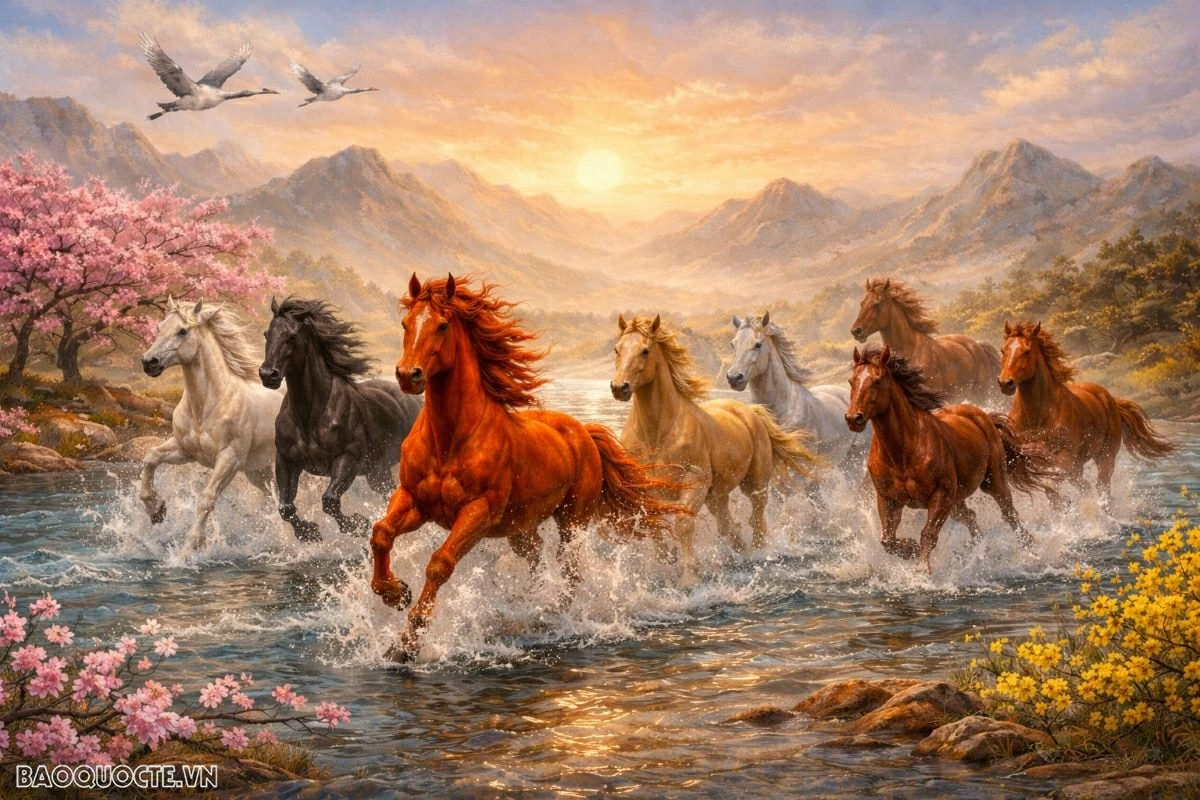 |
| Horses crossing the river. (Image created by AI) |
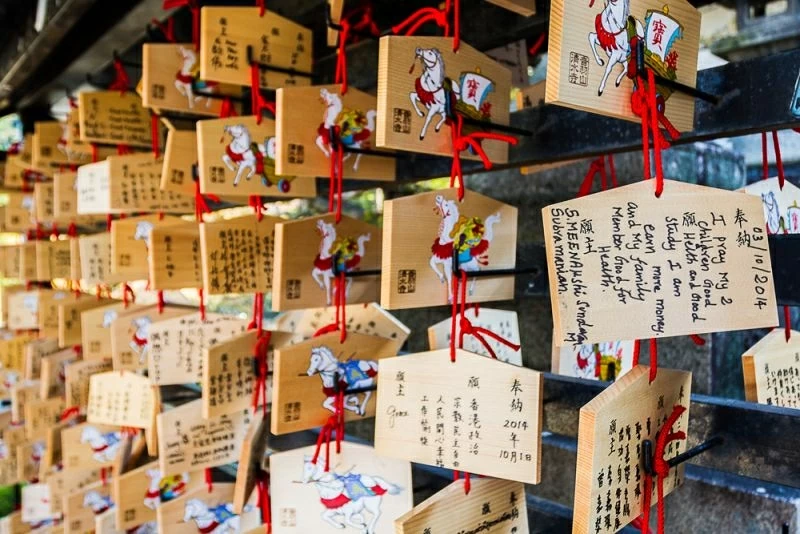 |
| Ema (pagoda) is a distinctive feature of many Japanese temples. The custom of donating ema to temples dates back to the Nara period. Initially depicting only horses, other images began to appear during the Muromachi period, along with larger ema sizes . (Source: Shutterstock) |
Always strive and have hope.
In ancient Shinto beliefs in Japan, it was believed that the gods traveled on horseback, and through their footsteps, people's prayers were carried to the higher realms. Therefore, for centuries, offering horses to shrines was an important ritual, expressing the wish for favorable weather, bountiful harvests, and national peace and prosperity.
As living standards changed and real horses became increasingly rare, the Japanese began replacing them with Ema (wooden plaques depicting horses, hung in temples and shrines) to express their New Year's wishes, continuing the ancient belief in horses as messengers of the gods. Every New Year, Japanese temples and shrines are filled with colorful Ema plaques, each bearing neat or scribbled handwriting, recording everyday wishes: successful exams, stable work, family peace, a year without major incidents…
Interestingly, although Ema now features many other images, the hopes conveyed through it are increasingly closer to the rhythm of human life. Ema no longer represents grand supplications, but has become a place where people can entrust their small, sincere hopes. It's the belief that quiet efforts in daily life—studying diligently, working honestly, living fully—will eventually be heard.
It's worth noting that in Japanese culture, the horse has never been deified in a way that distances it from humans. Even when considered a messenger of the gods, the horse remains very much present in everyday life: standing before temples, depicted on wooden plaques, within reach of the writer. When bending down to write a wish on an ema plaque, people are not leaving their fate to the gods, but rather confirming to themselves a clear desire for the new year. The horse's hooves, therefore, do not carry a supernatural promise, but serve as a spiritual bridge – where belief is shaped and concretized through writing and thought, reminding people of the connection between effort and hope.
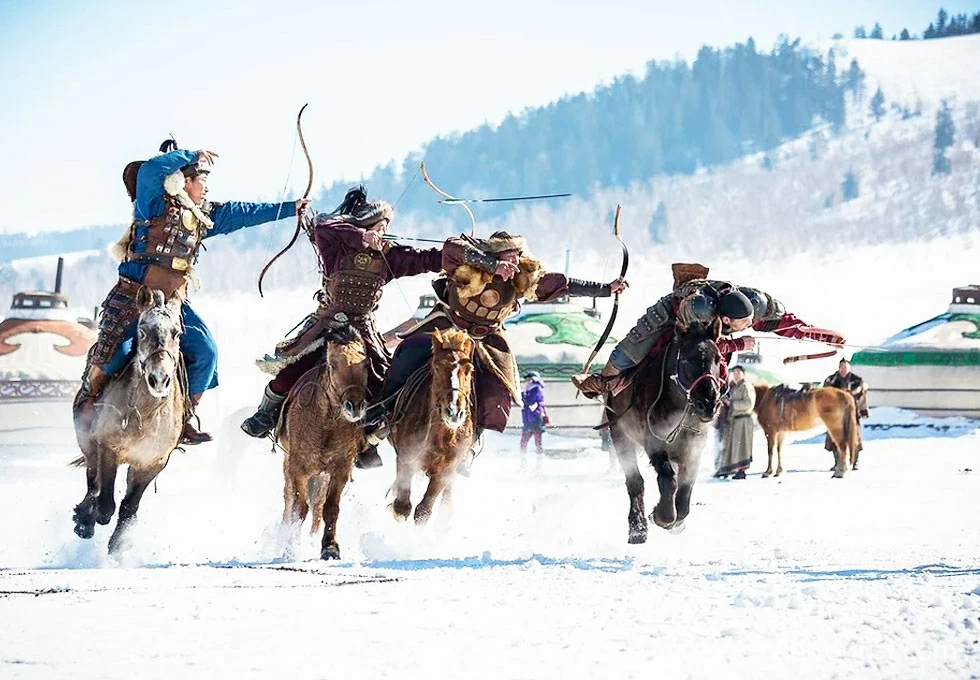 |
| The primary mode of transportation for nomads is the horse. Nomadic life is famous for many stories set on the "vast steppes where horses gallop like the wind." (Illustrative image. Source: Viettourist) |
A measure of character
For the nomadic peoples of Central Asia and Mongolia, horses are not just a means of transportation, but a life-or-death companion. On the vast steppes, where the horizon stretches endlessly and the weather can change in an instant, humans survive thanks to their ability to move. Horses know how to find water in arid lands, withstand freezing cold and sandy winds, and travel for days without exhaustion. Each hoofbeat thus carries life, and each journey is a test of the limits of both man and horse.
In that era, horsemanship was not merely a technique, but a measure of character. A skilled rider had to listen to the animal, feel its breathing, and understand when to urge it on and when to let go. Riding on the steppe did not allow for haste or overconfidence, for even a small mistake could lead to getting lost, running out of water, or facing danger. A person's character was therefore forged in a close bond with their horse – a relationship based on trust and understanding rather than control.
From that relationship, the qualities of horses gradually became the spiritual standards that nomads aspired to. These included perseverance to complete long journeys, independence to survive in vast spaces, and the ability to endure wind and frost without complaint. Horses did not show off their strength, nor did they rush to prove themselves, but walked quietly, steadily, and surely. Humans lived alongside horses, and therefore learned to live like them: less dependent, less complaining, but never giving up halfway.
On a deeper level, the image of the horse also reflects a very distinctive philosophy of nomadic culture: Humans not conquer nature but learn to adapt to it. Horses don't fight against the cold wind, but walk through it; they don't avoid vast open spaces, but find their way within those very spaces. These qualities, when applied to humans, become an ideal of life: strong yet humble, free yet disciplined, persistent yet not rigid.
Therefore, in the cultural memory of Central Asia and Mongolia, the horse is not only associated with warriors or the steppe, but also with character. The horse is the image of the ideal person – someone strong enough to travel far, patient enough to endure, and calm enough to keep going despite the hardships ahead. This is also the spirit that makes the image of the horse, whether in an ancient or modern context, always powerfully evocative whenever spring arrives and a new journey begins.
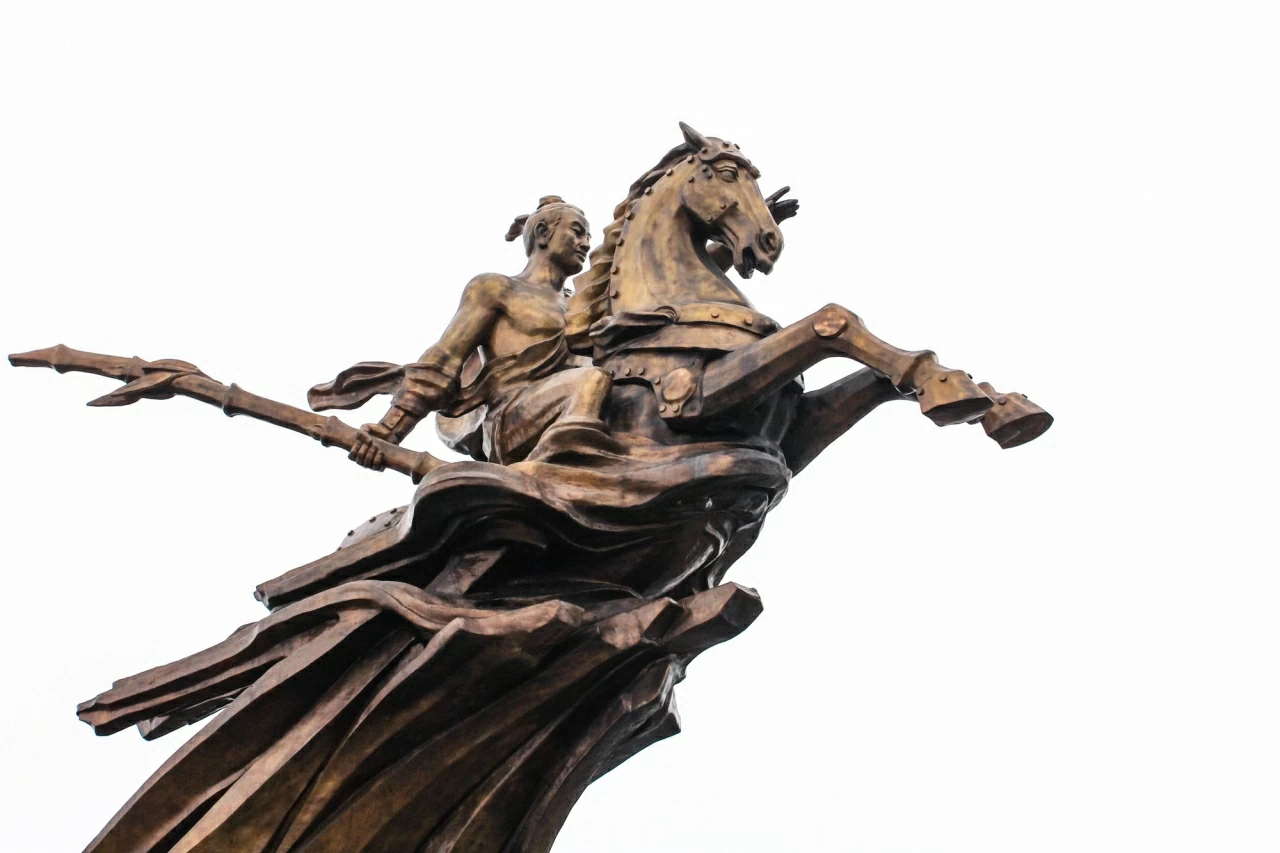 |
| Saint Giong, one of the "four immortals" of Vietnamese culture, bravely rides his horse into battle. (Illustrative image. Source: Vietnamplus) |
Fast, durable, and resilient.
In Vietnamese culture, horses have entered spiritual life in a very unique way. The image of Saint Gióng riding an iron horse and transforming into a mighty warrior has been deeply ingrained in the minds of many generations. Here, the horse is not only strong but also embodies a spirit of resilience, growing rapidly alongside the nation's destiny, intervening when needed, and then gracefully departing when its mission is accomplished.
The beautiful image of the horse is also associated with the Spring of 1789, the year of the Rooster, when King Quang Trung ordered messenger horses to gallop to Thang Long and throughout the northern provinces to report the victory at Ngoc Hoi - Dong Da. The horses' hooves galloping along the spring roads at that time not only carried the joyful news of victory, but also the elation of a nation that had just reclaimed its land, ushering in a spring of independence.
Not only in history and legend, horses also played a significant role in the Tet (Lunar New Year) celebrations of ancient Vietnamese people. Dong Ho folk paintings such as "Ma Dao Thanh Cong" (Horse Arriving Successfully) and "Nguoi Hong" (Red Horse) were often hung in homes during the New Year. The shimmering paper background depicts a strong, healthy horse with a graceful yet steady gait. Hanging horse paintings was not only for good luck but also to convey a very human wish: a prosperous new year, a peaceful family life, and a life without obstacles.
With the year of the Fire Horse (Bính Ngọ), the element of Fire makes the image of the horse even more vibrant. It is the horse of passion, honesty, and abundant energy. The ancients viewed the year of the Fire Horse with both expectation and a warning: This is a year for action, requiring careful consideration to move quickly without stumbling.
In today's fast-paced urban environment, where people talk a lot about "speeding up," "meeting deadlines," and "going the distance," the image of the Eastern horse becomes very relevant. Horses run fast but know how to maintain their pace, know when to rest, and conserve their energy for the crucial part of the journey.
Horses not only carry people far, but also teach them how to walk: with perseverance, trust, and never turning their backs on the path they have chosen. Amidst the burgeoning spring, the sound of hooves from the East always reminds us that every good beginning starts with firm steps.
Source: https://baoquocte.vn/ron-rang-nhip-vo-phuong-dong-356281.html
![[Image] Hanoi Police officially crowned champions of V-League 2025/2026](https://vphoto.vietnam.vn/thumb/1200x675/vietnam/resource/IMAGE/2026/05/31/1780244769054_ndo_br_039d561b692be875b13a-jpg.webp)
![[Photo] Admire the coral "masterpiece" amidst the million-year-old heritage of Dak Lak province.](https://vphoto.vietnam.vn/thumb/1200x675/vietnam/resource/IMAGE/2026/05/31/1780221235105_anh-man-hinh-2026-05-31-luc-16-53-27.png)
![[Photo] The General Secretary, President and his wife begin their state visit to the Philippines.](https://vphoto.vietnam.vn/thumb/1200x675/vietnam/resource/IMAGE/2026/05/31/1780230559452_anh-man-hinh-2026-05-31-luc-19-28-11.png)
![[Photo] Solemn bathing ceremony and Buddha procession in Hue](https://vphoto.vietnam.vn/thumb/1200x675/vietnam/resource/IMAGE/2026/05/31/1780228263543_1-jpg.webp)








![[Video] Sunset at Lap An Lagoon – Where the sun sets over the fishing nets](https://vphoto.vietnam.vn/thumb/340x192/vietnam/resource/IMAGE/2026/05/31/1780192137701_beach-landscape-sea-water-nature-grass-745871-pxhere-com.jpeg)


































![[Photo] Admire the coral "masterpiece" amidst the million-year-old heritage of Dak Lak province.](https://vphoto.vietnam.vn/thumb/402x226/vietnam/resource/IMAGE/2026/05/31/1780221235105_anh-man-hinh-2026-05-31-luc-16-53-27.png)



























Comment (0)