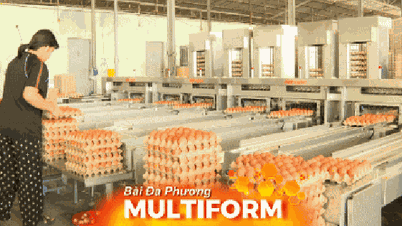
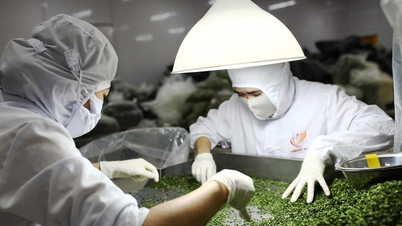
This year, the Ministry of Agriculture and Environment has set a target of over $74 billion in total export turnover, with agricultural products expected to contribute approximately $40 billion. This requires the industry to shift strongly towards production according to international standards, deep processing, and complete traceability. This is a strategic step for Vietnam's agriculture, forestry, and fisheries not only to maintain its market share advantage but also to access demanding markets with increasingly high requirements.
The projected export value of $1.66 billion for pepper and spice in 2025 will primarily stem from a decline in global supply from competing countries such as Brazil, Indonesia, and India, while demand is recovering, driving up export prices despite a lack of corresponding increases in production. Vietnam benefits from a stable supply and strong processing capabilities.
However, associations warn that this advantage is cyclical. As competing countries recover production, pressure on prices and standards will return, forcing the industry to shift sharply from price-driven growth to quality-driven growth.
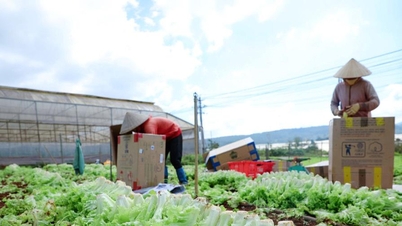
Ms. Hoang Thi Lien, President of the Vietnam Pepper and Spice Association, stated: "The industry is fragmented and scattered, lacking large-scale model farms. We are limited in our ability to uniformly control the largest possible sample size."
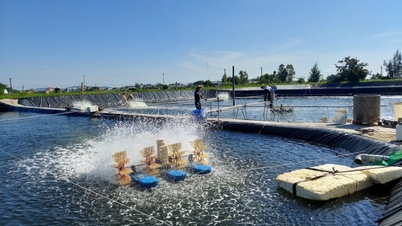
For the fisheries sector, this year has set an ambitious target of approximately $11.5 billion in export revenue, while total production is expected to exceed 10 million tons. This is a large figure considering the increasing compliance and quality control costs in key markets, where requirements for food safety, traceability, and trade protection continue to be tightened.
Mr. Tran Dinh Luan, Director of the Fisheries and Fisheries Inspection Department, Ministry of Agriculture and Environment, stated: "Recently, 15 laws have been amended, and we have submitted a Decree to the Government, which expands the scope to include other aquaculture facilities that wish to register for a code number, serving the purpose of traceability and enhancing the traceability of seafood raw materials for export."
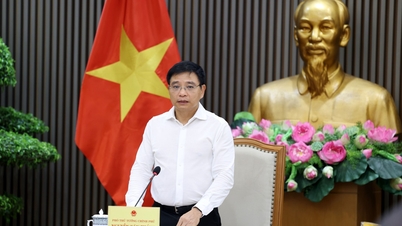
Mr. Tran Thanh Hai, Deputy Director of the Import-Export Department, Ministry of Industry and Trade, offered his opinion: "First and foremost is product quality, ensuring long-term export viability and maintaining credibility with customers, as well as creating a foundation for conquering new markets. Besides that, we must build a brand, because a brand is the cornerstone of trust."
With the national goal of achieving a trade surplus of over 23 billion USD in 2026, it is clear that agriculture, forestry, and fisheries continue to play a crucial role in the trade balance. Given their significant contribution to export revenue and the livelihoods of millions of households, agricultural products are expected to increase not only in quantity but also in quality to offset rising compliance costs and maintain market share in major markets.
Source: https://vtv.vn/san-xuat-nong-san-phai-theo-chuan-quoc-te-100260127114149909.htm



























































































Comment (0)