

 |
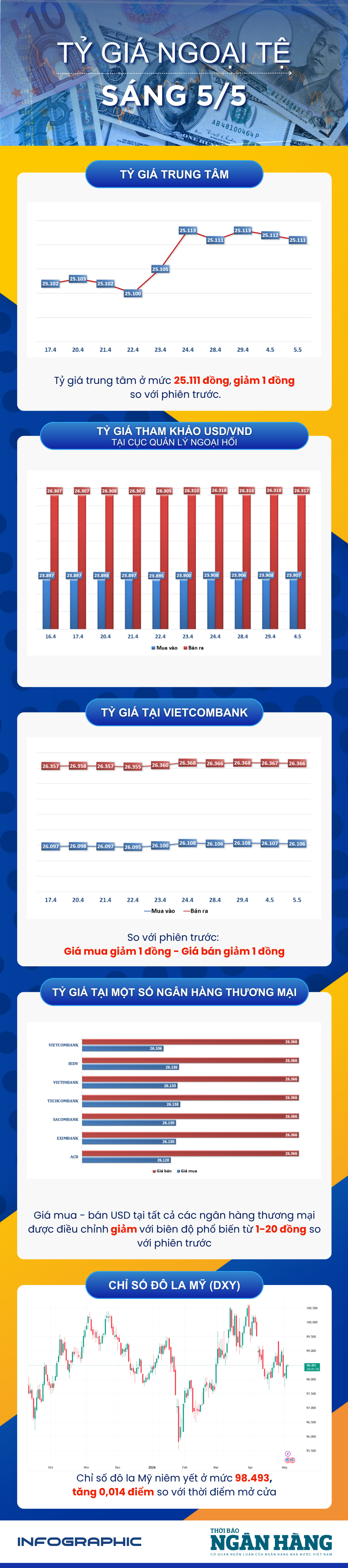
The Japanese yen traded sideways on Tuesday, as markets remained cautious following suspicions that Tokyo had intervened last week, a factor that had caused significant volatility in the currency in recent sessions. Meanwhile, the US dollar was supported by safe-haven demand as Middle Eastern conflicts continued to weigh on investor sentiment.
The Australian dollar was virtually unchanged, trading around US$0.7168 ahead of the Reserve Bank of Australia's (RBA) policy decision. Analysts expect the RBA to raise interest rates for the third consecutive time to curb inflation, which has exceeded its 2%–3% target since mid-2025.
The market's focus is currently on the RBA's policy message to assess the outlook for interest rates in the near future. Inflationary pressures are increasing globally, following disruptions to the Strait of Hormuz – a shipping route for approximately 20% of the world's oil supply – which has kept oil prices above $100 per barrel since the conflict erupted.
New airstrikes between the US and Iran on Monday further increased instability, challenging the fragile ceasefire and keeping investors on a cautious note.
Against this backdrop, the US dollar was supported, with the euro falling to $1.1693 and the British pound at $1.353. The US dollar index stood at 98.452 points, after rising 0.3% in the previous session.
Nick Twidale, Director of Market Strategy at ATFX Global, believes that while defensive sentiment has become more pronounced, the market has not yet seen the sharp volatility typically seen if the conflict escalates fully. However, he warns that any escalating tensions could push oil prices higher and put pressure on risky assets.
Brent crude oil is currently trading at $113.8 per barrel, down slightly during the session but remaining in higher territory after a sharp increase earlier.
The yen traded around 157.22 JPY/USD, near its strongest level in two months following recent gains. Several sources indicate that Japan may have spent around $35 billion intervening in the market to support its currency, although the long-term effectiveness remains debated.
According to Deepali Bhargava, Head of Asia Pacific Research at ING, the recent intervention mainly helped to readjust the short-term trading range of the USD/JPY exchange rate, while fundamental factors continue to put pressure on the yen.
Investors continue to closely monitor the 160 JPY/USD threshold – a level considered sensitive from a policy standpoint. Charu Chanana, Director of Investment Strategy at Saxo Markets, believes the USD/JPY exchange rate could fluctuate within the 155–160 range in the short term, as authorities tend to focus on curbing the yen's rapid depreciation rather than reversing the trend.
The future movement of the yen will continue to depend heavily on oil prices and the progress of the Middle East conflict. Vasu Menon, Director of Investment Strategy at OCBC Bank (Singapore), believes that if energy prices remain high, downward pressure on the yen could return.
Source: https://thoibaonganhang.vn/sang-55-ty-gia-trung-tam-giam-1-dong-181465.html





![[Photo] General Secretary and President To Lam presides over the meeting to approve the draft report on the results of the second inspection by the Politburo of the Standing Committee of the Hanoi City Party Committee.](https://vphoto.vietnam.vn/thumb/1200x675/vietnam/resource/IMAGE/2026/05/26/1779789811432_a2-bnd-4430-9620-jpg.webp)

































































































Comment (0)