

Monitoring using identifiers
According to the South China Morning Post (SCMP), Beijing recently launched a national initiative called the Comprehensive Lifecycle Management Service Platform for Humanoid Robots. Under this initiative, each domestically produced humanoid robot will have a unique identification code (ID). This can be understood as a kind of "national identity card" for the robot. Each ID consists of four parts: a two-digit country code used to track cross-border transportation and trade; a four-digit manufacturer code to identify the robot manufacturer; a six-digit product model code for robot classification; and a 17-digit serial number for individual identification.
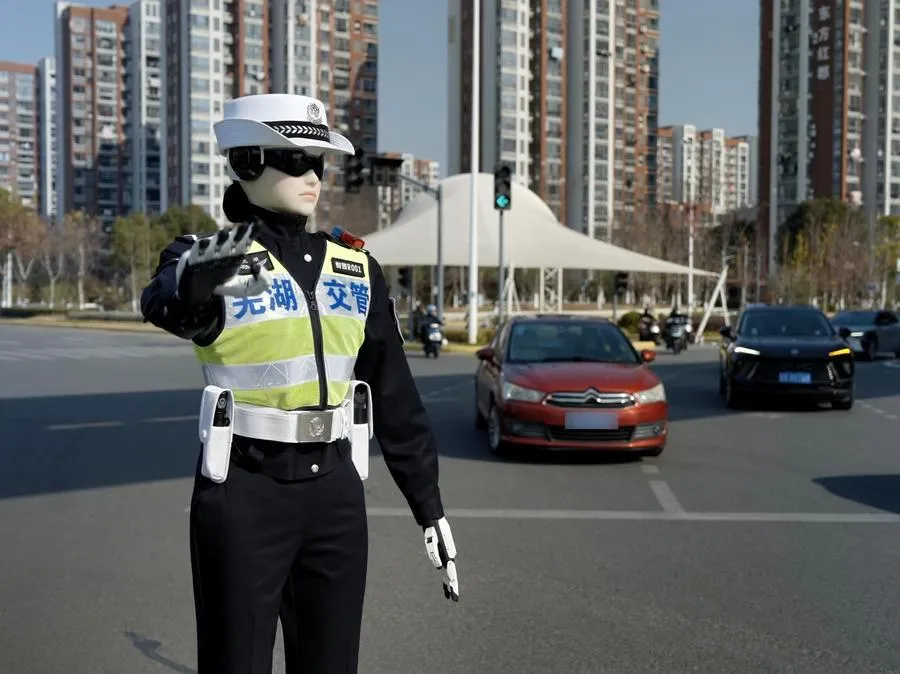
The program to assign identification codes to robots is being implemented by the Humanoid Robotics and Artificial Intelligence Standardization Committee (HEIS), under the Ministry of Industry and Information Technology of China. According to China Central Television (CCTV), this system is designed to track robots throughout their entire lifecycle, from manufacturing and distribution to use and disposal or recycling.
Chinese officials say the system's primary goal is to enhance product traceability, thereby helping to monitor potential risks during robot operation. China has also issued guidelines on managing the lifecycle of humanoid robots and regulations on how to use these identification codes. According to Yu Xiuming, Deputy Director of the China Electronic Standardization Institute (CESI), the new regulations apply to the entire supply chain, including manufacturers, service providers, retailers, users, and recycling facilities. The system has now been implemented for over 100 Chinese humanoid robot manufacturers. More than 28,000 robots of approximately 200 different models have been assigned identification codes.
Towards the commercialization of home robots.
Along with building regulatory frameworks, China is also accelerating the process of integrating humanoid robots into daily life. GigaAI introduced a multi-functional humanoid robot for home use called SeeLight S1. This is considered China's first multi-functional household robot. Unlike robots currently operating in factories, SeeLight S1 is designed to understand tasks and plan its execution independently with the support of embodied artificial intelligence (AI) models. In a demonstration video released by the company, the robot can perform many household chores such as chopping vegetables, frying eggs, putting clothes in the washing machine, hanging clothes to dry, making the bed, and drawing curtains. According to Zhu Zheng, CEO of GigaAI, the robot will be tested free of charge in households in Wuhan, Hubei province, starting in the first half of 2027. Prior to that, 100 robots will be deployed for testing in housing areas for high-tech workers. The household trial phase will prioritize families with elderly people, children, or pets.
GigaAI aims to reduce hardware prices to below 100,000 RMB (over $14,000 USD) by June 2027, equivalent to half the current price. Zhu Zheng predicts that home robots will achieve significant breakthroughs in both commercialization and the capabilities of embodied artificial intelligence models by 2028.
However, experts believe that despite the market's enormous potential, introducing robots into the home environment remains a significant challenge due to its non-standardized and constantly changing nature. Businesses also have to address issues related to device size and weight, and the necessary data to train robots to perform complex tasks in daily life.
According to LeadLeo Research (China), the global home robot market reached approximately $41 billion last year and is projected to grow at an average rate of 20% per year from now until 2027. Meanwhile, research published in January by the market consulting firm International Data Corporation (IDC, USA) indicated that the global humanoid robot market grew by 508% last year, with approximately 18,000 robots shipped worldwide .
Source: https://www.sggp.org.vn/siet-chat-quan-ly-de-som-dua-robot-vao-gia-dinh-post855345.html



![[Photo] General Secretary and President To Lam and the President of the Philippines hold talks.](https://vphoto.vietnam.vn/thumb/1200x675/vietnam/resource/IMAGE/2026/06/01/1780286997787_anh-man-hinh-2026-06-01-luc-11-09-43.png)



















































































Comment (0)