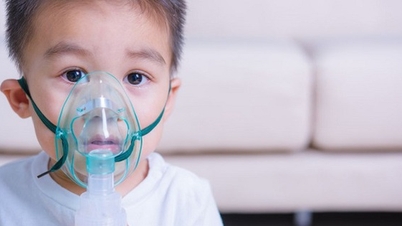
Young children are very prone to choking on food or foreign objects due to their curious nature, desire to explore , and tendency to put everything within reach into their mouths. In addition, they haven't yet developed molars, so they can't completely chew and grind hard food, and their chewing and swallowing skills aren't yet fully developed. Older children often run, jump, and laugh with food in their mouths, and even a slight lapse in attention can lead to accidents.
Recognizing and providing first aid when a child is choking.
If a child is eating or playing and suddenly starts coughing violently, their face turns red or blue, they sweat profusely, and they have difficulty breathing, choking should be immediately suspected. If the foreign object completely blocks the airway, the child may stop breathing immediately, quickly fall into a coma, and die if not treated properly.
Remain calm to assess the situation and choose the appropriate course of action. Note that approximately 25-50% of airway foreign body cases show no obvious signs or go undiagnosed within 24 hours, mainly because the foreign body is located in either large or small bronchi. After a transient "aspiration syndrome," the child may return to normal for several hours, causing parents to overlook the problem.
Subsequently, signs of lung collapse and secondary infections (bronchitis, pneumonia, lung abscess, etc.) may appear: high fever, dry cough, coughing up blood, coughing up purulent sputum, progressively worsening shortness of breath, respiratory failure, cyanosis, etc. If parents are unaware that their child has choked and only notice coughing and fever, they may be complacent and not take the child for examination, leading to a worsening of the condition.
If the child is still coughing or crying
In this case, the situation isn't too serious. When the child coughs or cries aloud, it means they can still breathe and their airway isn't completely blocked.
Do not attempt to intervene by patting the back or pressing on the chest, as this may push the foreign object deeper and cause respiratory arrest.
Things to do:
- Stand beside the child and encourage them to continue coughing to expel the foreign object.
- Stay calm so the child doesn't panic, and observe if they breathe more easily after the coughing fit.
- Examine the mouth and only remove any visible foreign objects; absolutely do not use your hands to grope around inside the mouth.
- Do not give the child anything to drink unless they are choking on something dry like a biscuit; giving them more water could make the situation worse.
- If, after coughing, the child continues to wheeze, breathe noisily, or cough persistently, they should be taken to a doctor immediately because the foreign object may have gone deep into the bronchi.
- If a child has difficulty breathing for several minutes, call emergency services immediately.
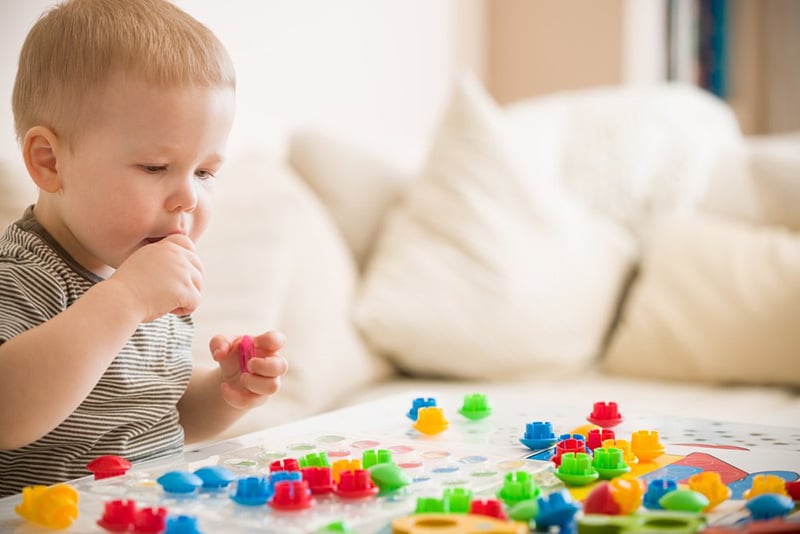
Young children are very prone to choking on food or foreign objects due to their curious nature.
How to prevent children from choking.
Toy
- Keep balloons (both inflated and uninflated) out of reach of children.
- Avoid leaving small toys like Lego sets and doll accessories within easy reach, and remind older siblings to follow this rule.
- Do not give children toys with small, easily detachable parts.
Chattel
- Keep buttons, batteries, and small objects out of children's reach.
- Lock any drawers or cabinets containing small items that children can open.
Preventing food choking.
- Always keep children seated while eating.
- Do not feed children while they are running, jumping, or laughing.
- Encourage children to eat slowly and chew thoroughly.
- Don't force children to eat, as this can easily cause them to choke.
For children with upper or lower respiratory tract infections: it is necessary to help reduce mucus by suctioning it frequently, and to avoid letting the child cry excessively as this increases the risk of choking.
Source: https://suckhoedoisong.vn/so-cuu-tre-bi-sac-dung-cach-169251125084636254.htm



![[Photo] Admire the coral "masterpiece" amidst the million-year-old heritage of Dak Lak province.](https://vphoto.vietnam.vn/thumb/1200x675/vietnam/resource/IMAGE/2026/05/31/1780221235105_anh-man-hinh-2026-05-31-luc-16-53-27.png)
![[Photo] The General Secretary, President and his wife begin their state visit to the Philippines.](https://vphoto.vietnam.vn/thumb/1200x675/vietnam/resource/IMAGE/2026/05/31/1780230559452_anh-man-hinh-2026-05-31-luc-19-28-11.png)

![[Photo] Solemn bathing ceremony and Buddha procession in Hue](https://vphoto.vietnam.vn/thumb/1200x675/vietnam/resource/IMAGE/2026/05/31/1780228263543_1-jpg.webp)
















![[Video] Sunset at Lap An Lagoon – Where the sun sets over the fishing nets](https://vphoto.vietnam.vn/thumb/340x192/vietnam/resource/IMAGE/2026/05/31/1780192137701_beach-landscape-sea-water-nature-grass-745871-pxhere-com.jpeg)




































![[Photo] Admire the coral "masterpiece" amidst the million-year-old heritage of Dak Lak province.](https://vphoto.vietnam.vn/thumb/402x226/vietnam/resource/IMAGE/2026/05/31/1780221235105_anh-man-hinh-2026-05-31-luc-16-53-27.png)
































Comment (0)