

After 7 years of implementation, the One Commune One Product (OCOP) program in the province has achieved significant results, making an important contribution to the efficient and sustainable development of the rural economy , linked with the construction of new rural areas. This success stems from unlocking existing potential, support from the State, and a strong shift in the production mindset of farmers.
Part 1: Awakening the indigenous "gold mine"

Lang Son is a mountainous, border province with a vast terrain and unique climate and soil conditions suitable for developing specialty crops and livestock, creating favorable conditions for the development of OCOP products.
Abundant potential
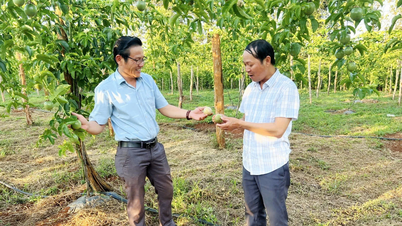
Lang Son currently boasts large-scale raw material areas with over 46,000 hectares of star anise, nearly 11,000 hectares of cinnamon, approximately 4,600 hectares of custard apple, and more than 10,000 hectares of vegetables and food crops. The province also has many outstanding scenic spots and unique cultural features of ethnic minorities; its unique cuisine with traditional dishes attracts tourists. These are "gold mines" with high economic value if exploited correctly. The introduction of the OCOP program is considered a "key" to unlocking the door for local products to assert their position.
DOBAO Agricultural and Forestry Cooperative (Na Sam commune) is one of the pioneering units participating in the OCOP program. Ms. Chu Thi Hanh, Director of the Cooperative, shared: "With the advantage of the black jelly raw material area, in 2010 my family started researching and producing instant black jelly. The product has gained consumer trust and is used regularly. By 2020, the product was recognized as a 3-star OCOP product. After receiving OCOP certification, the cooperative's black jelly product is widely consumed throughout the country with a quantity of about 200 boxes/day."

Along with black jelly, the province has many other distinctive products that can be developed into OCOP products, such as custard apples, persimmons, various vegetables, six-toed chickens, cage-farmed fish, roast duck, and many other agricultural products and products in the fields of industry, handicrafts, trade, services, and traditional culture…
In implementing the OCOP Program, all levels and sectors in the province have proactively developed specific plans and projects to carry out the program. This includes assigning tasks to each agency, unit, and individual; strengthening propaganda, support, and guidance for program implementation; and advising on the issuance of support policies. From 2019 to the present, all levels and sectors have organized and integrated 997 propaganda conferences for over 41,000 people; distributed over 41,543 sets of documents; and produced 1,141 newsletters, reports, and articles for propaganda purposes. They have also issued specific policies to encourage investment, development of cooperation, and linkages in the production and consumption of agricultural and rural products in the province, including support for the development of OCOP products.
Over the past 7 years, provincial authorities and departments have provided equipment and machinery to businesses with a total budget of over 700 million VND; supported more than 1.5 million traceability labels; over 416,000 various types of packaging; developed 22 product stories; 163,300 labels and tags; facilitated businesses' participation in 82 trade promotion, investment promotion, and supply-demand connection programs; and awarded cash prizes to 127 OCOP-certified products with a total budget of 695 million VND...
Proactive from the subject
If the attention of all levels and sectors is considered a "lever," then the proactiveness of the stakeholders is the decisive factor in the effectiveness of the OCOP program. In reality, after being informed about the role and significance of the program, many stakeholders have proactively learned about the OCOP criteria, improved their production conditions, and registered to participate in the program.
To be recognized as an OCOP product, businesses must meet numerous requirements regarding product quality, production conditions, food safety, traceability, packaging design, and legal documentation. These criteria are not easy to fulfill for small-scale production facilities in rural areas. However, with their proactive approach, many businesses have made changes to meet the program's conditions.
On August 13, 2019, the People's Committee of Lang Son province issued Decision No. 1533/QD-UBND approving the Project "OCOP Program of Lang Son province for the period 2019 - 2020, with orientation to 2030" with specific objectives: By 2030, standardize 135 - 140 products; build 6 community-based cultural tourism villages; consolidate and strengthen 70 economic organizations; develop 80 new economic organizations to actively participate in the OCOP program; build a provincial-level OCOP product database system to actively support state management and connect information, promote trade of OCOP products… |
A typical example is the business owned by Nguyen Thi Hang in That Khe commune. After many years of producing traditional dishes, her establishment has gradually met the requirements to be granted OCOP product certification. Ms. Nguyen Thi Hang said: "To date, my family has been producing traditional dishes in the commune for 16 years. Through the propaganda and guidance of the commune government, in 2023, my family registered to participate in the OCOP program. Accordingly, my family focuses on implementing food safety criteria, upgrading the production area, and equipping machinery to process products such as braised pork belly and roast duck."
In addition to improving product quality to meet requirements, many businesses are also changing their production mindset towards collaboration. While previously people mainly worked individually, now many households have linked together to form cooperatives for joint production. This is also a crucial factor in achieving OCOP certification and enhancing competitiveness in the market.
The Thanh Son Agricultural and Agricultural Products Processing Cooperative in Thien Tan commune is a prime example. Ms. Hua Thi Thuan, the cooperative's director, stated: "Many households in the commune produce traditional cakes such as gio cake, mugwort cake, and thorn cake. However, in the past, these households mainly produced on a small scale and hadn't built a brand for their products. Given this reality, in 2025, I mobilized the women in the village to establish a cooperative with 7 members. After its establishment, the cooperative proactively completed the necessary conditions to participate in the OCOP program. Not only focusing on quality, the cooperative also invested in machinery and equipment for cake making, and paid attention to packaging and labeling for its products. As a result, in 2025, the cooperative's thorn cake and mugwort cake were evaluated and classified as 3-star OCOP products."
In addition, households and cooperatives have invested in packaging and design. Previously, many products were simply packaged in bags for sale; now, businesses are focusing on packaging design, printing product information, and attaching QR codes for traceability. This is not only a requirement in the OCOP product evaluation but also helps to enhance professionalism and build consumer trust. Businesses also proactively participate in training courses on branding, digital transformation, and product promotion organized by relevant agencies. Some cooperatives and businesses have even learned how to promote on social media and list their products on e-commerce platforms to expand their customer reach, such as the Lua Vy Agricultural Products Processing Cooperative and the Mai Sao Lang Son Cooperative.
With the support of the State and the involvement of stakeholders, OCOP products have been gradually developed and expanded. From 2019 to the present, relevant units in the province have evaluated, classified, and certified 256 products meeting OCOP standards, including 25 4-star products and 231 3-star products. These OCOP-certified products have made a significant contribution to enhancing product value and creating sustainable development.
Source: https://baolangson.vn/chia-khoa-ocop-ky-1-danh-thuc-mo-vang-ban-dia-5092778.html


















![[Photo] Reception to welcome General Secretary and President To Lam and his wife on their State visit to the Philippines](https://vphoto.vietnam.vn/thumb/1200x675/vietnam/resource/IMAGE/2026/06/01/1780295488620_vna-potal-chieu-dai-chao-mung-tong-bi-thu-chu-tich-nuoc-to-lam-va-phu-nhan-tham-cap-nha-nuoc-toi-philippines-8798060-7855-jpg.webp)




























































Comment (0)