

Back in the 1950s, Liberia and Ethiopia were the only two African nations to have escaped colonial rule. Today, virtually all African nations are independent and sovereign states. Some, such as South Sudan, Eritrea, and Namibia, have even gained independence from other African nations.
However, according to experts such as Juste Codjo, an associate professor and security research analyst from Benin, in many cases, becoming an independent nation does not equate to economic prosperity for African countries.
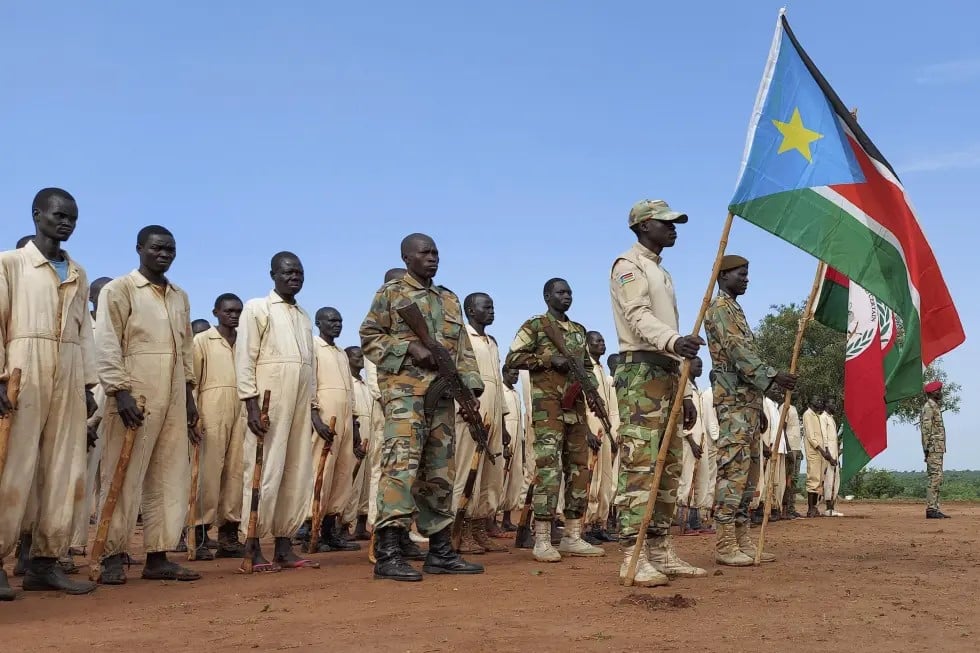
South Sudan celebrated its 13th anniversary of independence on July 9th. During that short period, the country endured a seven-year civil war. Photo: AP
Associate Professor Codjo told DW: "Independence is something we can say has happened, but we cannot confirm that, in reality, African countries are completely independent."
For Ghanaian political analyst Fidel Amakye Owusu, this is a matter of individual cases. For example, Namibia appears to have fared significantly better than South Sudan, even though both African nations followed similar paths to independence.
Owusu stated, "The kind of independence these African nations have is dependent on the colonial power that rules a particular territory."
South Sudan serves as a cautionary tale.
Africa's youngest nation, South Sudan, celebrated its 13th anniversary of independence on July 9th. However, during that short period, the country endured a seven-year civil war. In 2017, the United Nations declared a nationwide famine in South Sudan. Adding to this were years of political infighting, making life for the people truly miserable.
James Boboya, an international development scholar from South Sudan, told DW that the country was initially very optimistic. However, this changed rapidly.
"When we gained independence, we had civil servants and armed forces personnel who worked for more than eight months without pay," Boboya said. "What the government inherited from Sudan was chaos, lack of services, corruption, and poor resource management."
Mr. Boboya added that all these factors have led to "problems of minorities, lack of freedom, and underdevelopment."
However, analyst Owusu argues that many of South Sudan's problems are directly related to the nature of its politics. "Because of war and instability, the country is not developing. The lesson learned is that if you are not united, if there is no internal cohesion, you cannot develop," he said.
Boboya argued that a lack of political will and genuine leadership is at the core of the persistent failures in South Sudan, adding that key security institutions in the country need a focused, unified mandate.
"The government must address the issue of civilian state reform so that we have an army, a police force, a national security agency, and an intelligence agency to carry out the task of ensuring security for South Sudan," said Boboya.
Kingsley Sheteh Newuh, a political economist from Cameroon, agrees that South Sudan's institutions need strengthening from within. "The lack of strong, independent institutions has led to poor governance, inefficiency, and corruption," Newuh stated.
Quality leadership is a crucial factor for success.
But for Newuh, there was also an intangible element at play: leadership. While inheriting historical problems could challenge the trajectory of any newly independent nation, Newuh believed that leadership qualities played a crucial role in the art of governance—especially when a new nation sought to develop its own identity.
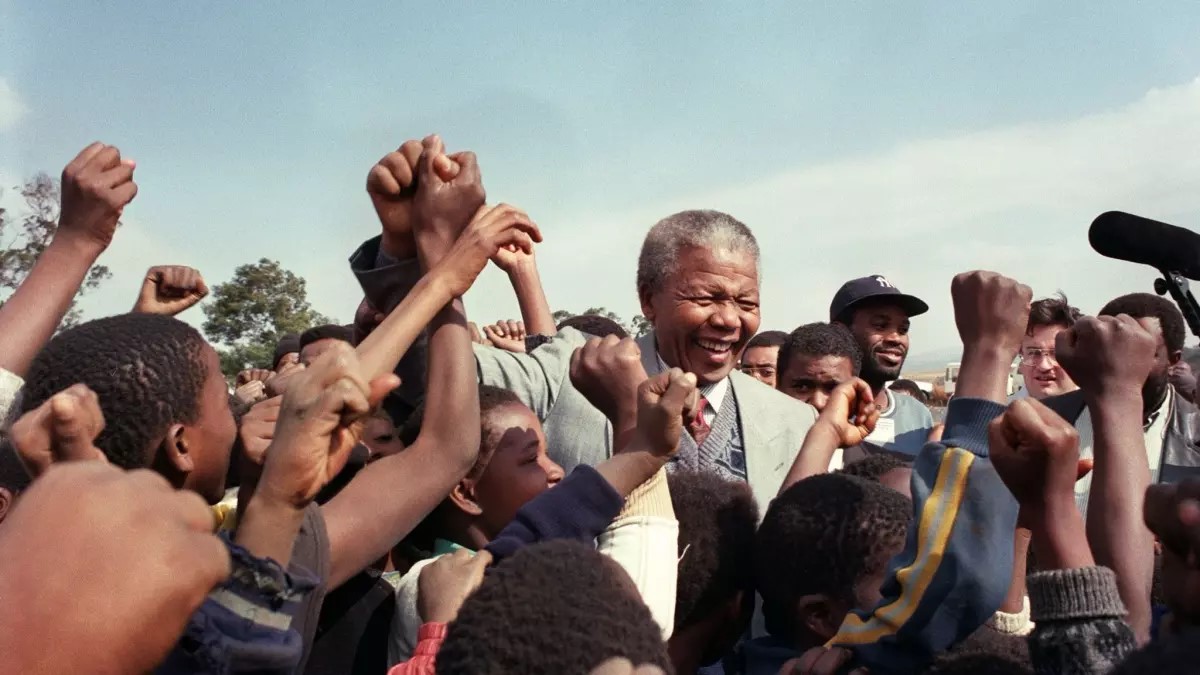
Not every African nation is fortunate enough to have a leader as outstanding, compassionate, and visionary as Nelson Mandela of South Africa. (Photo: LA Times)
"Political leadership is a double-edged sword in post-independence Africa. While visionary leaders like Nelson Mandela, Julius Nyerere, and Kwame Nkrumah played crucial roles in fostering national unity, social development, and economic progress, conversely, weak leadership, characterized by corruption, nepotism, and authoritarianism, contributed significantly to the failures of many other African nations."
Newuh added that leaders who prioritize personal power over national development tend to face more serious problems such as poverty, conflict, and underdevelopment.
South Sudanese scholar Boboya shares a similar perspective on leadership in his country's context. "There have been many warlords and individual political leaders who have taken advantage of the situation, and they have begun to encourage rebellion throughout South Sudan," Boboya said, emphasizing that this is a key factor in the erosion of the country's independence gains.
Lessons learned from colonialism to genocide.
But historical narratives also play a crucial role when assessing the level of progress of different African nations. In particular, Owusu believes it is necessary to pay attention to the precise ways in which different countries gained independence.
"For example, the way the United Kingdom granted independence to South Africa was different from how they did it in West Africa," he said. "And there had to be a coup in Portugal before granting independence to its colonies in Africa," Owusu added, emphasizing that the journey to sovereignty of different African nations depended heavily on the political context of their respective colonizers at the time.
However, some believe it is time to break free from the shadow of colonialism and look at real-world success stories in Africa.
"When it comes to roads and cleanliness, many people admire Rwanda. In terms of agriculture, Uganda offers the best system. And the ability to question the government, as seen in Kenya, is something that South Sudanese people aspire to," Boboya said.
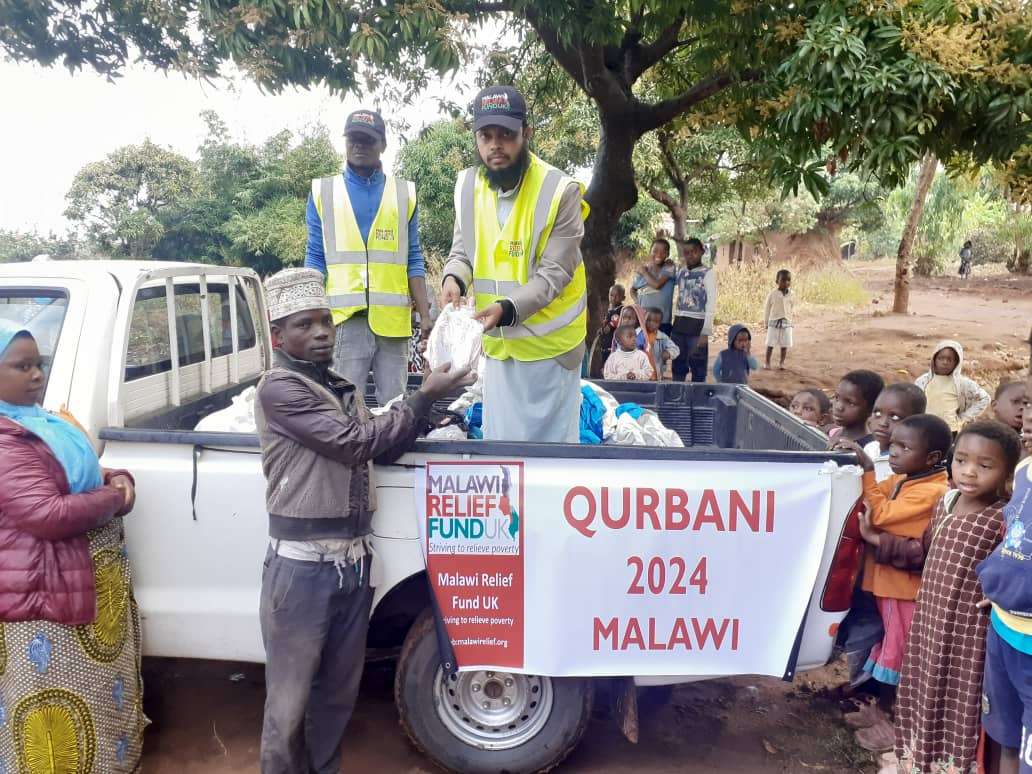
Malawi celebrated its 60th anniversary of independence on July 6th. Despite having no ongoing conflict, it is the fourth poorest country in the world. Photo: Malawirelief
Political analyst Owusu agrees that Rwanda's specific example can inspire other African nations, emphasizing that this small East African country has demonstrated that a nation can overcome a catastrophic situation like Rwanda's 1994 genocide against the Tutsi and moderate Hutu to achieve stability and development.
However, he added that Rwanda has not yet solved all of its problems. "It is one of the poorest countries in Africa with high youth unemployment and an unstable economy," he said.
But not all challenges and development shortcomings stem from conflict. For example, Malawi celebrated its 60th anniversary of independence on July 6th. While there is no ongoing conflict in the country, the World Bank ranks it as the fourth poorest nation in the world, with 70% of Malawians living on less than $2.50 a day.
Owusu believes Malawi's plight is directly linked to its colonial past: "The British colonial rulers did not provide them with a good education. They used forced labor," he explained, adding that similar patterns occurred in Mali and Burkina Faso when both countries separated from France in 1960.
What opportunities does Africa have to rise up?
Entering the 21st century, Africa is facing a multitude of new challenges without resolving the problems that have persisted since the colonial era.
Newuh stated that corruption remains rampant in many African countries and stressed that "this problem needs to be addressed because it creates a vicious cycle of underdevelopment, poverty, and political instability in many African nations."

Africa's large and increasingly dynamic younger generation promises to be a force capable of transforming the continent. Photo: World Bank
Political analyst Owusu believes that "environmental problems caused by global warming" need to be addressed first, as the African continent is bearing the brunt of the consequences of global warming. "And youth unemployment is also holding the continent back," he added.
However, despite all these challenges, Boboya believes we have reason to be optimistic, as the future lies in the hands of the youth. "Young people must empower themselves to take on leadership roles, to ensure that they liberate these nations from their current leadership failures," he said.
According to United Nations projections, in the next decade, at least one-third of the world's youth aged 15 to 24 will be African, making the continent the world's largest workforce, surpassing China and India.
African youth are also better educated and more connected than ever before: 44% graduated from secondary school in 2020, up from 27% in 2000, and more than 500 million people have daily internet access.
Access to technology and interaction with the world will be the driving force for the younger generation of Africa to change their destiny, and of course, that of the struggling nations on the continent.
Nguyen Khanh
Source: https://www.congluan.vn/tai-sao-doc-lap-la-khong-du-doi-voi-mot-so-quoc-gia-chau-phi-post305427.html

























![[Photo] Reception to welcome General Secretary and President To Lam and his wife on their State visit to the Philippines](https://vphoto.vietnam.vn/thumb/1200x675/vietnam/resource/IMAGE/2026/06/01/1780295488620_vna-potal-chieu-dai-chao-mung-tong-bi-thu-chu-tich-nuoc-to-lam-va-phu-nhan-tham-cap-nha-nuoc-toi-philippines-8798060-7855-jpg.webp)



















































Comment (0)