

Up to this point, according to businesses in the shrimp industry, they are mainly focusing on accelerating the delivery of orders scheduled for the second quarter to partners in the US market. This is because the shipping time from Vietnam to the US takes approximately 38-45 days, leaving businesses with only about 40-45 days to procure and process the shrimp (calculated from the date the tax deferral decision takes effect). This is a relatively short period, coupled with low shrimp reserves and limited domestic raw shrimp supply (due to difficulties in the early farming season), and high domestic shrimp prices, making it very difficult to fulfill new contracts.
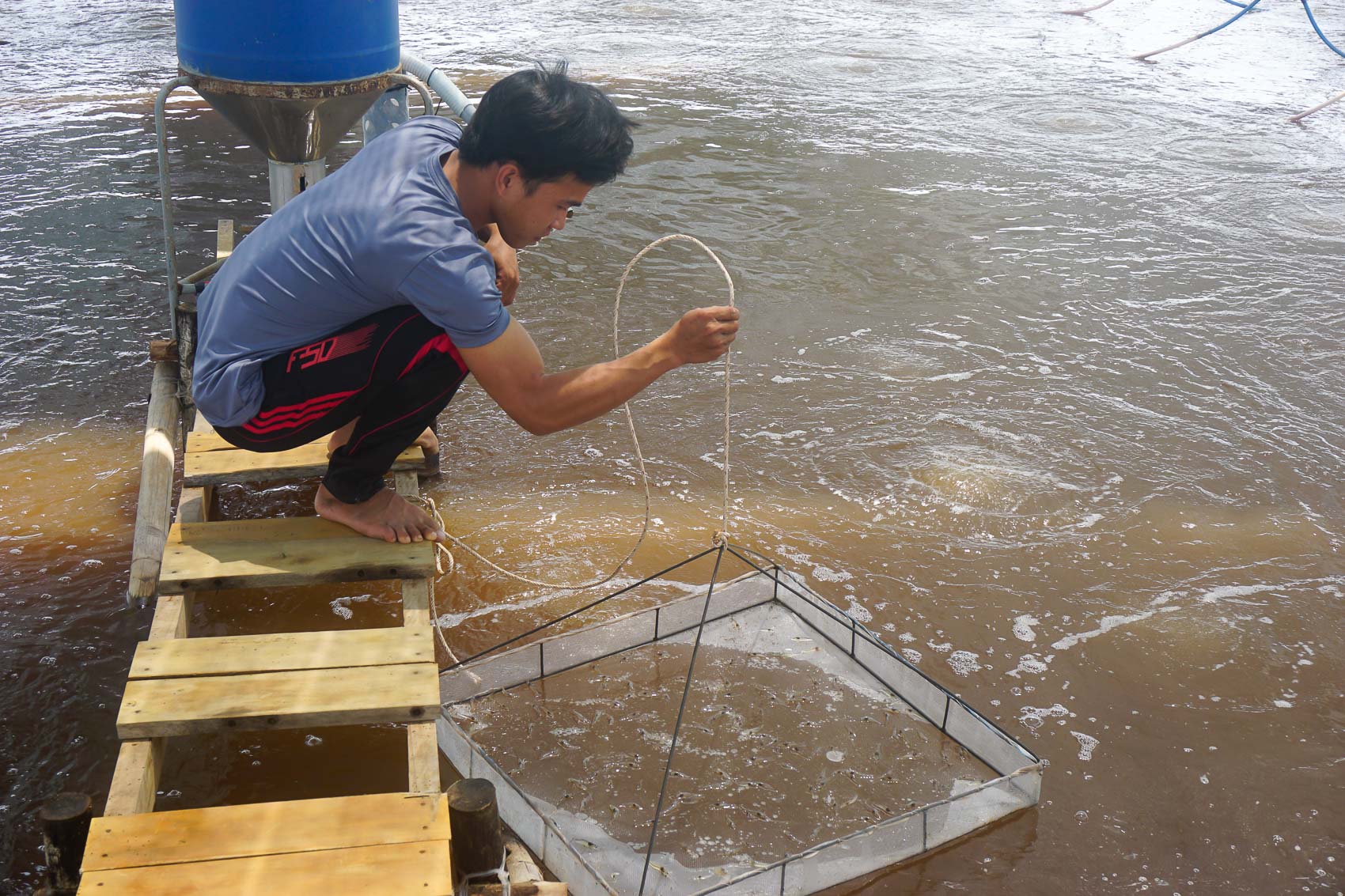 |
| Although not on a massive scale, shrimp farmers have confidently continued to stock for the new crop as shrimp prices remain high. Photo: TICH CHU |
The export situation remains challenging. Besides accelerating shipments to the US before the reciprocal tariff deferral, businesses are focusing on finding alternative solutions should they be forced to leave the US market in the worst-case scenario. According to these businesses, although profit margins in the US market are not high, losing this market would undoubtedly lead to a decline in revenue, profits, and overall industry exports. Regarding the specific impact on sales and profits if they have to withdraw from the US, businesses say it's too early to say anything definitively, as it depends on the individual circumstances of each company. This is something businesses do not want, but scenarios and contingency plans for a forced exit from the US market must be carefully prepared to avoid being caught off guard.
The shrimp farming season at the beginning of 2025 continues to be full of difficulties and challenges. If asked to name these difficulties and challenges, shrimp farmers would not hesitate to say: "Weather and disease." This is evident in the high supply of shrimp fry to the market, but the amount of feed is not commensurate. According to dealers, since the beginning of the year, they have only been able to sell feed to customers for 1-2 months, due to shrimp diseases such as EHP, TPD, and a newly emerging and very dangerous disease called PDD, recently announced by scientists from Can Tho University. However, thanks to the high price of shrimp from the beginning of the year, farmers are almost guaranteed a profit as long as they have shrimp to harvest. This is also a great source of motivation, contributing to the estimated farming area after the first four months of the year reaching over 612,000 hectares and the harvested shrimp production exceeding 250,000 tons.
While shrimp farmers were struggling to overcome disease outbreaks to ensure a harvest, a new worry emerged in early April: the "counter-tax." Immediately after the tax was announced, the price of shrimp of certain sizes plummeted, with some types dropping by over 20,000 VND/kg, further increasing farmers' concerns. Fortunately, the tax was postponed shortly afterward, and coupled with increased domestic demand, shrimp prices recovered until May. The issue of the counter-tax spread rapidly from export businesses to shrimp farmers, causing many households to worry and only dare to stock their ponds sparingly. As a result, the area stocked in April and early May slowed down, even though shrimp prices remained high and shrimp seed suppliers increased promotions offering 30%, 50%, or even 100% free seeds.
Anxiety, hope, and mutual encouragement are all that shrimp farmers can do while waiting for a positive outcome in negotiations regarding reciprocal taxes. This is what has helped ensure that the daily shrimp harvest, while not abundant, provides a certain amount of shrimp for processing plants to maintain production. If shrimp prices remain at their current levels, farmers will continue to stock new crops, albeit not on a massive scale, but still meet a certain supply for processing plants during the peak export season from August to October.
Shrimp businesses and farmers are temporarily out of danger, and although opportunities are limited, everyone is seizing them to turn them into tangible results in this production and business year. Hopefully, good things will come to the shrimp industry in general and shrimp farmers in particular, giving everyone more motivation and confidence to overcome difficulties and challenges together and safely reach the finish line in the 2025 shrimp season.
PROTEIN
Source: https://baosoctrang.org.vn/kinh-te/202505/tam-thoi-thoat-hiem-7070415/


![OCOP during Tet season: [Part 1] Ba Den custard apples in their 'golden season'](/_next/image?url=https%3A%2F%2Fvphoto.vietnam.vn%2Fthumb%2F402x226%2Fvietnam%2Fresource%2FIMAGE%2F2026%2F01%2F26%2F1769417540049_03-174213_554-154843.jpeg&w=3840&q=75)



Comment (0)