

The development of artificial intelligence (AI) has led to increasingly sophisticated cyberattacks, turning ransomware into a service for cybercriminals. New threats have also emerged, targeting the iOS operating system through Operation Triangulation in 2024.
In the context of ever-changing cybersecurity threats, with new attackers, technologies, and threats constantly emerging, organizations and communities face a highly uncertain landscape. Even opening any email carries unforeseen risks.
According to Kaspersky's Incident Response Analyst Report 2023, 75% of cyberattacks exploit vulnerabilities in Microsoft Office. Regarding attack methods, 42.3% target free applications available on the internet, 20.3% exploit compromised accounts, while only 8.5% use brute force.
Most attacks begin with the following method: attackers use stolen or illegally purchased login credentials. They then proceed to attack via the Remote Desktop Protocol (RDP), send phishing emails containing malicious attachments or links, and infect systems through malicious files disguised as documents on public sources. On the positive side, the number of attacks in Q1 2023 decreased by 36% compared to the same period in 2022.
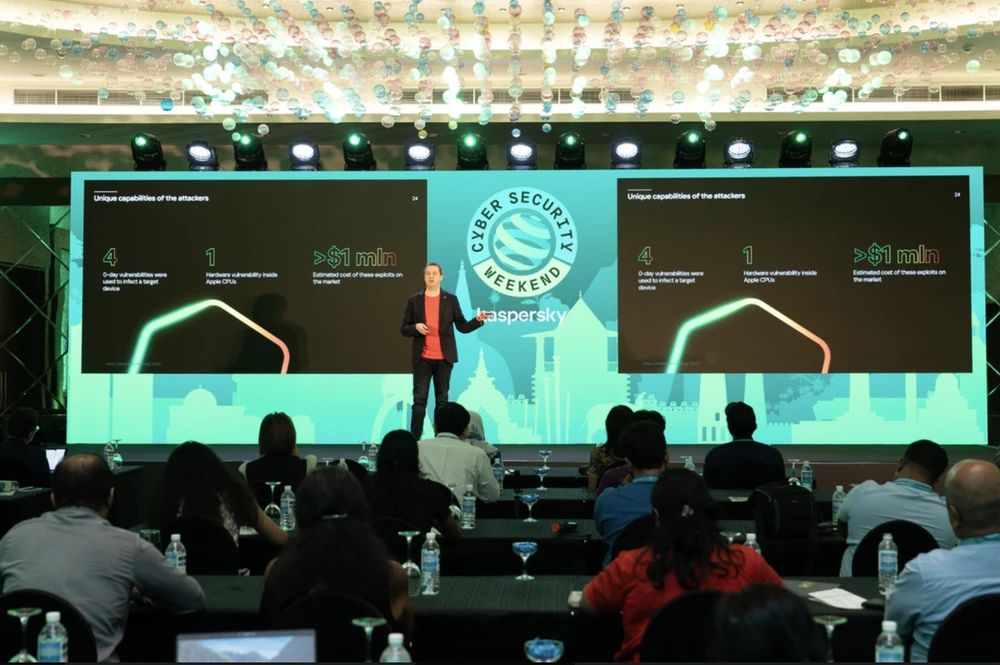
One of the most dangerous cyberattack campaigns ever detected by Kaspersky is called Operation Triangulation. This campaign targets iOS devices by exploiting hardware vulnerabilities in Apple's CPUs to install malware.
Notably, the hackers used four extremely dangerous zero-day vulnerabilities to infect the target devices. The cost of purchasing these vulnerabilities on the black market can exceed $1 million.
When an iOS device is targeted, it receives an invisible iMessage containing a malicious attachment. This attachment exploits a vulnerability that allows for the automatic execution of malware without user interaction. Once installed, the malware connects to a command and control server and begins multiple stages of the attack. Upon completion, the attacker gains complete control of the iOS device and erases all evidence of the attack to conceal their actions.
Apple has patched these vulnerabilities; however, to protect devices from potential future attacks, iOS users should regularly update their software, periodically restart their devices, and disable iMessage to minimize the risk of receiving malware via messages.
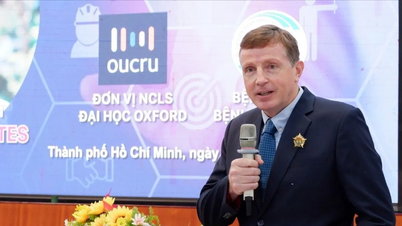
Igor Kuznetsov, Director of the Global Research and Analysis Team (GReAT) at Kaspersky, stated: " Government organizations are the most targeted. This is followed by manufacturing businesses and financial institutions. Ransomware and cyberattacks are the two most serious threats, causing significant damage to organizations."
KIM THANH
Source: https://www.sggp.org.vn/tan-cong-mang-khai-thac-cac-lo-hong-phan-cung-trong-cpu-cua-apple-post754206.html

![[Photo] Prime Minister Pham Minh Chinh attends the Conference on the Implementation of Tasks for 2026 of the Industry and Trade Sector](/_next/image?url=https%3A%2F%2Fvphoto.vietnam.vn%2Fthumb%2F1200x675%2Fvietnam%2Fresource%2FIMAGE%2F2025%2F12%2F19%2F1766159500458_ndo_br_shared31-jpg.webp&w=3840&q=75)














![[INFOGRAPHIC] Legion Go Gen 2 sets a new standard for gaming.](https://vphoto.vietnam.vn/thumb/402x226/vietnam/resource/IMAGE/2025/12/19/1766146888809_info-taycamgames-02-jpg.webp)
















































































Comment (0)