

With the trend of diversifying global supply chains, many multinational corporations have been increasing their investment in Vietnam, creating significant opportunities for domestic businesses to participate. Meanwhile, the government has also issued numerous policies and mechanisms aimed at making Vietnam a major manufacturing hub, supplying a wide variety of high-quality goods at competitive prices. However, assessments indicate that many Vietnamese businesses have not yet fully grasped and utilized these opportunities, still cautiously exploring their path to participating in global supply chains.
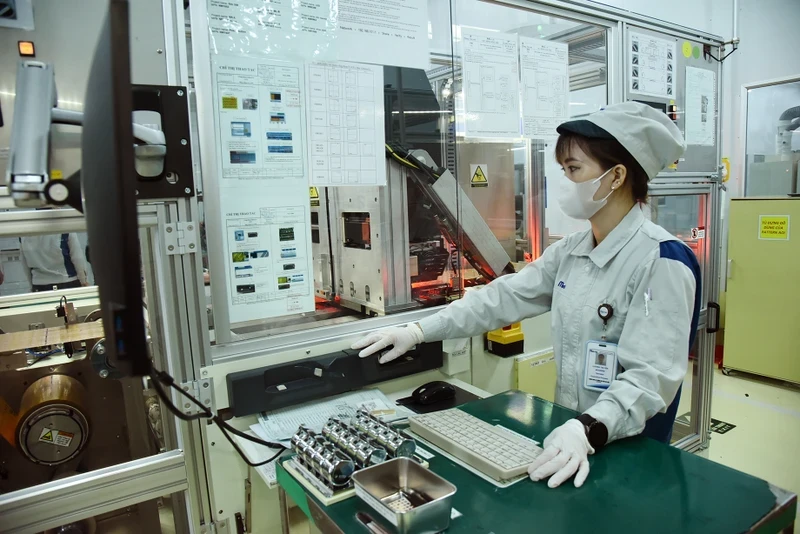
It is time for Vietnamese businesses to quickly adapt to the new context, enhance their competitiveness, improve their human resources, and upgrade labor productivity and technology to meet the stringent requirements of global supply chains.
A change in mindset and perception is needed.
From the end of 2023 to the present, many large economic and technology corporations worldwide have shown interest in and gradually shifted their supply chains to Vietnam, while also actively seeking local suppliers to increase the localization rate. In the first six months of the year alone, total registered foreign direct investment (FDI) in Vietnam reached nearly US$15.2 billion, an increase of 13.1%; implemented capital also reached approximately US$10.84 billion, an increase of 8.2% compared to the same period last year…
The above results show that Vietnam is an attractive investment destination, trusted and chosen by countries and corporations, becoming a new location in the strategy of diversifying production and supply chains, affirming the significant improvement in the investment and business environment.
Furthermore, increasingly synchronized infrastructure and technology are also advantages that attract foreign investors to Vietnam. Some large global corporations like Apple and Amazon, although not yet investing directly in Vietnam, always consider it a region to source components, raw materials, and input equipment for their production processes. This is also an important factor for Vietnam to rise and participate more deeply in the global supply and value chain.
Nevertheless, great opportunities often come with many challenges, as the supply chain in Vietnam has not yet met the expectations of foreign investors. According to the General Statistics Office, Vietnam currently has approximately 5,000 supporting industrial enterprises, producing industrial products to meet domestic demand and export to major markets such as South Korea, Japan, China, and the United States.
However, among them, only about 100 businesses are first-tier suppliers to multinational corporations, while about 700 are second-tier, third-tier, and so on. This shows that, after nearly 40 years of development, Vietnamese businesses are still struggling to find their place in the supply chain, with a very low percentage of businesses truly becoming part of the global supply chain.
According to Dr. Nguyen Tu Anh, Director of the Center for Economic Information, Analysis and Forecasting (Central Economic Committee), out of more than 800,000 operating businesses in Vietnam, 96%-98% are small and medium-sized enterprises (SMEs). These businesses often lack management skills, are less innovative in technology, have limited financial resources, and their workforce quality and skills are not yet up to par, making it difficult to meet the demands of corporations relocating to Vietnam for technology transfer and adoption.
If these weaknesses are not addressed soon, they will increase the risk of falling deeper into the trap of processing and assembly, making it difficult to control low-quality investment flows, foreign investment taking over domestic markets and businesses, and "front" investments, etc. In addition, as the economy grows rapidly, attracting abundant capital, the demand for energy is enormous, but for Vietnam, this remains a concern for foreign investors.
According to Nguyen Van Hoi, Director of the Institute for Strategic and Policy Research in Industry and Trade (Ministry of Industry and Trade), this process is facing numerous difficulties due to the mindset, awareness, thinking, and vision of policymakers, which sometimes lack transparency and equality, stability, and overlapping or contradictory policies. While some businesses have boldly invested in equipment, machinery, and high-quality human resources, the level of investment remains too low compared to the actual needs of the value chain.
Furthermore, Vietnamese businesses have an inherent weakness: a lack of linkages between businesses participating in the supply chain. Therefore, they cannot expand their local sources of raw materials and components, and most have to find their own strategies in the market.
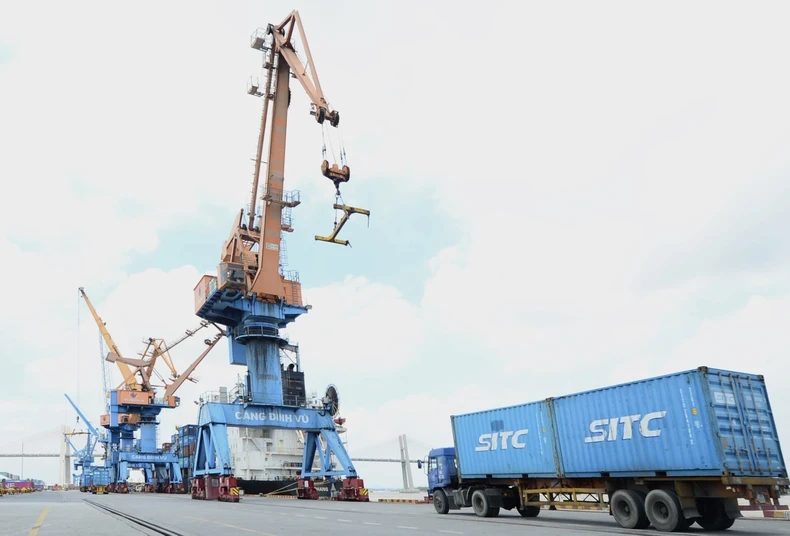
Support should be focused and targeted.
Participation in regional and global supply chains is no longer just a trend but a practical necessity for Vietnamese businesses in the process of increasingly deep international economic integration. According to many experts, to anticipate this trend, Vietnam needs timely, synchronized, and appropriate countermeasures and solutions to prevent and mitigate risks, as well as to take advantage of the opportunities presented by this shift, giving Vietnam a competitive edge in participating in global supply chains from its home turf, especially as the global economy shows signs of recovery.
At the same time, businesses need to proactively enhance their self-reliance, self-improvement, pioneering spirit, innovation, and boldness in thinking, acting, and venturing into new areas that the economy truly needs in order to reach international markets and compete directly with foreign businesses in accordance with market principles.
Another important issue is the need to enhance competitiveness by focusing on human resource development and science and technology, and innovation linked to practical needs; aiming to produce high-tech products with high intellectual content, creating high-value products that rank highly in the global supply chain... And "greening" in production is the key for Vietnamese businesses to improve their competitiveness, meet the requirements of the supply chain's top management regarding reducing carbon emissions into the environment, promote sustainable exports, and create new competitive advantages for businesses.
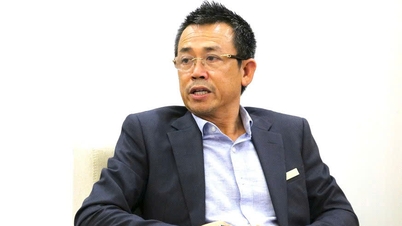
While the efforts of businesses are a key factor, according to Dr. Le Duy Binh, CEO of Economica Vietnam, government support is crucial and decisive. In the future, the government needs to improve institutions and policies, with administrative procedures, import/export processes, and specialized inspections being reformed and improved significantly. Simultaneously, it needs to innovate its approach to supporting businesses, focusing on key areas to achieve specific goals.
Support measures that involve exemptions or reductions, which have been in place for too long, should be gradually scaled down in scope or intensity. Instead, measures that foster business development should be prioritized. Policies should focus on helping businesses innovate technologically, especially in green technologies, energy saving, and the transition to renewable energy; developing the digital economy, green economy, circular economy, and new industries of the future such as semiconductors, electronic chips, clean energy, digital economy, artificial intelligence, etc.
Vice Chairman of the Vietnam Chamber of Commerce and Industry (VCCI), Hoang Quang Phong, expressed his hope that in the coming time, the Government will continue to focus on removing technical barriers to enable businesses to penetrate new markets; promote the development of logistics services, contributing to reducing costs and enhancing the competitiveness of Vietnamese export goods,...
Furthermore, in the long term, the State needs to continue promoting innovation in the growth model and restructuring the economy, developing strong Vietnamese enterprises capable of linking with technology corporations in global supply chains; building and implementing a national strategy for regional and global supply chain integration; having policies and solutions to develop supporting industries to help domestic enterprises have sufficient capacity to participate in domestic, regional, and global supply chains; and promoting cross-border e-commerce to boost supply chain development, goods circulation, market expansion, and export growth. Only strong policies can help Vietnamese enterprises seize opportunities to participate in global supply and value chains, enhance their independence and self-reliance, and affirm the position of the Vietnamese economy on the international stage.
Source


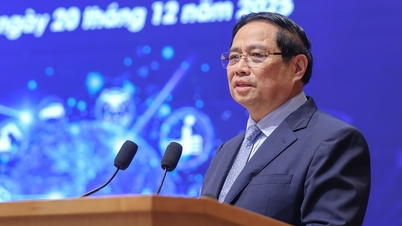
![[Photo] Prime Minister Pham Minh Chinh presides over a meeting on private sector economic development.](/_next/image?url=https%3A%2F%2Fvphoto.vietnam.vn%2Fthumb%2F1200x675%2Fvietnam%2Fresource%2FIMAGE%2F2025%2F12%2F20%2F1766237501876_thiet-ke-chua-co-ten-40-png.webp&w=3840&q=75)



































































Comment (0)