

Vietnam is at a critical juncture; R&D is no longer an option but a necessity to overcome the middle-income trap and join the ranks of high-tech nations.
A strong focus on accelerating R&D is crucial in shaping Vietnam's position in the coming decades.
R&D is a key piece of the puzzle.
After nearly 40 years of comprehensive reform, Vietnam has achieved encouraging results, creating a foundation and momentum towards the goal of becoming a high-income developed country by 2045. Vietnam is emerging as a growth star of the world . But to continue shining and reaching further in the era of the Fourth Industrial Revolution, Vietnam needs to focus strongly on research and development (R&D) capabilities. If it lags behind, Vietnam risks falling into the "sandwich" trap – unable to compete on production costs with latecomers and also lacking the technological competitiveness of more advanced nations.
Despite playing a crucial role in Vietnam's future development, R&D remains a "grey area." Firstly, total investment in R&D (including both government and corporate funding) is still too low, less than 0.7% of GDP, lower than other countries in the region. This figure is only a fraction of that in China (2.68% of GDP in 2024). The gap between research and application remains significant, leading to many research results not being commercialized or transformed into practical products to create economic value and improve people's lives.
Furthermore, Vietnam's R&D workforce still has many limitations in both quantity and quality. Currently, the ratio of R&D personnel is less than 10 people per 10,000 inhabitants – only 7.6% of South Korea, 13% of France, 29.8% of Malaysia, and 58% of Thailand. Notably, over 84% of Vietnam's R&D workforce is concentrated in the state sector, while the non-state sector – the main driver of innovation – accounts for less than 14%.
The system for training high-quality human resources has not yet met development needs, with the percentage of the population aged 18 to 29 attending university being less than 29% - much lower than the average of over 50% in upper-middle-income countries.
At the same time, Vietnam lacks universities, research institutes, and businesses capable of implementing global-scale R&D projects. The R&D environment is also not attractive enough, leading to a brain drain as many R&D talents seek employment opportunities abroad.
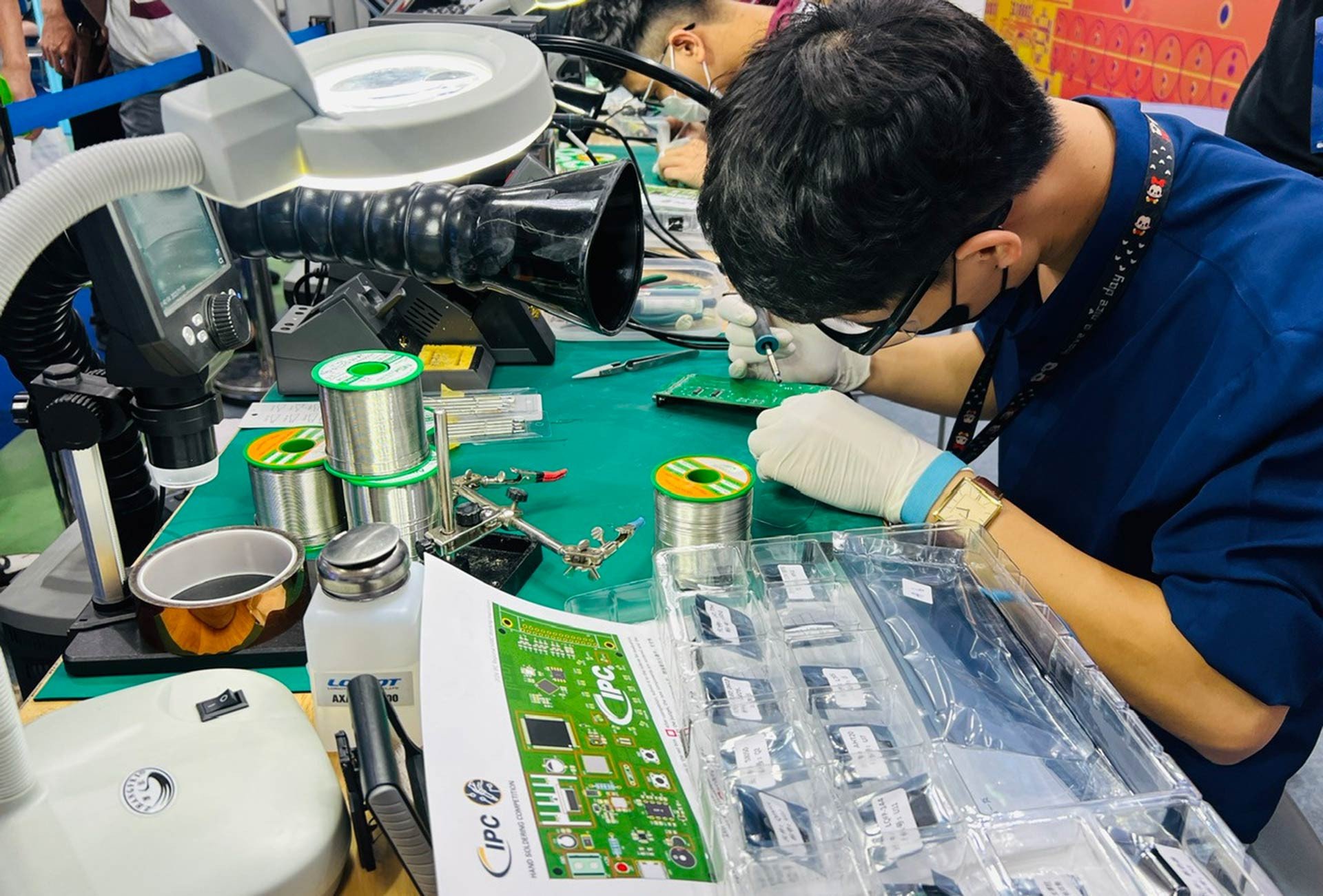
Another major obstacle is that Vietnam's R&D ecosystem remains fragmented and lacks cohesion. Currently, the government primarily plays a regulatory role, while large enterprises operate independently without close coordination with research institutes and universities. In particular, Vietnam has not effectively leveraged the participation of global technology corporations to connect the flow of international knowledge and technology, while simultaneously fostering talent development and increasing investment in R&D.
A strategy of rapidly increasing investment in R&D lays the foundation for accelerated growth.
The goal of increasing R&D spending to 2% of GDP by 2030 is not just a guideline but a mandatory requirement to enhance competitiveness and ensure sustainable development in Vietnam. Investing in R&D not only reflects a nation's innovative capacity but is also key to helping Vietnam overcome the middle-income trap and rise to the group of high-tech countries. To achieve this goal, Vietnam needs a comprehensive and decisive strategy, focusing on three main pillars: increasing R&D spending from the state budget, encouraging large domestic enterprises to invest heavily in R&D, and attracting global technology corporations. Close coordination between these three approaches will create a powerful impetus, driving breakthrough development in the R&D ecosystem and bringing Vietnam closer to its goal of becoming an innovation-based economy.
Increasing government spending on R&D: A foundation for innovation and national competitiveness.
Increasing government spending on R&D is not only a starting point but also a crucial foundation for creating future technological breakthroughs. This demonstrates the strong commitment of the State to long-term investment in science, technology, and innovation, building confidence and encouraging the private sector to participate deeply in the technological innovation process.
Experience from developed countries shows that public investment in R&D can create a powerful ripple effect. Israel allocates more than 1% of its GDP from the state budget to directly fund research projects, contributing to building a world-leading advanced technology ecosystem. South Korea uses state budget to develop national research centers and heavily funds cutting-edge industries such as information technology and semiconductor materials, encouraging private enterprises to increase R&D investment and creating a ripple effect throughout the entire economy.
To achieve similar progress, Vietnam needs to increase the state budget for R&D from approximately 0.2% to 0.5% of GDP by 2025 and reach a higher level by 2030. This is not only a sign of a strong commitment from the government but also a crucial lever to encourage and promote businesses and researchers to actively participate in technology development.
Encouraging large domestic enterprises to invest in R&D: A driving force for Vietnam's technological breakthrough.
Large domestic enterprises not only possess strong financial resources but also have high-quality human resources and management capabilities to implement large-scale R&D projects. When these enterprises invest heavily in R&D, they not only create technological breakthroughs but also drive the development of the entire domestic value chain, spreading throughout the economy.
Tax incentives are crucial tools for reducing financial burdens, allowing large businesses to focus resources on R&D. Policies such as R&D expense deductions or significantly lower tax rates for high-tech projects will encourage businesses to invest more heavily in AI, renewable energy, and cutting-edge technologies.
Human talent is a key factor in the success of R&D development. However, Vietnam is facing a brain drain, as many AI and big data experts choose to work in Singapore, Japan, or the US, where they offer higher salaries, better environments, and more opportunities for career advancement.
Accordingly, the State, on the one hand, needs to support large domestic enterprises in attracting and retaining high-tech talent, and on the other hand, cooperate with large enterprises to build in-depth technology training programs. South Korea was successful in supporting Samsung's cooperation with universities in the 1990s, training a generation of talented engineers, contributing to making Samsung a leading global technology corporation.
For large domestic enterprises to become the main driving force for R&D growth and global expansion, Vietnam needs a comprehensive strategy, including: tax incentives to encourage technology investment; administrative procedure reforms to promote an innovation environment; and the development of high-tech talent to build a sustainable competitive advantage.
When policies are designed flexibly and tailored to the practical needs of businesses, large domestic enterprises will play a leading role, pulling hundreds of small and medium-sized enterprises into the technology ecosystem, creating a strong impetus for Vietnam to enter the group of high-tech countries in the world.
Attracting global technology corporations: The key to Vietnam becoming a regional R&D hub.
Attracting global technology corporations to invest in R&D not only helps Vietnam increase its financial resources for R&D but, more importantly, promotes technology transfer and the development of local talent. A clear example is Samsung's $220 million R&D center in Hanoi, which not only focuses on researching new technologies but also trains thousands of Vietnamese engineers, directly contributing to the development of the domestic technology ecosystem.
Global technology corporations need to be shown that Vietnam is the optimal destination for research in terms of cost and efficiency. Several strong solutions could be implemented, including: exempting large R&D centers from corporate income tax for the first 10-15 years; significantly reducing tax rates for investments in cutting-edge technologies such as artificial intelligence (AI), renewable energy, and semiconductor technology; and minimizing administrative barriers.
When Vietnam can create an environment that combines attractive tax incentives, streamlined administrative procedures, and a wealth of talent—not only from within the country but also from globally—technology corporations will consider Vietnam a top destination for expanding their R&D operations.
The "Standing on the Shoulders of Giants" Strategy: Leveraging Global Intelligence to Accelerate Growth

Strong investment is a necessary condition, but talent is the decisive factor in the success or failure of R&D development. With a low starting point, limited knowledge accumulation, and modest R&D experience, Vietnam needs to maximize the use of global intelligence to narrow the gap, promote innovation, and quickly catch up with developed countries.
Attracting world-class experts: A launching pad to catch up with cutting-edge technology.
One of the fastest ways to bridge the technology gap is to proactively invite leading global experts to Vietnam to work, lead large-scale projects, and train young talent. This will help: quickly access advanced scientific knowledge and apply it in practice; connect domestic R&D teams with the global scientific community; and establish a "mentorship" model, creating a direct learning environment where international experts directly guide and develop the next generation of talented young Vietnamese people.
To achieve this, Vietnam needs special mechanisms to attract international talent, including: granting long-term visas to facilitate work; offering personal income tax incentives and reducing financial barriers for international experts coming to Vietnam; and providing financial support for research, making it easier for them to implement key R&D projects.
Leveraging Vietnamese talent abroad: A core force for R&D development.
Due to historical circumstances, Vietnam has a large pool of talented individuals working in leading R&D centers around the world, such as the United States, Japan, Germany, and South Korea. This is a valuable resource that Vietnam needs to leverage to: attract them back to the country to work on strategic projects; build mechanisms for remote collaboration, allowing them to contribute without having to travel; and create attractive incentives, including a competitive work environment, fair compensation, and opportunities for long-term contribution.
Strategy for building an open R&D ecosystem: Connecting global intelligence for breakthroughs.
An effective R&D ecosystem cannot operate in isolation but needs to be connected to the world to leverage the flow of knowledge, technology, and investment capital for sustainable development. Currently, Vietnam's R&D ecosystem is fragmented and isolated, lacking not only strong links between research institutes, businesses, and universities, but also deep integration with the global innovation network. This prevents Vietnam from fully utilizing the power of large technology corporations in training and developing domestic R&D talent.
Talented researchers are not only attracted by high salaries, but more importantly, they need a comprehensive support system, including: modern infrastructure for research and technology testing; a transparent work environment that values creativity and innovation; and opportunities to collaborate with global science and technology networks, rather than being limited to the national level.
Above all, the State needs to play a bridging role, proactively creating conditions for innovative ideas to be commercialized.
When businesses, the government, and researchers work together in a unified strategy, Vietnam will move away from its low-cost production model and transform itself into a leading nation in innovation in the future.
More than ever, Vietnam needs to implement a comprehensive R&D reform strategy on a sufficiently large scale, over a long period, and with a broad enough scope to create a real turning point. The reform must be implemented synchronously across three core pillars: investing heavily in R&D, ensuring sufficient resources to create breakthroughs; removing all barriers and building a favorable environment for research and innovation; and connecting global intelligence, attracting and retaining the best minds.
Dr. Pham Manh Hung - Assoc. Prof. Dr. To The Nguyen - Lecturers at the University of Economics - VNU Hanoi
Source: https://vietnamnet.vn/tang-toc-rd-de-dinh-hinh-vi-the-viet-nam-2371776.html
![[Image] Close-up view of the interchange connecting the two expressways and Long Thanh Airport.](https://vphoto.vietnam.vn/thumb/1200x675/vietnam/resource/IMAGE/2026/05/25/1779703378210_ndo_br_z7863716673926-224453a31600126cce10622af6290afd-4549-jpg.webp)
![[Image] Hanoi's urban life under the challenge of a "scorching hot" environment](https://vphoto.vietnam.vn/thumb/1200x675/vietnam/resource/IMAGE/2026/05/25/1779706979265_nang-nong-t5-2026-minh-duy-7-4636-jpg.webp)



























































































Comment (0)