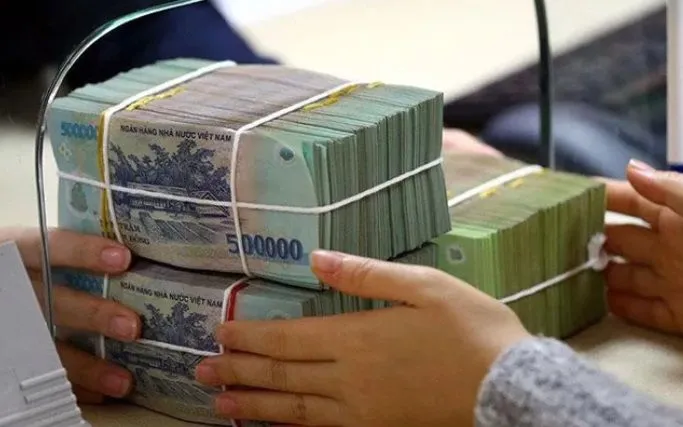
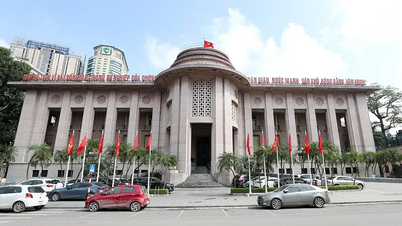
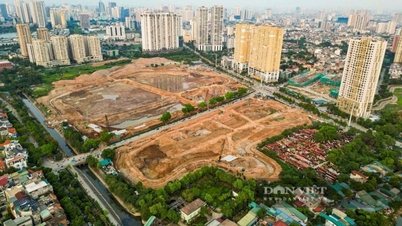
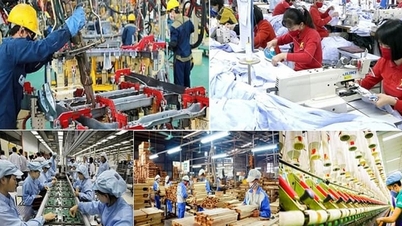
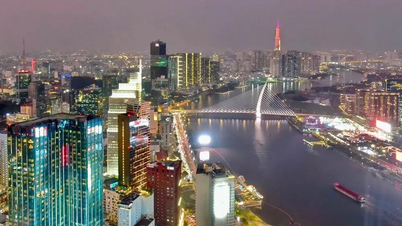
Illustrative image.
These are the latest figures announced by Deputy Governor of the State Bank of Vietnam (SBV) Pham Thanh Ha at a press conference on banking performance in 2025 and the implementation of tasks for 2026, held on the afternoon of December 29 in Hanoi .
According to the Deputy Governor, in 2025 the State Bank of Vietnam (SBV) will continue to implement credit management solutions in line with macroeconomic developments to contribute to supporting economic growth and controlling inflation. From the beginning of the year, the SBV clearly defined its credit management orientation for 2025 and projected system-wide credit growth of approximately 16%, with adjustments made to suit actual developments and circumstances. Simultaneously, the SBV will continue to innovate its credit growth management practices, publicly and transparently announcing the principles for assigning credit growth targets so that credit institutions can proactively implement them.
Credit solutions for specific sectors and fields are being actively and synchronously implemented to direct credit towards production and business sectors, priority sectors, and growth drivers as directed by the Government and the Prime Minister ; increasing access to bank credit, contributing to supporting and promoting economic growth; and actively implementing credit programs to support production, business, consumption, and investment projects as directed by the Government and the Prime Minister.
In light of the complex developments of recent natural disasters, storms, and floods, and in accordance with the directives of the Government, the Standing Committee of the Government, and the Prime Minister, the State Bank of Vietnam (SBV) promptly issued directives to credit institutions, branches of foreign banks, and regional SBVs to urgently review and assess the business operations and debt repayment capacity of borrowers affected by major storms and floods in 2025, in order to promptly apply support measures and alleviate difficulties for these customers.
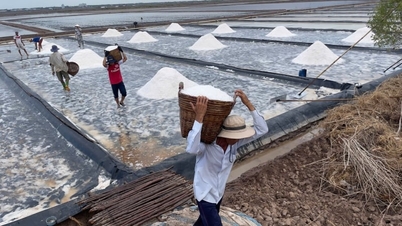
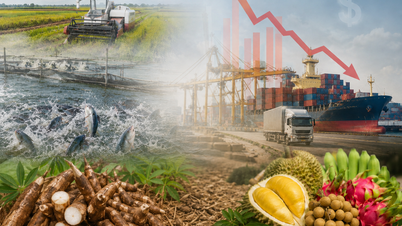
Regarding the credit structure, the Deputy Governor stated that the credit structure is consistent with the economic structure, meeting the credit needs of people and businesses. Specifically, data from the end of October compared to the end of 2024 shows that the agriculture, forestry, and fisheries sector accounts for 6.15% of the total outstanding loans in the economy; the processing and manufacturing industry accounts for 12.39%; the construction sector accounts for 7.47%, including infrastructure investment projects, which are being prioritized by the Government and the Prime Minister; and the wholesale and retail sector has the largest outstanding loan volume in the entire system, accounting for 22.24%.
Several sectors with a large share of total outstanding credit in the economy continued to grow significantly, including those contributing to growth. As of the end of October, priority sectors such as agriculture, rural areas, and small and medium-sized enterprises (SMEs) continued to account for a large share of total outstanding credit in the economy, at 22.42% and 19.11% respectively; while supporting industries and high-tech enterprises saw credit growth rates of 27.46% and 30.36% respectively.
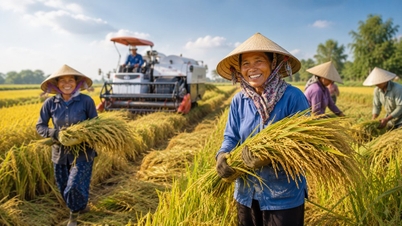
In addition, credit institutions have actively disbursed funds for credit programs as directed by the Government and the Prime Minister, such as: the credit program for the forestry and fisheries sectors, which has increased in scale from VND 15,000 billion to VND 185,000 billion; and the loan program for linking production, processing, and consumption of high-quality, low-emission rice products in the Mekong Delta, with an estimated cumulative disbursement of approximately VND 3,100 billion by the end of November 2025.
Several other programs, such as social housing loans; loans for young people under 35 to buy, rent, or lease-to-own social housing; the VND 500 trillion credit program for businesses investing in infrastructure and digital technology; and other policy credit programs, are also being actively implemented by credit institutions.
Regarding interest rate management, the State Bank of Vietnam (SBV) continues to maintain the policy interest rates, creating favorable conditions for credit institutions to access capital from the SBV at low costs, thereby enabling them to support the economy. At the same time, the SBV regularly directs credit institutions to continue reducing operating costs, strengthening the application of information technology, digital transformation, and other solutions to strive for lower lending interest rates; and is ready to share a portion of its profits to support people and businesses in accessing bank credit, contributing to economic development. As a result, the overall lending interest rate continues to trend downwards, and businesses and individuals are accessing loans at lower interest rates than before.
Regarding exchange rate management, from the beginning of 2025, the foreign exchange market and the VND exchange rate will mainly be affected by complex and unpredictable developments in the international market, such as the unpredictable monetary policy trajectory of the US Federal Reserve (Fed), the trade and tariff policies of the US government, and fluctuations in the international USD. During certain periods, the domestic supply and demand balance of foreign currency will face temporary pressure from short-term factors.
Against this backdrop, the State Bank of Vietnam (SBV) has managed the exchange rate flexibly, in line with market conditions, contributing to absorbing external shocks; coordinating monetary policy tools such as interest rates, VND liquidity, and foreign exchange intervention sales; and to meet liquidity needs, especially at the end of the year, in addition to the money supply channel through open market operations, the SBV has implemented foreign exchange swap transactions with credit institutions, thereby contributing to exchange rate stability, macroeconomic stability, and inflation control.
Source: https://vtv.vn/tang-truong-tin-dung-dat-gan-18-100251229152214432.htm


![[Image] Hanoi's urban life under the challenge of a "scorching hot" environment](https://vphoto.vietnam.vn/thumb/1200x675/vietnam/resource/IMAGE/2026/05/25/1779706979265_nang-nong-t5-2026-minh-duy-7-4636-jpg.webp)
![[Image] Close-up view of the interchange connecting the two expressways and Long Thanh Airport.](https://vphoto.vietnam.vn/thumb/1200x675/vietnam/resource/IMAGE/2026/05/25/1779703378210_ndo_br_z7863716673926-224453a31600126cce10622af6290afd-4549-jpg.webp)











































































Comment (0)