

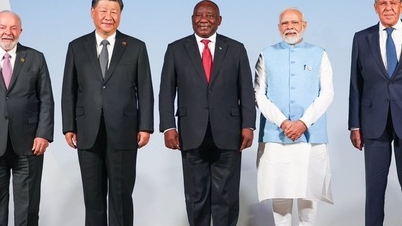
The BRICS group of nations – Brazil, Russia, India, China, and South Africa – are not “wasting energy” on discussions about geopolitical competition with other groups, such as the G7, South Africa’s ambassador to BRICS, Anil Sooklal, told TASS news agency on August 24.
"We don't waste our energy on discussions about competition and counterbalances... Because that's not the purpose of BRICS," said Sooklal.
“BRICS is about the Southern Hemisphere. It’s about global structural reform and striving toward a more equitable global order,” the South African diplomat added.
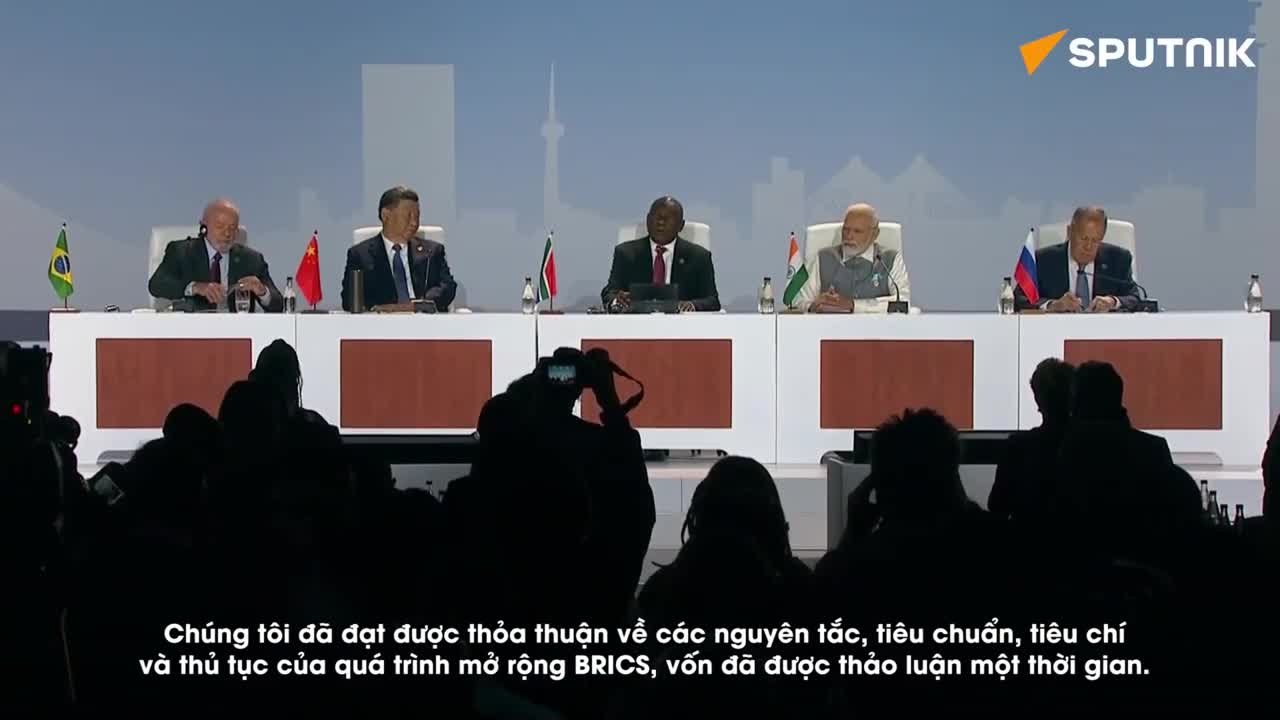
However, whether they like it or not, since their inception, BRICS has faced comparisons with the G7 based on economic growth and other metrics.
In recent years, the rise of this five-nation bloc has drawn attention to its impact as a geopolitical force, creating an increasing counterweight to the traditional influence of the G7.
For a long time, the G7 – comprising the United States, Canada, the United Kingdom, Germany, France, Italy, and Japan – held the reins of global economic governance and decision-making. However, as the BRICS nations experienced rapid economic growth and development, the collective influence and ambitions of this emerging bloc began to increase.
In terms of GDP based on purchasing power parity (PPP), the BRICS countries surpassed the G7 in 2020. According to the IMF, the bloc will account for a total of 32.1% of global GDP this year. This figure is up from just 16.9% in 1995 and higher than the G7's 29.9%.
The rise of the BRICS nations, while not without its challenges and internal divisions, has led to growing calls for more representative and inclusive global governance, adding weight to voices that do not follow the trajectory of policies shaped by the West.
Global GDP ratio: BRICS versus G7
Population of BRICS and G7
BRICS currently represents 40% of the global population and 32% of global GDP, but one of the main topics of discussion at the group's three-day summit in South Africa was the admission of new members.
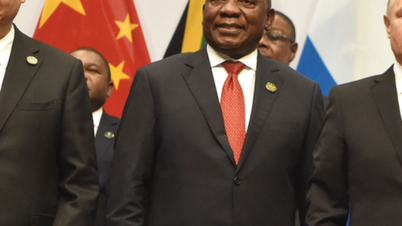
The Russian news agency Sputnik quoted South African President Cyril Ramaphosa as saying on August 24 that BRICS had adopted the Johannesburg Declaration II, which includes a decision to expand the bloc.
Accordingly, Argentina, Egypt, Ethiopia, Iran, Saudi Arabia, and the United Arab Emirates (UAE) will become full members of BRICS from January 2024.
“Despite disagreements among BRICS members, they are believed to have more in common than the Western strategic community expected, and all see the rise of multipolarity as the right thing to do,” said analyst Yu Jie of the UK-based think tank Chatham House. “As a result, all are expected to play a more active role in shaping the current world order.”
Leading investor in BRICS
The BRICS leaders' summit currently taking place in South Africa is also discussing ways to reduce the dominance of the US dollar in global trade.
Nevertheless, the G7 and BRICS remain two groups with close economic ties. Many G7 member countries are the largest investors in BRICS countries. China itself is also a major investor in BRICS member countries .
Minh Duc (According to The National News, TASS)
Source
![[Photo] Prime Minister Pham Minh Chinh presides over a meeting on private sector economic development.](/_next/image?url=https%3A%2F%2Fvphoto.vietnam.vn%2Fthumb%2F1200x675%2Fvietnam%2Fresource%2FIMAGE%2F2025%2F12%2F20%2F1766237501876_thiet-ke-chua-co-ten-40-png.webp&w=3840&q=75)


![[Photo] Prime Minister Pham Minh Chinh presides over the conference announcing the establishment of the International Finance Centre in Vietnam.](/_next/image?url=https%3A%2F%2Fvphoto.vietnam.vn%2Fthumb%2F1200x675%2Fvietnam%2Fresource%2FIMAGE%2F2025%2F12%2F21%2F1766309817714_ndo_br_dsc-3400-jpg.webp&w=3840&q=75)



































































Comment (0)