


The draft of the 14th Party Congress document affirms that culture and people are the foundation, resources, intrinsic strength, and regulatory system of sustainable development. How can the Vietnamese community abroad contribute to preserving and spreading Vietnamese cultural identity and values to the younger generation, as well as connecting overseas Vietnamese with their homeland and supporting people-to-people diplomacy ?
I would like to choose five keywords for reflection: Preservation, connection, contribution, support, sustainability. Individuals or communities, if they can practice and develop these five elements, will converge both intrinsic and extrinsic strength. However, to truly harness that strength, the additional keyword is understanding in both directions.
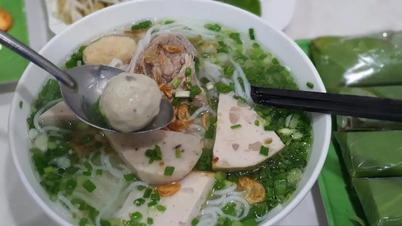
Firstly, there is the proactive and creative role of the Vietnamese community abroad. In reality, the Vietnamese community overseas is making effective and diverse contributions to preserving and spreading Vietnamese cultural identity, as well as actively supporting people-to-people diplomacy. Each overseas Vietnamese individual, to varying degrees, is a "cultural ambassador"—in their neighborhood, workplace, or simply in their own home. Whether consciously or unconsciously, they are naturally spreading Vietnamese culture—through language, cuisine , customs, lifestyle, and love for their homeland.
Recently, I've noticed a positive trend: many young Vietnamese people born in Europe want to return to Vietnam for internships, employment, or to experience life in their homeland. This proactive approach is the result of many factors, including personal desires, the nurturing and guidance of parents, and the efforts of expatriate organizations.
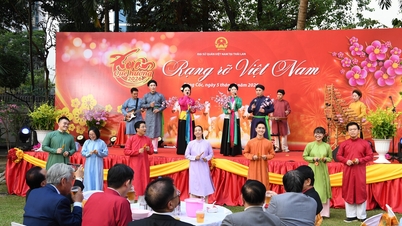
Some noteworthy initiatives include: Vietnamese cultural weeks and days introduced in local schools where overseas Vietnamese reside; Vietnamese cultural, culinary, and music festivals, including Tet (Vietnamese New Year) and Mid-Autumn Festival, organized by overseas Vietnamese; singing, dancing, and music clubs formed within the Vietnamese student community to preserve and spread traditional culture; projects such as the "Vietnamese Book Shelf," "Donating Vietnamese Books to Libraries Abroad," and "Tet Book Corner"; bilingual media channels, community media channels, and channels run by influential figures; and activities encouraging Vietnamese people, young Vietnamese, and people of Vietnamese origin to boldly express their voices in defending sovereignty and territorial integrity at international forums and in international learning and research environments.
The above examples demonstrate that the "soft power" of overseas Vietnamese lies not only in patriotism, but also in how they transform that love into concrete, persistent, and natural actions.
Conversely, a genuine and long-term collaborative mechanism is needed. However, for these contributions to be sustainable and strategically significant, an effective domestic support mechanism is essential.
Therefore, the question must be asked again: Have domestic functional units promptly and effectively met the needs of overseas Vietnamese? Have the funds supporting culture, education, and research from within the country (if any) reached the individuals and groups who are striving to do this work? Is there any official program or system in place to facilitate overseas Vietnamese children returning to the country for internships, learning, and maintaining ties with their homeland?
If there were a well-structured program, such as "Opportunities in the Homeland for Global Young Vietnamese," allowing Vietnamese-American students to intern, research, or work in Vietnam for short periods, with support and guidance from domestic agencies, it would be an effective and sustainable channel for people-to-people diplomacy.
The draft document has added the lesson "Strengthening and effectively promoting the power of the people and the great national unity." What suggestions do you have to consolidate trust, increase connectivity, and promote the strength of the global Vietnamese community in building and protecting the Fatherland and spreading Vietnamese values to the world?
Mahatma Gandhi once said, "The true strength of a nation lies in its people who are willing to act." Within the global Vietnamese community, there are always individuals who quietly and persistently contribute, day by day, to promoting the image of Vietnam to the world through concrete, creative, and heartfelt initiatives.
However, I see an equally important question: How do we identify, connect with, and properly support those capable and proactive individuals and communities? In my opinion, the key lies in building trust, establishing mechanisms for collaboration, and encouraging action. We shouldn't just rely on short-term movements, but rather build a cohesive ecosystem for Vietnamese people globally – where every community initiative, however small, has the opportunity to develop into a sustainable project with widespread impact.
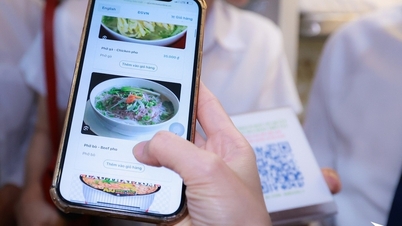
Recently, the "We Love Pho" community in Europe is a prime example of the desire to connect and the spirit of action. Starting from a love for a national dish, they have transformed culinary activities into a cultural movement, spreading the essence of Vietnamese pho throughout Europe, contributing to promoting the image of a modern, friendly, and creative Vietnam.
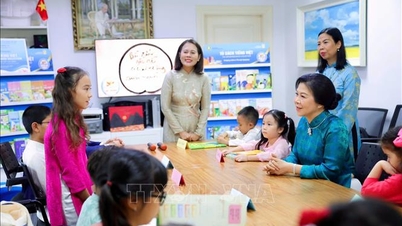
Similarly, Vietnamese language schools in the community, although primarily run by the dedication of a few individuals or groups, persistently preserve the mother tongue for the younger generation. Vietnamese cultural centers abroad, though still few in number and not yet fully effective, remain valuable cultural "seeds."
The challenge is how to ensure these "red seeds" (referring to revolutionary ideals) can take deep root, receive ample nourishment, and spread widely. To achieve this, mechanisms for selection, support, and empowerment are essential. The state and domestic organizations should view these proactive individuals not as mere "assignees" left to fend for themselves.
They should be considered strategic partners in cultural diplomacy and community development. Support should then extend beyond just financial or material resources, encompassing strategic direction, development advice, international connections, and recognition of their contributions.
In cases where public funding is limited, a public-private partnership model can be called for, combining domestic Vietnamese businesses and overseas Vietnamese communities to build multi-functional Vietnamese cultural centers. These centers would serve as "Vietnamese homes abroad," teaching the Vietnamese language, organizing events, seminars, cultural exchanges, and showcasing Vietnamese products. When the initiatives of overseas Vietnamese are supported, invested in, and celebrated, it will further strengthen their faith and attachment to their homeland.
Thank you very much!
Source: https://baotintuc.vn/thoi-su/tao-co-che-giup-nguoi-tre-tro-ve-nuoc-cong-hien-20260115184318715.htm













![[Image] Nearly 125,000 Hanoi students completed the Literature exam for the 10th grade entrance exam.](https://vphoto.vietnam.vn/thumb/1200x675/vietnam/resource/IMAGE/2026/05/30/1780117233041_ndo_br_thiet-ke-chua-co-ten-2-png.webp)




















































Comment (0)