A series of government measures to address difficulties have helped the real estate market become more positive. However, experts believe that many synchronized solutions are needed to continue "unfreezing" the market.
Hundreds of projects have had their obstacles removed.
According to Minister of Construction Nguyen Thanh Nghi , in order to overcome difficulties and promote the real estate market, the Government has recently established a Task Force of the Prime Minister, headed by the Minister of Construction, to review, supervise, and guide the resolution of difficulties and obstacles in the implementation of real estate projects for localities and enterprises.
The task force directly worked with six localities (Ho Chi Minh City, Hanoi , Da Nang, Hai Phong, Can Tho, and Dong Nai) and many real estate businesses to hear reports, gather information, assess the situation, and exchange ideas and provide guidance to resolve difficulties and obstacles in project implementation.
To date, efforts to resolve difficulties and obstacles in the real estate market have begun to yield positive results. Hanoi City has directed and resolved 419 projects (equivalent to 58.8% of the initial 712 projects) and is continuing to direct the resolution of 293 projects.
In Ho Chi Minh City, the local authorities have directed and resolved 67 projects (equivalent to 37.2% of the initial 180 projects), including 28 projects guided and urged by the Task Force; and 39 projects reviewed by the local authorities.
In Dong Nai province, the Task Force provided guidance and clarification on 7 major projects, including those of Novaland Group and Hung Thinh Group, identifying obstacles related to urban planning and construction under the authority of the Dong Nai Provincial People's Committee. Through this process, they provided guidance and clarification to the Provincial People's Committee and local departments to resolve difficulties and obstacles.
Most recently, the Department of Construction of Dong Nai province issued a document confirming that 752 low-rise houses at Aqua City, developed by Novaland Group, are eligible for sale as future housing units. In addition, the People's Committee of Dong Nai province has also allowed the investor to prepare and submit for appraisal the revised 1/500 detailed planning, concurrently with the approval of the C4 zoning plan.
At the same time, the competent authority will facilitate the investor to continue implementing construction and sales for items that conform to the approved detailed plan in order to fully fulfill commitments to customers.
To address the difficulties and obstacles of the Novaworld Phan Thiet project, also by Novaland Group, the working group organized a meeting at the Ministry of Construction with the People's Committee of Binh Thuan province and the project's investor to listen to the difficulties and obstacles, and to exchange information, provide answers, and guide the resolution of these issues. To date, Novaworld Phan Thiet has completed the adjustment of the 1/500 detailed planning for all project components.
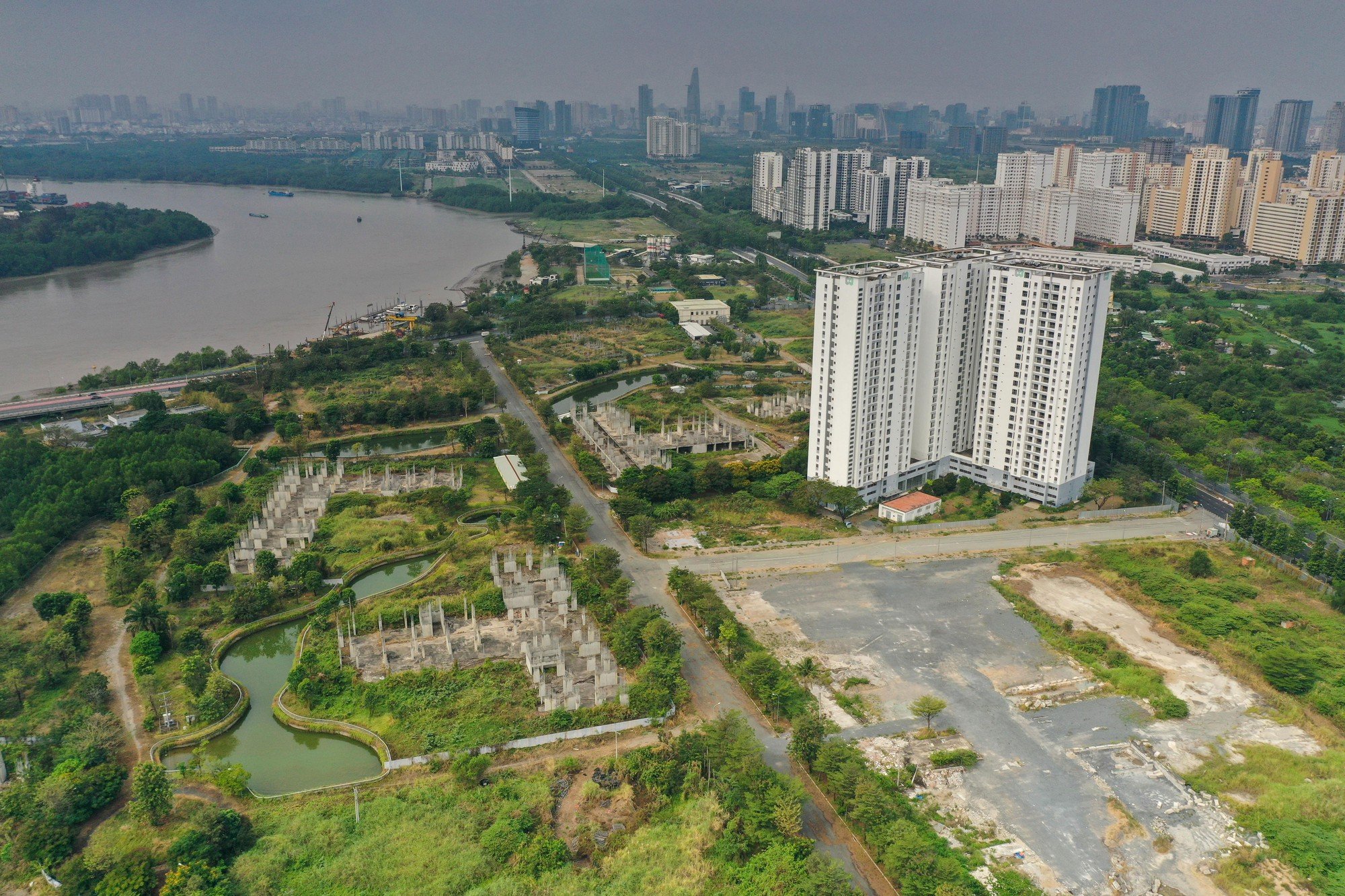
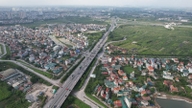
A real estate project is facing legal issues in Binh Khanh ward, Thu Duc City, Ho Chi Minh City. Photo: HOANG TRIEU


An even stronger solution
A recent report by the Vietnam Association of Real Estate Brokers (VARS) noted that efforts from various parties (the Government, ministries, banking system, real estate businesses, real estate brokers, etc.) have contributed positively to "maintaining" the market. Although the market is not yet strong enough to "overcome the steep decline," it has somewhat avoided the risk of "losing control."
Local authorities have actively participated, working together with real estate businesses to resolve issues, and have basically cleared obstacles for most projects that still have the potential to restart. However, out of approximately 1,200 projects facing legal issues, valued at around $30 billion, nearly 800 projects are still "waiting in line," which has a somewhat negative impact on the market's recovery.
Dr. Tran Du Lich, a member of the National Advisory Council on Financial and Monetary Policy, stated that real estate is one of the sectors that needs focused efforts to resolve obstacles in order to recover quickly, as it impacts many other sectors of the economy. The real estate market directly contributes about 10% of GDP and indirectly contributes an additional 2%-3% to economic growth.
Therefore, stronger solutions are needed soon to overcome difficulties, focusing on both supply and demand to ensure a strong recovery of the real estate market in 2024. This, along with strengthening the financial market, will create a solid foundation for the next phase.
Citing the "collateral damage" from the difficulties in the real estate market, Mr. Nguyen Chanh Phuong, Vice Chairman and General Secretary of the Ho Chi Minh City Wood Processing and Handicraft Association (Hawa), said that many businesses in the furniture and interior design industry have experienced a 40%-50% decrease in revenue due to the significant impact of the difficulties in the real estate sector.
Dr. Nguyen Huu Huan from the University of Economics Ho Chi Minh City also analyzed solutions to overcome difficulties in the real estate sector, which are mainly focused on the supply side, such as the 120,000 billion VND credit packages for lending to social housing investment projects.
Meanwhile, current demand for individual real estate remains low due to declining incomes. In fact, the real estate market is experiencing an oversupply of high-end apartment projects, while lacking affordable commercial and social housing projects that meet the needs and incomes of the population.
Economist and PhD holder Nguyen Tri Hieu observes that Vietnam's real estate legal framework is fraught with obstacles and overlaps in regulations. However, he raises the question of whether the real estate market can recover if these obstacles are removed. That is the major question to answer.
"I believe the issue isn't just about legal matters, as we expect that removing these obstacles will lead to a strong market recovery. The crucial factor lies in supply and demand. The legal framework is merely the framework for the market to operate and meet the demands of supply and demand."
"Over the past two years, the Vietnamese real estate market has experienced a supply-demand imbalance, heavily impacted by the challenging macroeconomic environment. To date, the market's supply and demand remain unbalanced. There is still a large supply of high-end real estate, while the majority of people can only afford affordable real estate or social housing," this expert analyzed.



Untangling the construction permit bottleneck
While appreciating the efforts of city departments and agencies in resolving obstacles in the past period, Mr. Nguyen Quoc Bao, Chairman of the Ho Chi Minh City Real Estate Club, hopes that the city needs to remove more bottlenecks and issues related to permits and regulations that are sometimes unnecessary in practice.
In particular, some regulations relate to construction permits. For example, if an investor applies for a 7-story building project but lacks the financial resources to build only 5 stories, they shouldn't be penalized. Or, permits are supposed to expire only when the 1/2,000 scale planning of Ho Chi Minh City changes, which is usually every 5 years, but in reality, investors are required to renew their construction permits annually, with a maximum of 3 renewals.
Furthermore, there are many other issues that make investors feel overwhelmed, so the idea of streamlining unnecessary procedures and regulations, rather than necessarily violating the law, can help alleviate difficulties for project investors.
(To be continued)
Source: https://nld.com.vn/kinh-te/tap-trung-go-kho-cho-bat-dong-san-20231107221552507.htm


















![[Video] Weather forecast for tonight and tomorrow, July 3, 2026: Tropical depression likely to strengthen into a storm tonight](https://vphoto.vietnam.vn/thumb/402x226/vietnam/resource/IMAGE/2026/07/02/1782997465372_dem-2-png.webp)