

The General Secretary requested that the effectiveness of research and proposals on major viewpoints, policies, and orientations of the Party regarding internal affairs, and on the prevention and fight against corruption, waste, and negative phenomena be further improved.
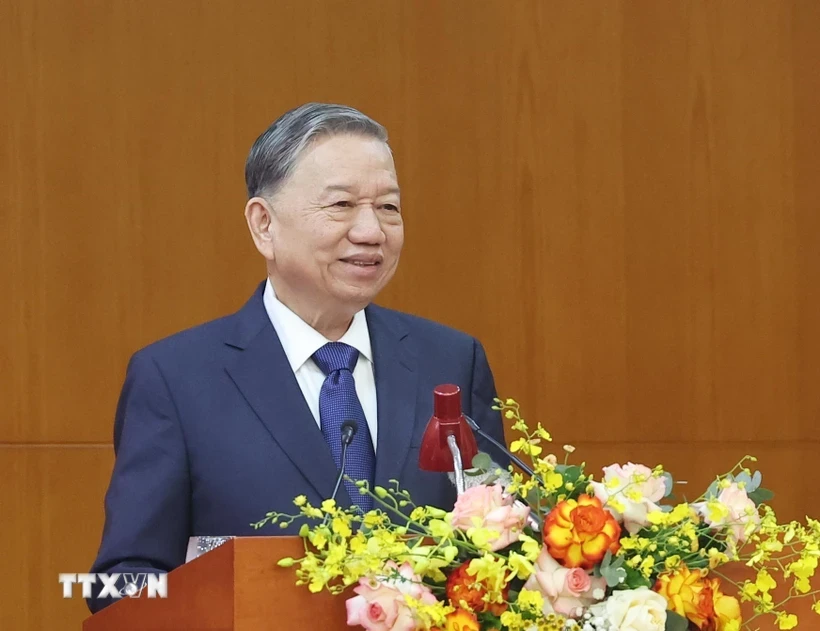
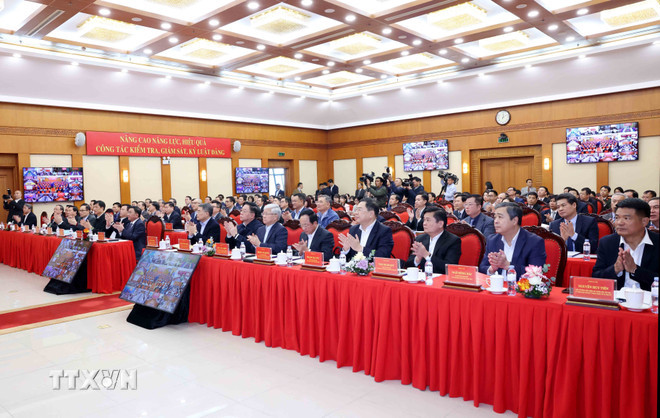
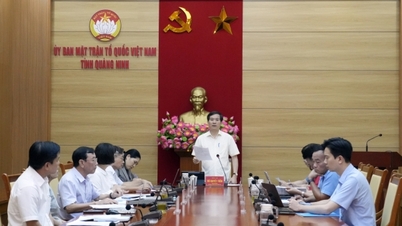
On the afternoon of December 31st, in Hanoi , the Central Internal Affairs Commission held a conference to summarize the work of the Party's internal affairs sector and the activities of the Steering Committee for preventing and combating corruption, waste, and negative phenomena in provinces and centrally-administered cities in 2024, connecting online with locations in provinces and cities nationwide.
General Secretary To Lam, Head of the Central Steering Committee on Anti-Corruption, Waste, and Negative Phenomena (Steering Committee), attended and delivered a keynote speech at the Conference.
Also attending were: Politburo member, Standing Committee Secretary, and Chairman of the Central Inspection Commission Tran Cam Tu, along with other Politburo members, Secretariat members, Central Committee members, leaders of central and local departments, ministries, agencies, and organizations.
Contributing to maintaining political stability and social order and security.
Reporting on the results of their work at the conference, representatives from the Central Internal Affairs Commission stated that in 2024, the Commission completed the development and submission to the Politburo, the Secretariat, and the two Central Steering Committees of 10 major projects on internal affairs, anti-corruption, anti-waste, and judicial reform; and promptly advised on amending and supplementing the functions and tasks of the Central Steering Committee and provincial-level Steering Committees to direct the work of preventing and combating waste, equating the task of preventing and combating waste with the task of preventing and combating corruption and negative phenomena.
The Committee has completed the review and streamlining of the organizational structure and revised and supplemented the functions, tasks, and organizational structure; completed a key scientific research project on the advisory work of central Party agencies in the field of internal affairs over 40 years of reform; successfully organized 2 international conferences and 13 research projects at the Party committee and grassroots levels; and compiled and published a book. "Continue building and perfecting the socialist rule of law state of Vietnam" With its rich theoretical and practical value, it serves the research and advisory work of the Party's Internal Affairs sector.
The Internal Affairs sector has effectively advised and organized 3 sessions and 2 meetings of the Central Steering Committee and Standing Committee on preventing and combating corruption, waste, and negative phenomena, and over 600 sessions and meetings of provincial-level Steering Committees on preventing and combating corruption, waste, and negative phenomena; it has coordinated and directed the handling of many serious and complex corruption and negative cases that have attracted public attention, in accordance with the principle of "no forbidden zones, no exceptions," being both strict and humane, and in accordance with the law; it has advised the Central Steering Committee on the work of 6 inspection teams, contributing to improving the effectiveness of the coordination mechanism in detecting and handling corruption and negative phenomena.
The sector also conducted a review of 10 years of implementing Directive No. 35-CT/TW of the Politburo on strengthening the Party's leadership over citizen reception and handling of complaints and denunciations; advised and organized more than 1,000 meetings and dialogues with citizens by provincial and city Party Secretaries; received and processed nearly 60,000 letters and petitions reflecting, complaining, and denunciations; and advised and directed the handling of more than 200 large-scale and complex lawsuits, contributing to maintaining political stability and social order and safety.
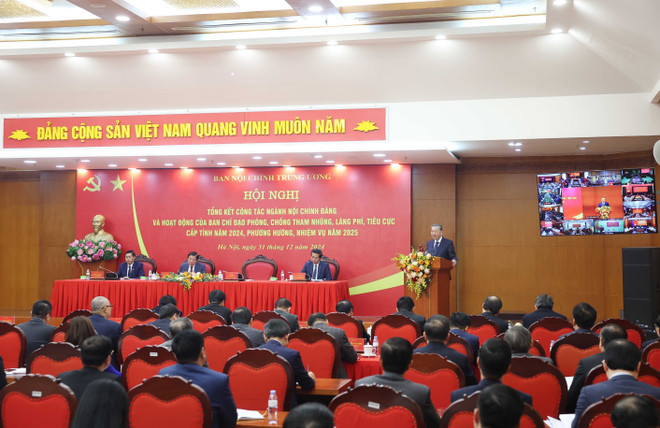
Delivering a keynote address at the Conference, General Secretary To Lam warmly welcomed and commended the efforts, endeavors, and achievements of the Party's Internal Affairs sector and the Provincial Steering Committee for preventing and combating corruption, waste, and negative phenomena in 2024. These results have made a significant contribution to the building and rectification of a clean and strong Party and political system, maintaining political stability, ensuring social order and security, and promoting the socio-economic development of the country.
Besides the achievements, the General Secretary also pointed out some limitations and requested the Party's Internal Affairs sector and the Provincial Steering Committee for preventing and combating corruption, waste, and negative phenomena to study and clarify the causes, propose solutions to overcome them, and further improve the effectiveness of their activities in the future.
Further enhance the effectiveness of the fight against corruption, waste, and negative practices.
The General Secretary noted that 2025 is a crucial year for the successful implementation of the Party's 13th National Congress Resolution and the organization of Party Congresses at all levels, leading up to the 14th National Congress. Given its position and role as the Party's strategic advisory body on internal affairs, anti-corruption, anti-waste, and judicial reform, the Party's Internal Affairs sector and the Provincial Steering Committee for Anti-Corruption, Anti-Waste, and Anti-Negative Practices must advise the Party leadership on continuing to strengthen the fight against corruption, waste, and negative practices; resolutely preventing corrupt, wasteful, and negative officials from being elected to the new Party committees.
The General Secretary requested that the effectiveness of research and proposals on major viewpoints, policies, and orientations of the Party regarding internal affairs, the fight against corruption, waste, and negative phenomena, and judicial reform be further improved. In particular, focus should be placed on researching, advising, and proposing improvements to the quality of draft documents for Party congresses at all levels and the draft documents for the 14th National Party Congress.
To advise and direct the review, amendment, supplementation, and rectification of loopholes and inadequacies, and to remove bottlenecks and obstacles in institutions and laws in general, and in the field of preventing and combating corruption, waste, and negative practices in particular, creating new impetus for the socio-economic development of the country.
The General Secretary emphasized the importance of advising and directing the vigorous implementation of measures to create strong and breakthrough changes in the fight against corruption, waste, and negative phenomena throughout society. He stressed the need to organize the National Conference summarizing the work of preventing and combating corruption, waste, and negative phenomena during the 13th Party Congress term, comprehensively assessing the results, limitations, and causes, accurately forecasting the situation, and proposing strong and groundbreaking tasks and solutions to further enhance the effectiveness of the fight against corruption, waste, and negative phenomena, meeting the requirements of the country's new development stage.
The Party's Internal Affairs sector and the Provincial Steering Committee for the Prevention and Combat of Corruption, Waste, and Negative Phenomena advise and direct the strengthening of inspection, supervision, and investigation in areas, localities, and among leading officials at all levels where there is much information and public opinion regarding corruption, waste, and negative phenomena; investigate and decisively handle serious, complex, and highly publicized cases of corruption, waste, and negative phenomena, especially those involving personnel.
At the same time, we will advise and direct efforts to further improve the effectiveness of solutions to prevent corruption, waste, and negative practices, with the motto that prevention is the main, fundamental, and long-term focus, while detection and handling are the priority and breakthroughs; promptly reminding, warning, preventing, and stopping violations early and from afar, so that small violations do not accumulate into major offenses.
Coordinate effectively the personnel assessment process for Party congresses at all levels; resolutely prevent corrupt, unethical, and dishonest officials, those who make false asset declarations, or those whose family members exploit their positions and authority for personal gain, from being elected to the new Party committees.
The General Secretary emphasized the need to further strengthen and improve the effectiveness of coordinated "joint operations" among internal affairs agencies; proactively monitor and assess the situation, and promptly advise and propose to the Politburo, the Secretariat, and provincial and city Party committees on leadership and guidance to promptly resolve complex and emerging issues related to national security and social order. In particular, it is crucial to advise and guide the effective handling of citizen complaints, dialogues with the people, and the effective resolution of their legitimate concerns and aspirations; to resolve complaints, denunciations, petitions, and feedback from the people thoroughly and fairly at the grassroots level; and to decisively handle large-scale, complex, and protracted cases of mass protests and disputes, preventing the emergence of "hot spots," passive responses, and unexpected situations.
The General Secretary requested a prompt review, amendment, and supplementation of functions and tasks, and streamlining of the apparatus in accordance with the plan of the Steering Committee for summarizing Resolution 18 of the Central Committee; and strengthening measures to build a team of internal affairs officials and those fighting corruption, waste, and negative phenomena who are truly "Firm-Sharp-Effective" (firm in law, sharp in professional skills, and capable of winning people's hearts).
The provincial-level Steering Committees for preventing and combating corruption, waste, and negative phenomena need to urgently revise and supplement their functions and tasks in accordance with Regulation 199-QĐ/TW, dated November 20, 2024, of the Secretariat of the Central Committee on the functions, tasks, powers, organizational structure, working regime, and working relationships of the Steering Committees for preventing and combating corruption, waste, and negative phenomena in provinces and centrally-administered cities; supplement and improve working regulations and procedures, maintain orderly working regimes, and continuously innovate and improve operational efficiency. The General Secretary requested that provincial and city Party committees continue to pay attention to consolidating the organizational structure and have mechanisms to attract cadres so that the internal affairs committees of provincial and city Party committees can perform their assigned functions and tasks even more effectively.
Source




![[Photo] General Secretary and President To Lam presides over a meeting on preparations for the review of one year of operation of the three-tiered government system.](https://vphoto.vietnam.vn/thumb/1200x675/vietnam/resource/IMAGE/2026/06/02/1780391821195_a1-bnd-4595-9717-jpg.webp)






























































Comment (0)