

The challenges in the revolution to streamline the organizational structure are far from simple, as they are difficult, sensitive issues involving people. Regarding these challenges, General Secretary To Lam once mentioned that "there are even fierce resistances." However, in the current context, this is a necessary task that cannot be delayed any longer.
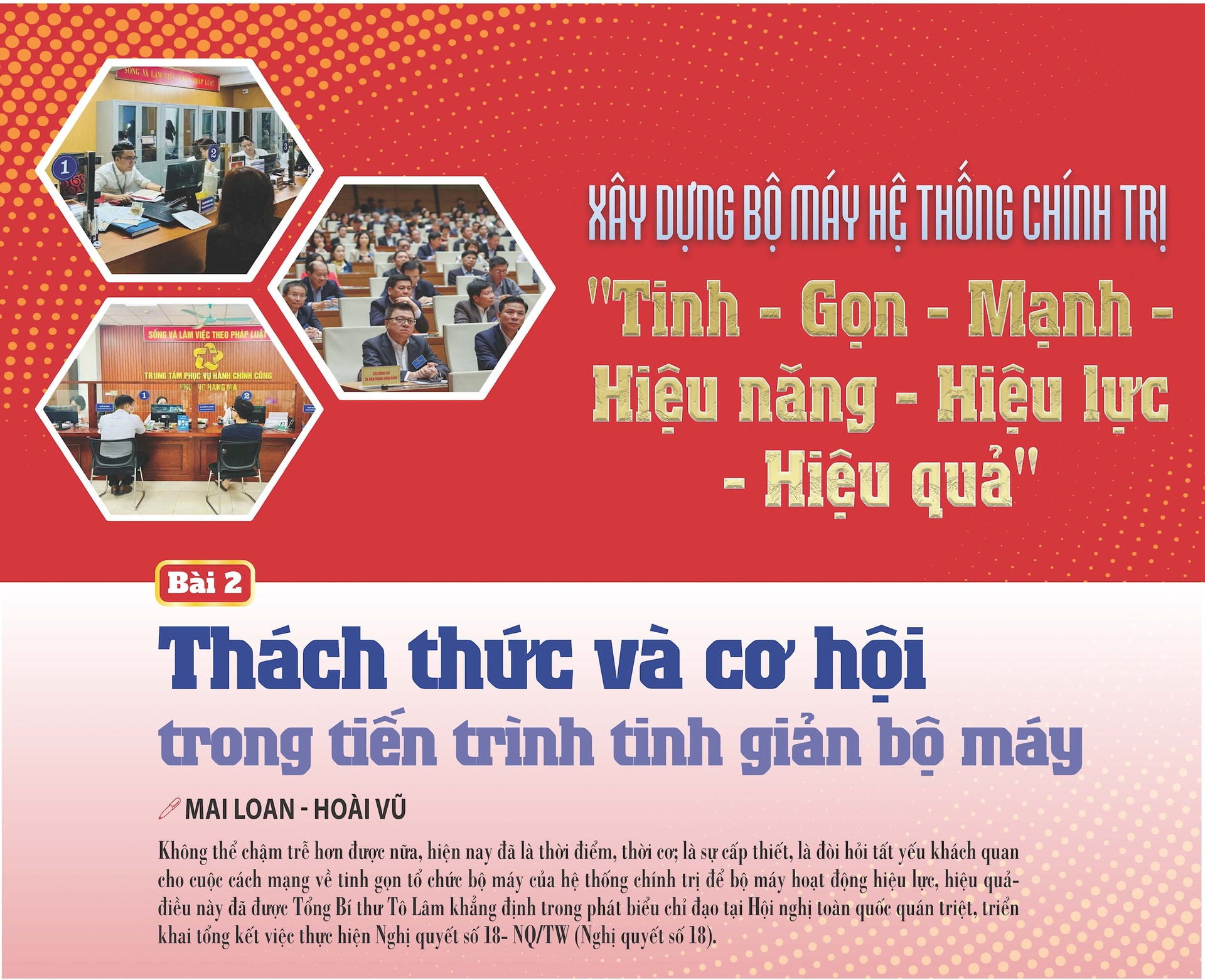
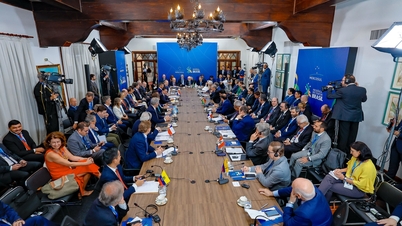
Immediately after the revolution on streamlining the organizational structure initiated by General Secretary To Lam, the entire political system joined in, implementing it decisively. The National Assembly, the Government, the Vietnam Fatherland Front, and other socio-political organizations, ministries, sectors, and localities established Steering Committees to summarize the implementation of Resolution 18-NQ/TW on streamlining and improving the efficiency of the organizational structure. The National Assembly's Steering Committee is chaired by the Speaker; the Government's Steering Committee is chaired by Prime Minister Pham Minh Chinh; ministries and sectors' Steering Committees are chaired by their respective Ministers and Heads of Departments; and provinces and cities' Steering Committees are chaired by their respective Provincial/City Party Secretaries.

Based on the proposed organizational restructuring plan, the proposed plan to streamline the political system's organizational structure at all levels of Party committees and organizations would reduce the number of Party agencies directly under the Central Committee by 4, Party committees by 25, and Party groups directly under the Central Committee by 16; while increasing the number of Party committees directly under the Central Committee by 2. For the Government sector, it would reduce the number of ministries by 5 and agencies directly under the Government by 2. For the National Assembly sector, it would reduce the number of National Assembly committees by 4 and agencies directly under the Standing Committee of the National Assembly by 1.
With a spirit of "speed," the Central Steering Committee for the review of Resolution No. 18-NQ/TW (chaired by General Secretary To Lam) has requested that units complete the plan for restructuring and streamlining the apparatus by December 2024 to serve the Central Committee meeting and the extraordinary National Assembly session to be held in February 2025.
With that in mind, the Government has proposed the following restructuring plan, which will result in 13 ministries and 4 ministerial-level agencies, reducing the number of ministries and agencies directly under the Government by 5 and 3. After restructuring and consolidation, the number of organizational units will be reduced by 35-40%, while the remaining internal organizations will be reduced by at least 15%. Essentially, general departments and equivalent organizations will be eliminated, with an initial plan to reduce 500 departments within ministries and general departments. For the National Assembly, after mergers and streamlining, the number of organizational units within the National Assembly and agencies under the Standing Committee of the National Assembly is expected to decrease by nearly 36%; the number of departments and units within the National Assembly Office will decrease by over 40%.
To date, Party agencies, Party committees, Party-affiliated organizations; the Vietnam Fatherland Front and political and social organizations at the central level have seriously implemented the review of Resolution No. 18-NQ/TW (Resolution 18), and developed plans and strategies for reorganizing the organizational structure.
Regarding the Vietnam Fatherland Front, immediately after the National Conference on the implementation of Resolution 18, Politburo member, Central Committee Secretary, and Chairman of the Central Committee of the Vietnam Fatherland Front, Do Van Chien, chaired a meeting to disseminate and implement Resolution 18. The Central Committee of the Vietnam Fatherland Front has completed the plan, which will reduce 8 departmental-level units (from 16 to 8); and add 4 divisional-level units.
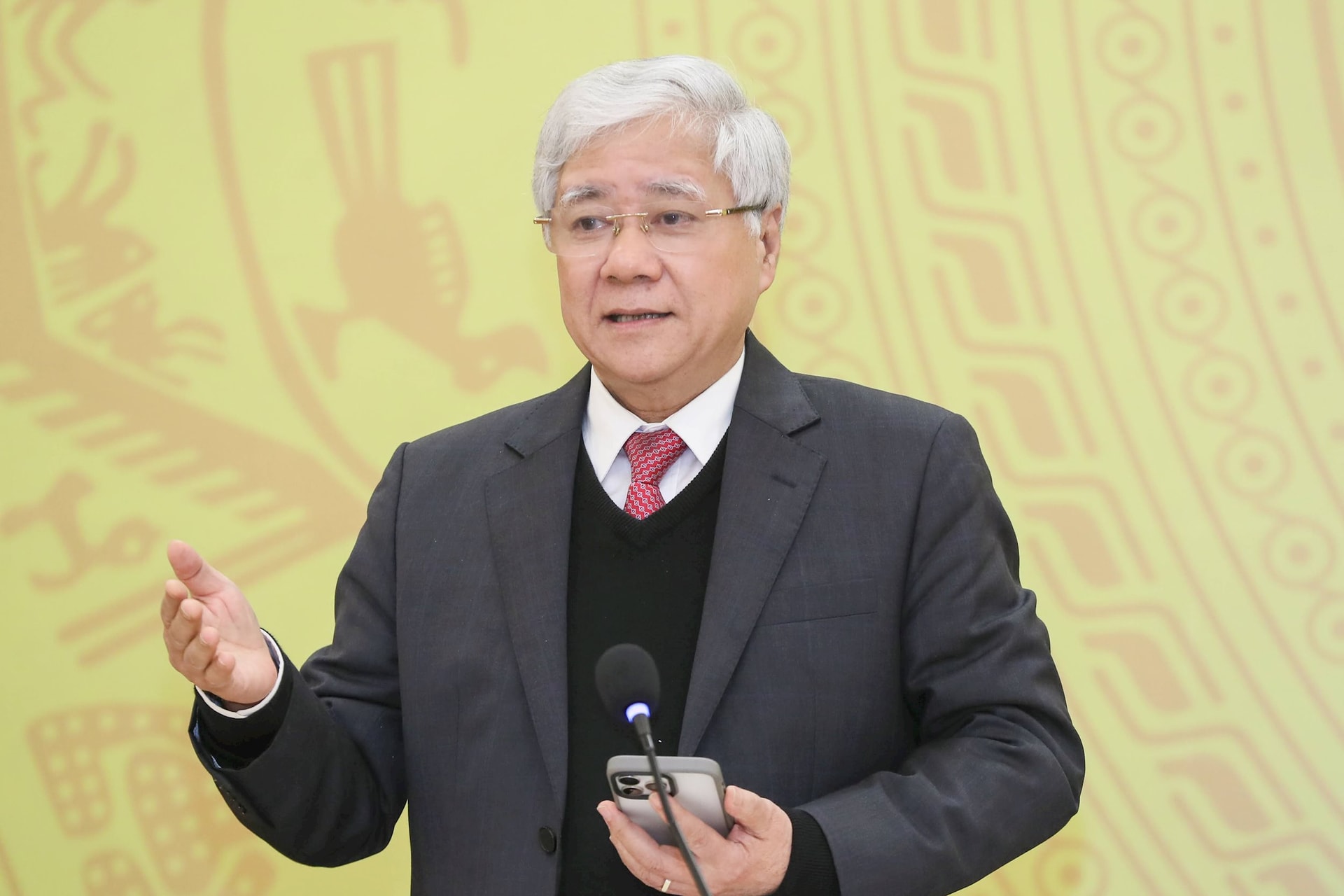
Significantly, not only the Ministries, Departments, and Committees slated for merger or closure must accelerate their restructuring plans; but the "call to action" initiated by General Secretary To Lam has also urged even ministries and agencies not subject to mergers to do so. For example, the Ministry of Industry and Trade has developed a plan to streamline its organizational structure by reducing 5 units (from 28 to 23 units), a reduction of 17.8% in the number of departments.
As for the provincial and city levels, in response to the "Central Government calls, localities respond" initiative, localities are currently implementing restructuring plans. In Nghe An province, a plan has been proposed to merge 12 departments and terminate the operations of 11 Party committees. Thus, according to the restructuring plan for the political system, Nghe An province will reduce 6 departments and 1 agency directly under the provincial government.
Meanwhile, Hai Phong also plans to merge the City Party Committee's Propaganda Department with the Mass Mobilization Department; terminate the activities of the City's Committee for the Protection and Care of Cadre Health, the Party Committee of the City's Agencies Bloc, the Party Committee of the City's Enterprises Bloc, and the Party groups and Party committees directly under the City Party Committee. At the same time, it will merge the Department of Planning and Investment with the Department of Finance; merge the Department of Natural Resources and Environment with the Department of Agriculture and Rural Development; merge the Department of Culture, Sports and Tourism with the Department of Tourism; merge the Department of Science and Technology with the Department of Information and Communications; merge the Department of Labor, War Invalids and Social Affairs with the Department of Internal Affairs, while transferring some functions to the Department of Education and Training and the Department of Health.
According to the plan, the Standing Committee of the Hai Phong City Party Committee requests that Party committees, Party organizations, agencies, and units, based on their assigned tasks, proactively develop and finalize the Project (or plan) for restructuring and streamlining the organizational apparatus according to their assigned tasks and submit it to the City Party Committee's Organization Department before January 15, 2025, for compilation and reporting to the Standing Committee of the City Party Committee and the City Party Committee.
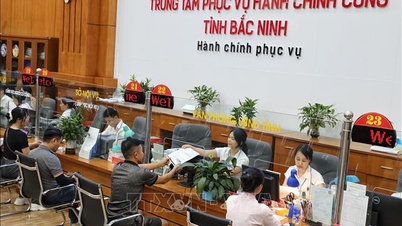
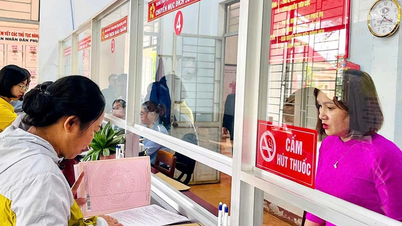
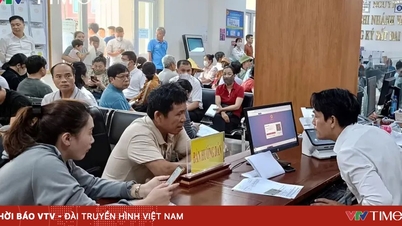
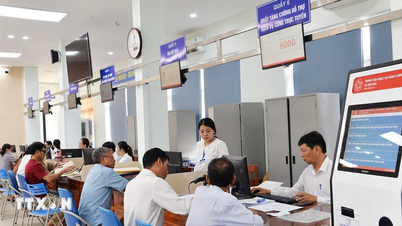
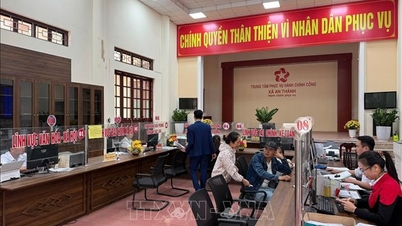
According to a report by the Ministry of Interior, during the period 2019-2022, downsizing the workforce helped save over 25,600 billion VND for the budget, which was then used to implement salary reforms. While there is no specific estimate of the total budget savings achieved after streamlining the organizational structure of the entire political system, in reality, as part of administrative procedure reform aimed at improving work efficiency and reducing budget costs, Hanoi has approved a pilot project to establish the Hanoi City Public Administrative Service Center. The establishment of the Public Administrative Service Center will reduce the number of "one-stop" service centers (from 673 to 30 branches). According to the Hanoi People's Committee, the Public Administrative Service Center will replace the "one-stop" service centers, thereby saving approximately 231 billion VND annually.
The above example in Hanoi illustrates that if the streamlining and reorganization of the administrative apparatus is implemented synchronously nationwide, budget expenditures for the apparatus will be significantly reduced, thereby freeing up a huge amount of resources for investment in national development.
Mr. Nguyen Duc Ha, former Director of the Party Organization Department (Central Organization Committee), gave an example and analysis stating that: in restructuring, if one Ministry is eliminated, at least 63 Departments in provinces and cities will be eliminated. Eliminating 63 Departments would also eliminate thousands of offices at the district level and subordinate units of the Departments.

However, the difficulties in implementing the streamlining of the apparatus are far from simple. As General Secretary To Lam clearly stated, "this is an issue that requires the unity, solidarity, courage, and sacrifice of each cadre and Party member, first and foremost the leaders of Party committees, government, the Fatherland Front, and mass organizations at all levels, all for the development of the country."
Based on his many years of practical experience researching personnel management, Mr. Le Van Cuong, former Deputy Head of the Thanh Hoa Provincial National Assembly Delegation, believes that streamlining the administrative apparatus has been discussed for many years but has not been implemented due to numerous obstacles. Now there is no more time to delay, so we must "run and queue at the same time," meaning we must work and learn from experience simultaneously. As we encounter difficulties, obstacles, and bottlenecks, we must focus on resolving them.
Considering this a very difficult issue, touching upon the interests and sentiments of the staff, civil servants, and public employees, Mr. Cuong believes the biggest obstacle remains resolving the human resources issue. Therefore, while it's easier to resolve the issue of those who voluntarily resign after the restructuring, a fair and transparent policy is needed. Thus, to address this problem, it's necessary to promptly issue a superior support policy to encourage those who resign early.
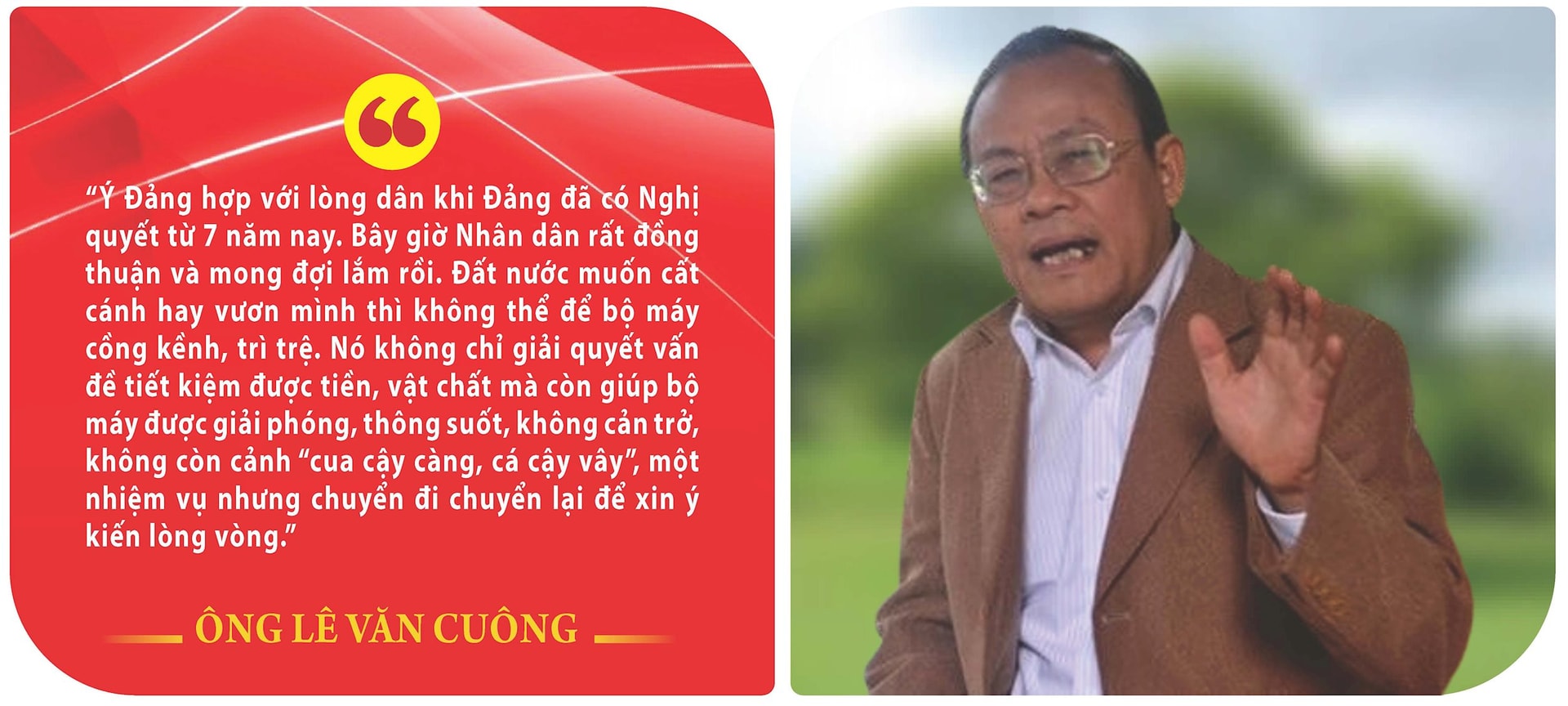
Regarding the challenges for those who "are not yet ready to retire," Mr. Cuong believes that streamlining the workforce requires a "transitional period," meaning a roadmap. Explaining his proposal, Mr. Cuong suggested that, initially, organizational restructuring should be carried out to reduce the number of departments. This would define the functions, tasks, and powers of the new organization after the restructuring and merger, initially reducing the number of heads and deputy heads.
Regarding personnel matters, according to Mr. Cuong, a step-by-step approach with a clear roadmap is necessary. He argues that applying pressure will only cause officials and civil servants to feel uneasy.
Regarding the situation where the Department of Agriculture and Rural Development of Thanh Hoa province previously had 6-7 Deputy Directors after the merger, but has now stabilized with only 3 Deputy Directors, Mr. Cuong said: “The most important goal when streamlining and merging is to have a strong and efficient apparatus, ensuring that work is not interrupted or stagnant but interconnected. The human factor is crucial to ensuring the operation of the state administration. Therefore, we should prioritize streamlining the organizational structure. As for personnel, that's a difficult and sensitive issue, so we need to address it step by step, allowing the reorganized structure to stabilize and the General Assembly to be completed before considering personnel matters.”
According to Mr. Nguyen Duc Ha, we must always pay attention to overcoming both tendencies. Being overly subjective and hasty can have negative impacts; but we should also avoid being overly cautious and meticulous to the point of stagnation.
Mr. Ha said that streamlining the organizational structure of the entire political system and reducing the number of officials within the entire political system is a major, arduous, complex, and highly sensitive task. Therefore, attention must be paid to political and ideological work so that everyone clearly and deeply understands that this is an urgent and necessary issue.
"When reorganizing personnel, it affects many officials, and their concerns are understandable because it impacts their rights, interests, and jobs. For officials, it's also about their families. Therefore, the Party, the State, and organizations must consider, weigh, and comprehensively calculate many solutions," Mr. Ha said.
Regarding the restructuring plan in Hai Phong, Mr. Le Tien Chau, Secretary of the Hai Phong City Party Committee, also stated that it is necessary to streamline the organizational structure first. Following that, the workforce should be reduced, and the staff of officials, civil servants, and employees should be restructured to eliminate unnecessary positions, overlapping functions and responsibilities, reduce inefficient work, and focus resources on key areas and truly deserving and suitable personnel.
Source: https://daidoanket.vn/bai-2-thach-thuc-va-co-hoi-trong-tien-trinh-tinh-gian-to-chuc-bo-may-10297351.html


![[Photo] Prime Minister Pham Minh Chinh presides over a meeting on private sector economic development.](/_next/image?url=https%3A%2F%2Fvphoto.vietnam.vn%2Fthumb%2F1200x675%2Fvietnam%2Fresource%2FIMAGE%2F2025%2F12%2F20%2F1766237501876_thiet-ke-chua-co-ten-40-png.webp&w=3840&q=75)

























































Comment (0)